
 English
 Deutsch
 Español
 Français

Here You Can Get Our Latest Information
Industry News
Are Solar-Powered Outdoor Showers Available? Types, Sizes, and Buying Guide
Yes — Solar-Powered Outdoor Showers Are Available in Several Forms
Solar-powered outdoor showers are readily available as portable gravity bags, rigid freestanding columns, poolside pedestal units and larger garden shower stands. The practical question is not whether they exist, but which format matches the water volume, sun exposure, mounting surface and daily routine. A small 8L unit can be right for a beach house rinse-off; an 18L or 35L column often fits a family garden or pool; a 60L model starts to make sense where several people need a quick rinse in sequence.
These products are not the same as electric instant heaters or solar thermal panels connected to a home hot-water system. Most solar-powered outdoor showers use an integrated dark tank or tube that absorbs sunlight, warms the water inside, and releases it by gravity or low-pressure flow. There is no compressor, no mains wiring and no complex plumbing in the simplest versions. That makes them useful at pools, gardens, beaches, campsites and seasonal rentals where running hot water is expensive or impractical.
Factory-made rigid units usually range from about 8L to 60L. Portable bag showers are smaller, often 5L to 20L, and hang from a branch, roof rack or frame. Rigid columns hold more water, stand stable on a base or ground anchor, and often include a proper shower head and valve. Both are genuine solar-powered outdoor showers; they simply serve different use patterns.
What Counts as a Solar-Powered Outdoor Shower?
A solar-powered outdoor shower normally combines three functions in one product: water storage, solar collection and a controlled outlet. The tank surface is usually dark to absorb solar radiation. Some units use a single wall with direct sun exposure; others use a shaped column, twin-wall section or transparent cover to improve heat retention. The water becomes warm after several hours of direct sun, then flows through a hose, valve and shower head.
The term “solar-powered” can cover a wide span of products, so buyers should check the actual heating method. A black bag left in the sun is solar-powered in the simplest sense. A rigid column with a large exposed tank is also solar-powered, but it offers more volume, better stability and a more familiar shower experience. A unit with a small electric pump is still often described as solar-assisted, but it depends on a battery or power source and should be evaluated differently.
Portable gravity bag
Lightweight, low cost and easy to move. Capacity is usually limited, water pressure is low, and the bag needs a strong hanging point. Best for camping, beach trips and occasional garden use.
Rigid solar column
A freestanding tank and pole with a shower head. More stable than a bag, easier to fill from a hose, and available from small garden sizes to large poolside units. Needs a level base and good sun exposure.
Poolside pedestal unit
A heavier column or base-mounted design for rinsing before and after swimming. The larger footprint and base improve stability, while the higher tank can provide a more comfortable shower height.
Compact garden shower
A small 8L to 18L unit for quick rinses, pet washing or a decorative outdoor shower point. Easy to install, but not intended for long showers or multiple users at once.
Capacity Comparison: 8L, 18L, 30L, 35L and 60L
Capacity is the first specification that changes the ownership experience. A larger tank gives more shower time, but it also weighs more when full, needs a stronger base and takes longer to heat. The estimates below assume direct sun, moderate ambient temperature and a short outdoor rinse rather than a long indoor-style shower.
| Capacity | Typical use | Approximate heat-up | Practical trade-off |
|---|---|---|---|
| 8L | 1-2 quick rinses; beach, small garden, pet rinse | 1.5-2.5 hours in strong sun | Light and easy to move, but limited reserve and lower mounting height on some models |
| 18L | 2-3 short showers; garden, poolside, vacation rental | 2-3 hours in strong sun | Good balance of volume and weight; still needs a stable base when full |
| 30L | 2-4 short showers; family garden or pool | 3-4 hours in strong sun | More useful reserve, but heavier when filled and slower to heat |
| 35L | 3-5 short showers; larger garden, pool deck, small guest house | 3-4.5 hours in strong sun | One of the most flexible sizes, provided the base and sun position are planned |
| 60L | 5-7 quick rinses; pool house, lodge, multi-user outdoor area | 4-6 hours in strong sun | Large reserve and heavier structure; requires a strong, level base and careful wind planning |
For a deeper comparison across 20L, 30L, 40L and 50L formats, this capacity selection guide explains how fill volume affects actual shower time and placement decisions.
Product Examples That Show the Range
A practical way to understand availability is to look at how different tank sizes are built. The 18L class is often the entry point for a permanent garden or poolside shower because it is large enough for a useful rinse but still manageable when full. Models with a base are easier to place on a patio or pool deck; models without a base may need paving slabs or a mounting surface.
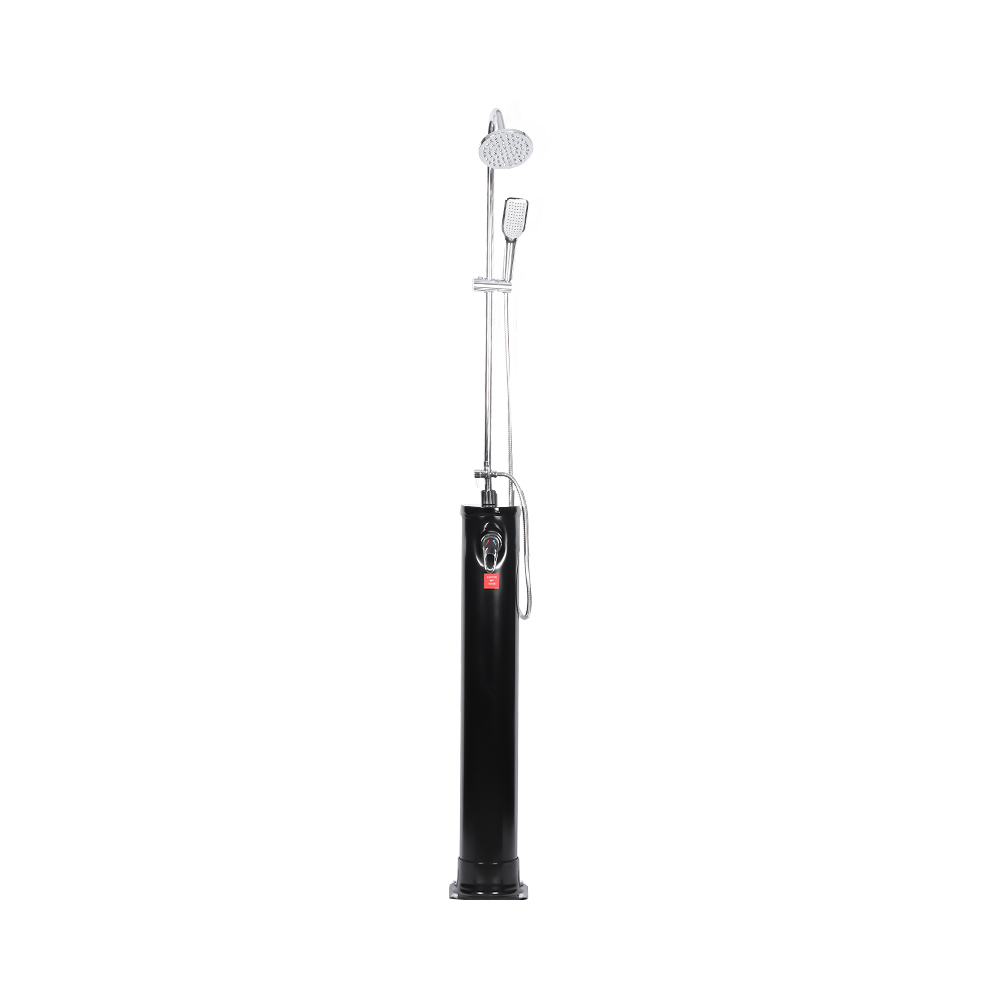
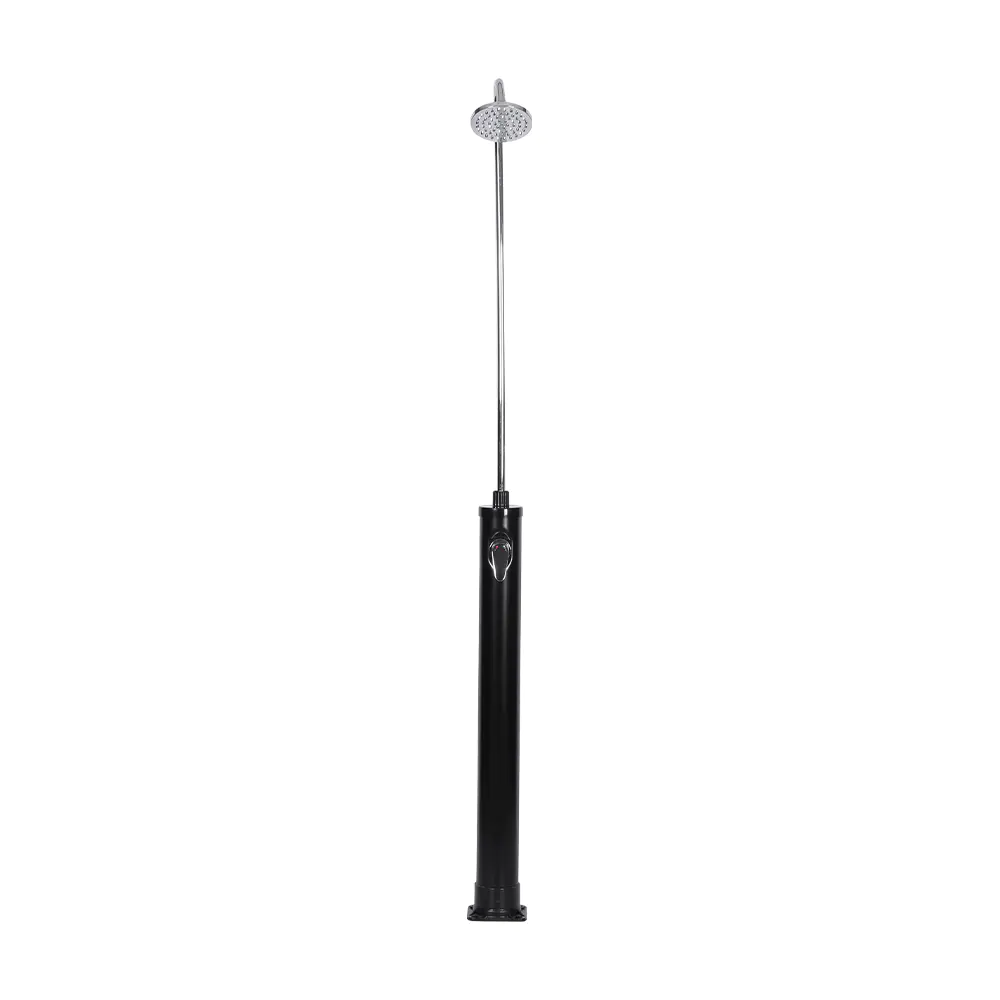
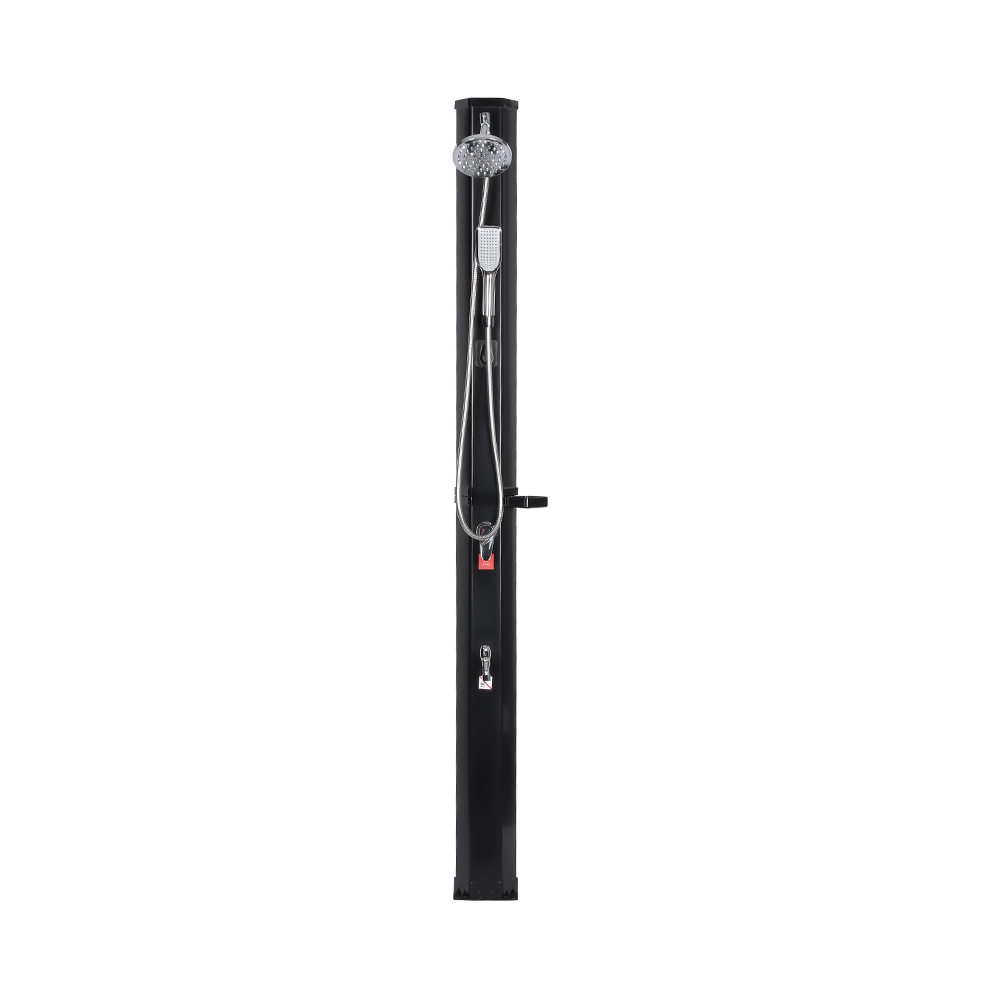
The LY18L01 18L outdoor garden PVC solar shower column with base is a straightforward example: a freestanding column, a stable base and a familiar shower layout. It suits a garden corner, poolside rinse point or holiday rental where a fixed hot-water line is not available. The main checks are base leveling, sun exposure and whether the hose can reach a filling point.
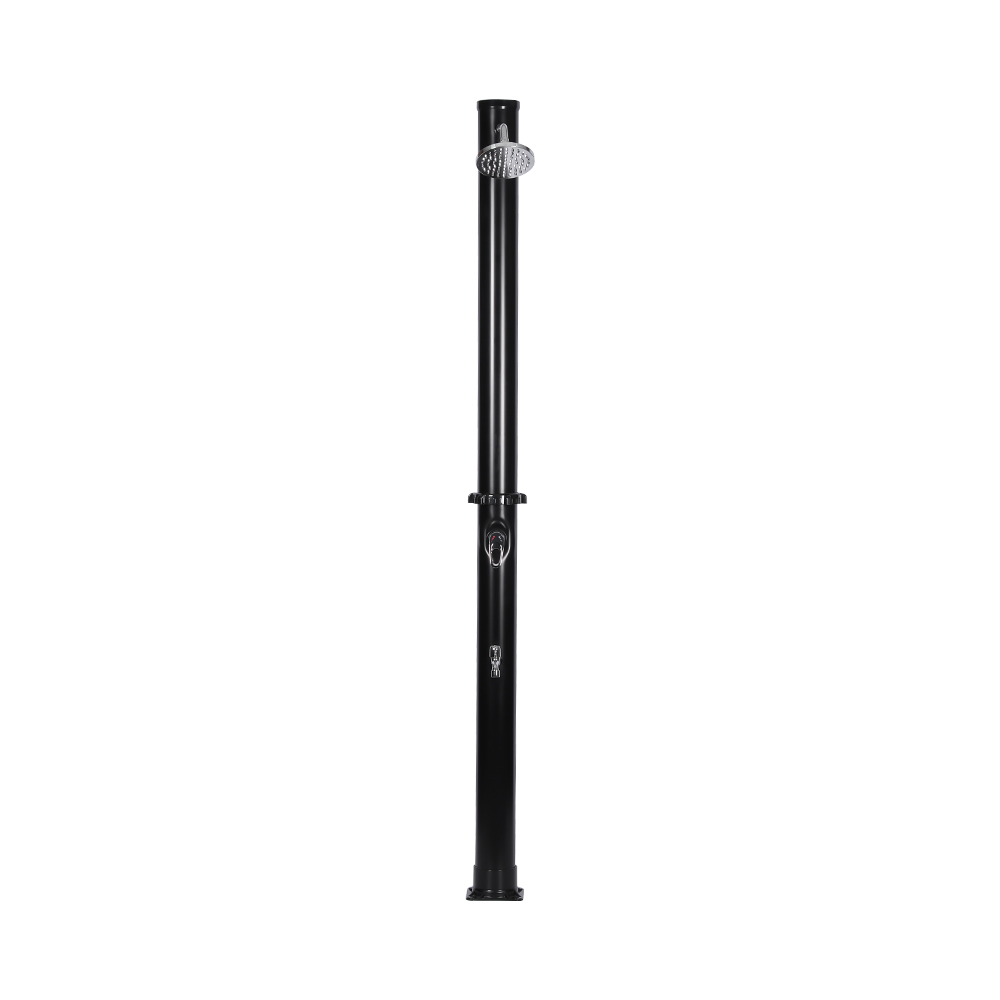 LY18L01 18L Outdoor Solar Shower Column with PVC BaseA freestanding 18L solar shower column with PVC base, single-lever mixer, and 180° adjustable rain shower head; suits gardens, poolside areas, or rentals without fixed hot water.View Product →
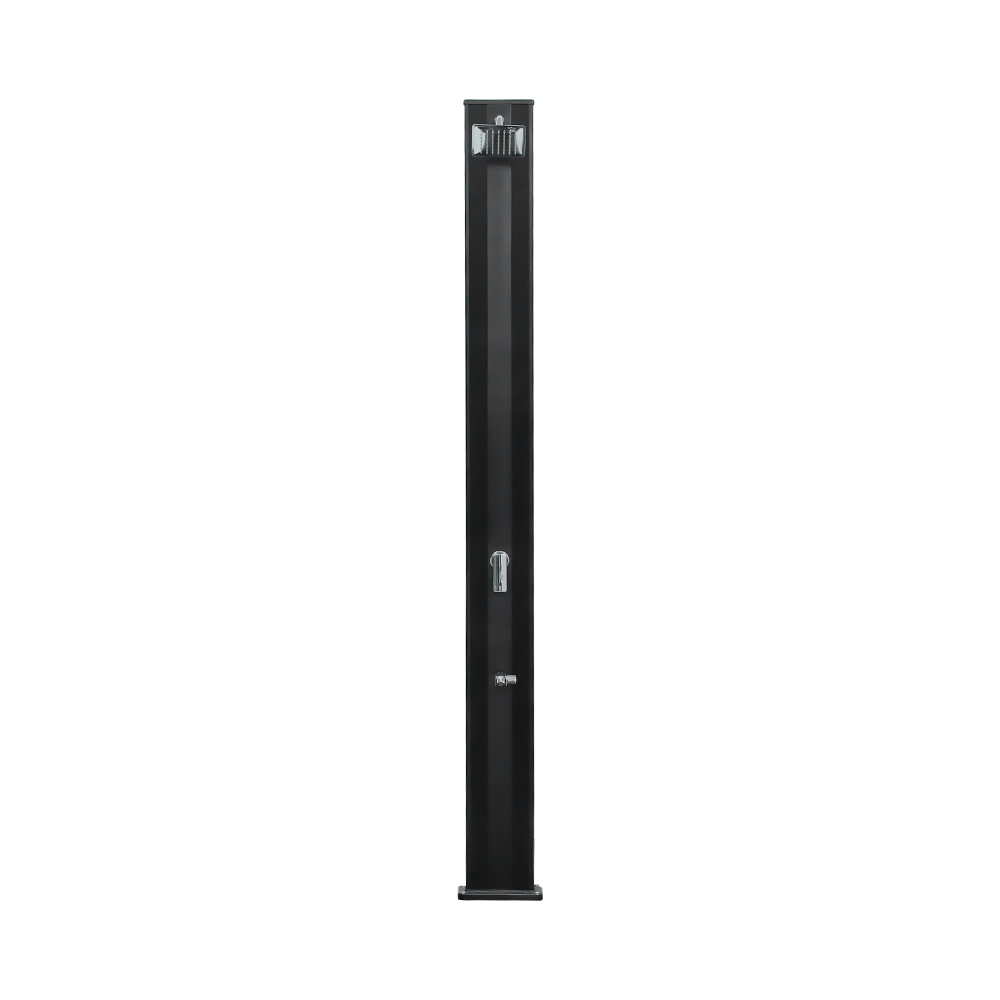
The 35L class moves into family use. The LY35L01 outdoor garden solar shower with large-capacity shower pipe is designed around a bigger water reserve, which helps when several people want to rinse in sequence. It is still a gravity-fed outdoor shower, so pressure depends on height and flow path rather than a pump. Buyers should confirm the filled weight and the base area before choosing this size.
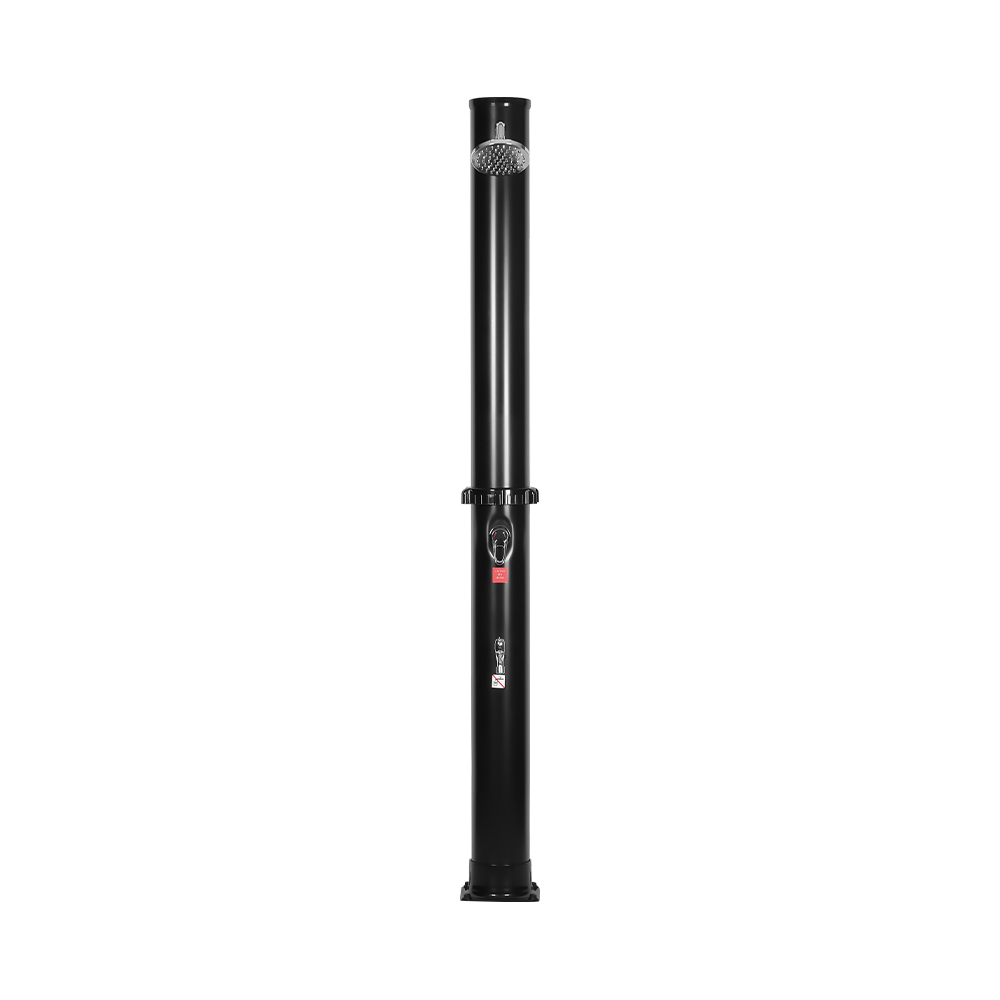 LY35L01 35L Outdoor Solar Shower with Large Shower PipeA 35L family-oriented solar shower with large-capacity shower pipe, built-in metal tray, drainage hole, and disassembly for seasonal storage; suited to sequential rinsing.View Product →
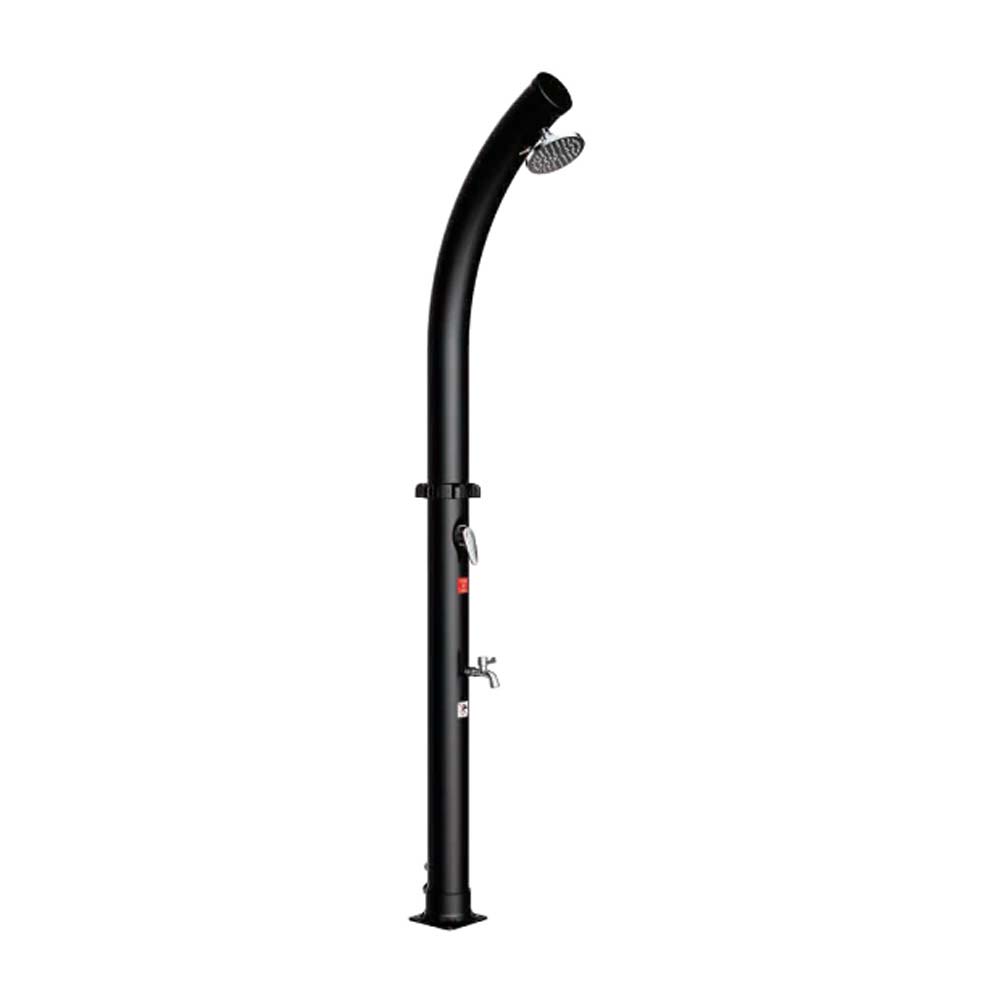
At the upper end, the LY60L01 extra-large rain shower head garden solar shower is aimed at higher-volume settings: pool houses, shared outdoor wash areas, lodges and larger properties. The 60L tank takes longer to heat and weighs considerably more when full, so the installation point should be planned like a small outdoor fixture, not a movable accessory. A strong level base, wind consideration and a nearby fill hose matter more at this size.
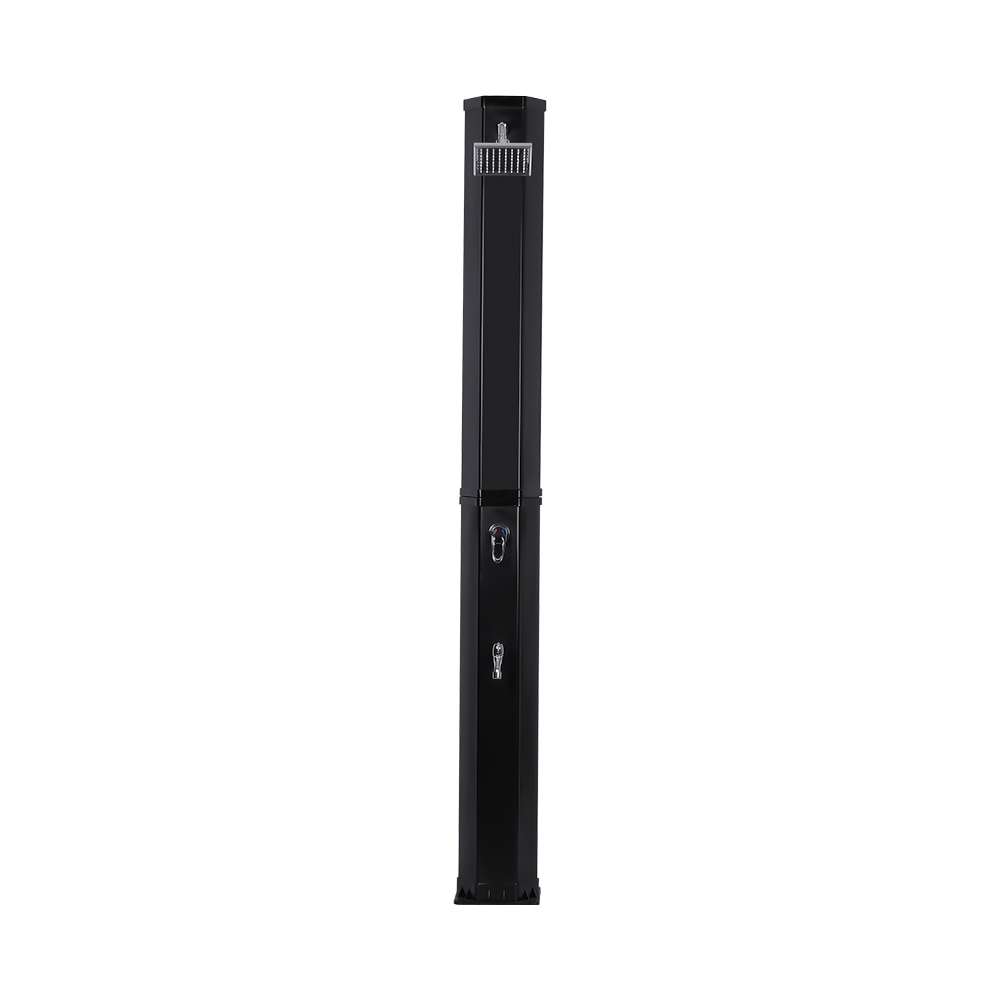 LY60L01 Extra-Large Rain Shower Head Garden Solar ShowerA 60L-class outdoor solar shower with oversized rain head, 180° ball-joint adjustment, UV-resistant plastic, metal base, and modular disassembly; suited to pool houses and lodges.View Product →
Where Solar-Powered Outdoor Showers Fit Best
Garden and backyard
A solar column near a patio, vegetable garden or outdoor seating area gives a convenient rinse point without trenching hot-water pipes. The unit should receive direct sun for most of the day and stand on a firm, level surface.
Poolside
Pool users often want a quick rinse before entering the water or after swimming. A poolside solar shower reduces wet footprints through the house and keeps sunscreen, chlorine and garden debris out of indoor bathrooms.
Beach and coastal areas
Portable bags and compact columns work well where sand and saltwater are part of the day. Rinse water helps remove salt and sand before entering a car, cottage or rental property. UV resistance and corrosion-resistant fittings matter in coastal use.
Camping and off-grid stays
Portable solar showers are common for camping because they pack flat and need no power. Rigid columns are less portable but can serve cabins, glamping sites and seasonal camps where a permanent outdoor rinse point is useful.
These showers are not only for warm climates. In cooler regions they are often used as seasonal fixtures: opened in late spring, drained before the first freeze, and stored or covered through winter. That seasonal pattern makes simple draining, accessible valves and durable seals more important than complex controls.
What Actually Affects Water Temperature
Sunlight is only one part of the result. A dark 18L tank in direct summer sun can feel comfortably warm after a few hours, while the same tank in shade or strong wind may only reach a lukewarm temperature. Fill water temperature also matters: water from a cold well or early-morning hose starts lower than water from a storage tank that has already warmed.
Typical Temperature Gain in a Dark-Tank Solar Shower After Three Hours
These are practical estimates for 18L to 35L dark-tank units, not guarantees. A 60L tank usually needs a longer exposure window because there is more water to warm.
Placement is the cheapest performance upgrade. A shower that receives sun from mid-morning to late afternoon will usually outperform a more expensive unit placed beside a shaded wall. In hot climates, partial late-afternoon shade can reduce overheating; in cool climates, full sun and wind protection are more useful. A clear cover, insulated rear surface or dark absorber improves heat retention, but the unit still needs direct sun to collect energy.
Buying Checks That Prevent Returns
Most disappointing solar shower purchases come down to a mismatch between the product and the site, not a failed heating principle. Before ordering, check the filled weight, base footprint, fill height, hose length, shower head height and drainage route. A 35L unit may be manageable empty but awkward when full; a 60L model can be too heavy for a soft lawn or lightweight deck.
- Confirm the tank material and UV package. PVC, ABS, aluminum and stainless steel behave differently in sun, salt air and freezing conditions.
- Ask for wall thickness, fitting material and seal specifications. Thin walls and poor UV stabilization shorten service life in exposed gardens.
- Check the base and wind resistance. A full column has a higher center of gravity; a level base, ground anchor or paving slab may be necessary.
- Review the valve and shower head. Small flow paths clog with grit or scale, and cheap valves become stiff after a season outdoors.
- Plan the fill route. A hose connection is easier than lifting a full container, especially for 30L and larger tanks.
- Confirm drain and freeze protection. If the unit stays outside in a freezing climate, the tank and pipework must be drainable.
- Ask for packaging drop-test details and spare seals if the unit will be shipped to a seasonal site or resold through retail channels.
- Check factory quality systems. A manufacturer working under ISO9001 and BSCI-style social compliance is better prepared for consistent production and documentation.
Price differences usually track material, capacity, base design, shower head quality, UV treatment, packaging and testing. A low-cost bag shower and a 60L rigid column are not comparable purchases. The right comparison is between products built for the same job: a stable garden column, a portable travel shower or a high-volume poolside unit.
Installation and Daily Use
- Choose a level spot with direct sun for at least four to six hours. Avoid overhanging branches, shaded walls and windy corners where possible.
- Prepare a firm base. Use paving slabs, a concrete pad or the supplied base for larger columns; soft ground can allow the unit to lean when full.
- Connect the hose and fill the tank. Leave space for expansion if the tank will be heated strongly, and follow the manufacturer’s fill limit.
- Check for leaks at the valve, shower head and base connection before the unit is in daily use.
- Allow several hours of sun before the first shower. Test the water temperature by hand before use, especially where children will be nearby.
- Drain and store the unit before freezing weather. Water left in a closed tank or pipe can expand and crack plastic parts.
Daily use is simple: fill, wait, rinse and drain. The most common operational mistake is filling a large tank late in the day and expecting hot water immediately. Another is placing a dark column against a wall that blocks morning sun. A small change in position often improves results more than adding accessories.
Maintenance and Longevity
Solar outdoor showers have few moving parts, but they are exposed to sun, water, dust and seasonal temperature swings. A monthly flush helps remove grit and biofilm. If the shower head slows, remove it and rinse the screen; in hard-water areas, a mild vinegar soak can dissolve scale. Inspect seals and valve fittings at the start and end of each season, and replace cracked washers before they cause a leak inside the tank base.
UV exposure is the main long-term stress. Keep sharp tools, garden chemicals and hot grill surfaces away from plastic tanks. In coastal areas, rinse metal fittings with fresh water to reduce salt buildup. If the unit is not used for long periods, empty it, clean the tank, dry the interior and cover it loosely so air can circulate. Avoid sealing a damp tank in a tight cover for months; trapped moisture encourages odors and surface growth.
FAQ: Solar-Powered Outdoor Showers
Are there solar-powered outdoor showers available?
Yes. They are available as portable gravity bags, rigid solar columns, poolside pedestals and larger garden units. Capacity usually ranges from about 5L in compact travel showers to 60L in high-volume outdoor columns.
Do solar-powered outdoor showers work without direct sunlight?
They can still provide water, but the temperature gain is much lower. Bright, indirect light may take the chill off; shade, cloud cover and wind can leave the water only lukewarm. Direct sun for several hours is the practical requirement.
How hot can the water get?
In strong summer sun, many 18L to 35L dark-tank showers reach roughly 35-45 C after a few hours. Small volumes can feel hotter, while 60L tanks usually need longer. Always test the water before use, especially for children or pets.
How long does a solar shower take to heat?
An 8L or 18L unit may need 1.5 to 3 hours in good sun. A 30L or 35L unit often needs 3 to 4.5 hours. A 60L unit may need 4 to 6 hours depending on ambient temperature, wind and starting water temperature.
Do solar showers need plumbing?
Most do not. They are filled from a hose or container and rely on gravity. Some rigid units can be connected to a garden hose for filling, but they are not normally plumbed into a home hot-water line.
Can a solar shower be used beside a swimming pool?
Yes. A poolside column is a common use case for rinsing before and after swimming. It does not heat the pool; it provides a separate outdoor rinse point using stored solar-heated water.
What size is best for a family?
An 18L unit suits short individual rinses, while a 30L or 35L column is more practical for several people in sequence. A 60L unit is better for shared pool houses, lodges or larger properties where water volume matters more than portability.
Can solar showers be left outside in winter?
Only if the manufacturer specifies a freeze-safe design and the unit is properly drained. In most cases, empty the tank, hose and valve before temperatures approach freezing. Trapped water can crack plastic tanks and split fittings.
How should a solar shower be cleaned?
Flush the tank with fresh water, rinse the shower head screen and wipe the exterior with a mild detergent. For scale, use a diluted vinegar soak on removable parts. Avoid harsh solvents that can damage plastic, seals or UV coatings.
Are portable bag showers still worth considering?
Yes, when weight and packing space matter. A bag shower is useful for camping, beach trips and temporary setups. For frequent garden or poolside use, a rigid column is usually more stable, easier to fill and more comfortable to use.
-
How Do You Maintain and Clean Your Solar Shower for Long-Term Use
Empty the Tank After Each Use Maintaining the cleanliness and functionality of your solar shower is ...
-
Comprehensive Guide to Solar Showers: From Portable Bags to Luxury Poolside Units
Introduction to Solar Showers What is a Solar Shower? A solar shower is an innovative and environmen...
-
How to Choose the Perfect 8L Solar Shower for Beach, Pool & Garden Use
Benefits of Using an 8L Solar Shower at the Beach 1. Convenience and Portability for Beachgoers An 8...
-
The Ultimate Guide to 18L Solar Showers: Reviews, Tips, and How-To
Introduction to 18L Solar Showers In recent years, 18L solar showers have become a must-have item fo...
No.27, Fengshan Road, Hangfu Town, Kecheng District, Quzhou City, Zhejiang Province, China
(+86)-17888203192
 Wholesale Outdoor Solar Shower Factory