
 English
 Deutsch
 Español
 Français

Here You Can Get Our Latest Information
Industry News
How Do You Take a Shower While Camping? Solar Shower Guide for Campers
Take a solar shower on the trip, fill it to about three-quarters, leave it in direct sunlight for two to four hours, and you can stand under a real stream of warm water at your campsite. That is the most reliable way to take a shower while camping when there is no electrical hookup, no gas heater, and no campground bathhouse nearby. It is also the method our factory knows best, because solar showers are what we design, test, and build every day, and we have measured how they behave in real outdoor conditions.
You do have alternatives, and each one makes sense in a different situation. The cards below are not a ranking; they are a quick map of what exists. Pick the method that matches your trip style, group size, and how much water you are willing to carry.
Solar shower
A dark-bodied container heats water in the sun and uses gravity to feed a showerhead. Best for campsites with several hours of direct sun and a place to hang or mount the unit.
Powered pump shower
A small pump pulls water from any bucket or container and pushes it through a showerhead. It runs on batteries, so you need to keep them charged and carry the pump assembly.
Sponge bath
A washcloth, a small basin, and a little soap. Uses roughly two litres of water and keeps your body clean when a full shower is not practical.
Natural water wash
Washing in a lake, river, or stream works when the rules allow it. Stay at least 200 feet from the water and use biodegradable soap responsibly.
Campground bathhouse
Many private and public campgrounds provide shower facilities. Check the site list before you leave and bring a backup for nights when the bathhouse is crowded or closed.
So the practical answer to how you should shower while camping depends on three questions: how much water do you actually need, does the campsite get direct sun, and how self-contained does the setup have to be? If you want a genuine shower rather than a wipe-down, a solar-powered unit is the most self-contained option you can bring.
In the rest of this article we walk through setup steps, realistic heating times, capacity selection, water use, hygiene rules, backup methods, and the mistakes we see campers make most often. The goal is to let you arrive at a campsite with a plan, not a hope.
Why a Solar Shower Is the Most Practical Way to Shower While Camping
A solar camping shower works on a simple physical principle. The tank has a dark absorbing surface, sunlight is converted into heat, and that heat passes into the water. As the water warms near the surface, it becomes slightly less dense and rises, so the whole mass in the tank gradually reaches a usable temperature without any moving parts. When you open the valve, gravity pushes the water through the hose and out of the showerhead. There are no pumps, no fuel cartridges, no wires, and almost nothing that can fail in the field.
The field is exactly where that simplicity matters. You arrive at a site, hang the unit from a branch or mount it on a base, fill it with water, and go hiking while the sun does the work. When you come back, the water is waiting at bath temperature. In the factory tests we run for quality control, a unit with a dark body and sufficient surface area lifts water from around 20°C to 38–42°C in two to four hours of direct sun, depending on capacity and air temperature.
The limits are just as clear as the benefits. A solar shower needs sun, it needs time, and it needs a place to hang. In heavy forest, in continuous rain, or in the middle of winter, performance drops and you will want a backup. We have written about the main benefits of using a 30L solar shower for outdoor camping in a separate piece, including how a larger tank behaves when two people use it in sequence.
For campers who want a large reserve without a permanent installation, the portable 35L model is the compromise we recommend most often. It still fits in a car boot, yet it holds enough water for several showers at a static camp, and it can be laid flat while heating and hung only when needed.
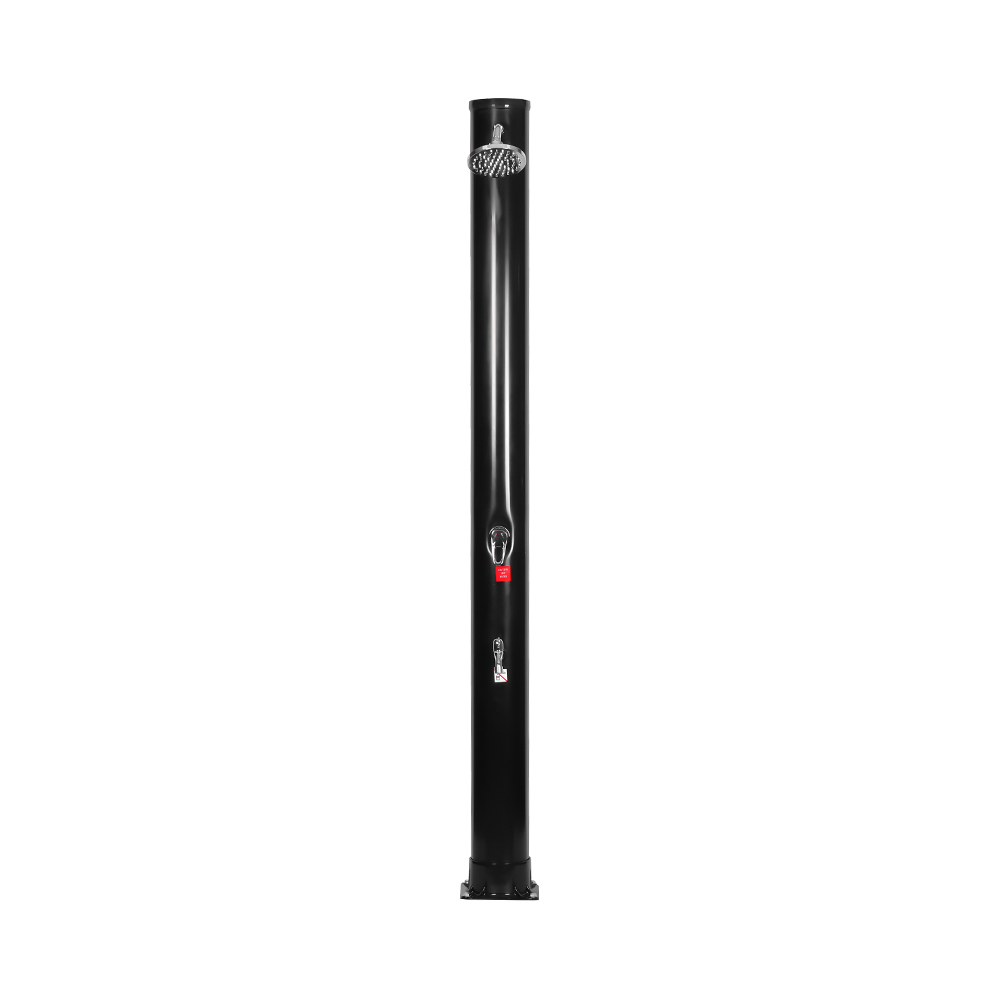 Portable 35L Solar Shower for Camping and Garden UseThis 35L model offers a large water reserve while fitting in a car boot, and its durable welded seams and UV-resistant tank ensure long-lasting reliability for static camps.View Product →
When you choose a solar unit for camping, look at the materials as much as the capacity. The tank needs to resist UV radiation, the seams need to be welded rather than glued, and the valve needs to survive thousands of open-and-close cycles. Those details separate a unit that lasts three seasons from one that cracks on the second trip. We see the difference in production every week, which is why we insist on those details in our own range.
How to Set Up and Use a Solar Shower at a Campsite
The complete setup takes about ten minutes, and the most common mistake is starting too late in the day. Here is the sequence we use in our standard field tests.
- Fill the tank to 70–80% of capacity. Leaving air space gives the water room to expand as it heats and makes the unit easier to lift and hang.
- Choose a sunny spot. The tank needs direct sun from late morning to late afternoon. A south-facing position in the northern hemisphere works best.
- Hang or mount the unit securely. Use a strong branch, a vehicle rack, or a purpose-made base. Make sure it cannot swing or tip when you operate the valve.
- Let it heat. Check the water temperature with your wrist after two hours. In summer, 8L and 18L units are often ready in 2–2.5 hours; larger tanks take three hours or more.
- Test the flow. Open the valve fully for two seconds, then adjust to a steady stream. Gravity flow is gentle, so the valve should be opened most of the way.
- Stand within arm's reach of the valve. If you are showering with a partner, one person can manage the valve while the other washes.
- Drain completely after use. Storing water inside a warm tank encourages algae and can damage the valve. Tilt or hang the unit to empty it fully.
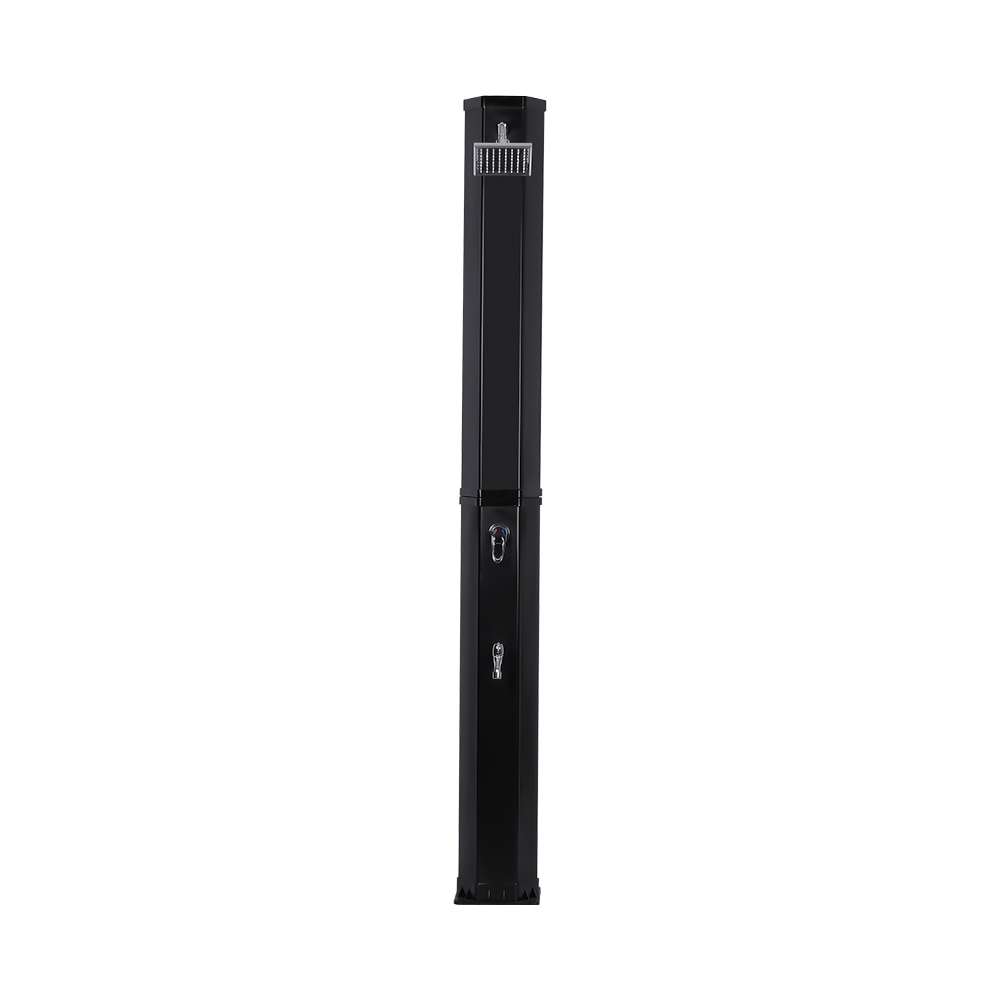
If you are car camping, a compact 8L column unit works well because it stands on its own base and does not need a branch or a frame to hang from. For a family base camp, a larger tank mounted on a pole gives a more comfortable shower height and easier access to the valve.
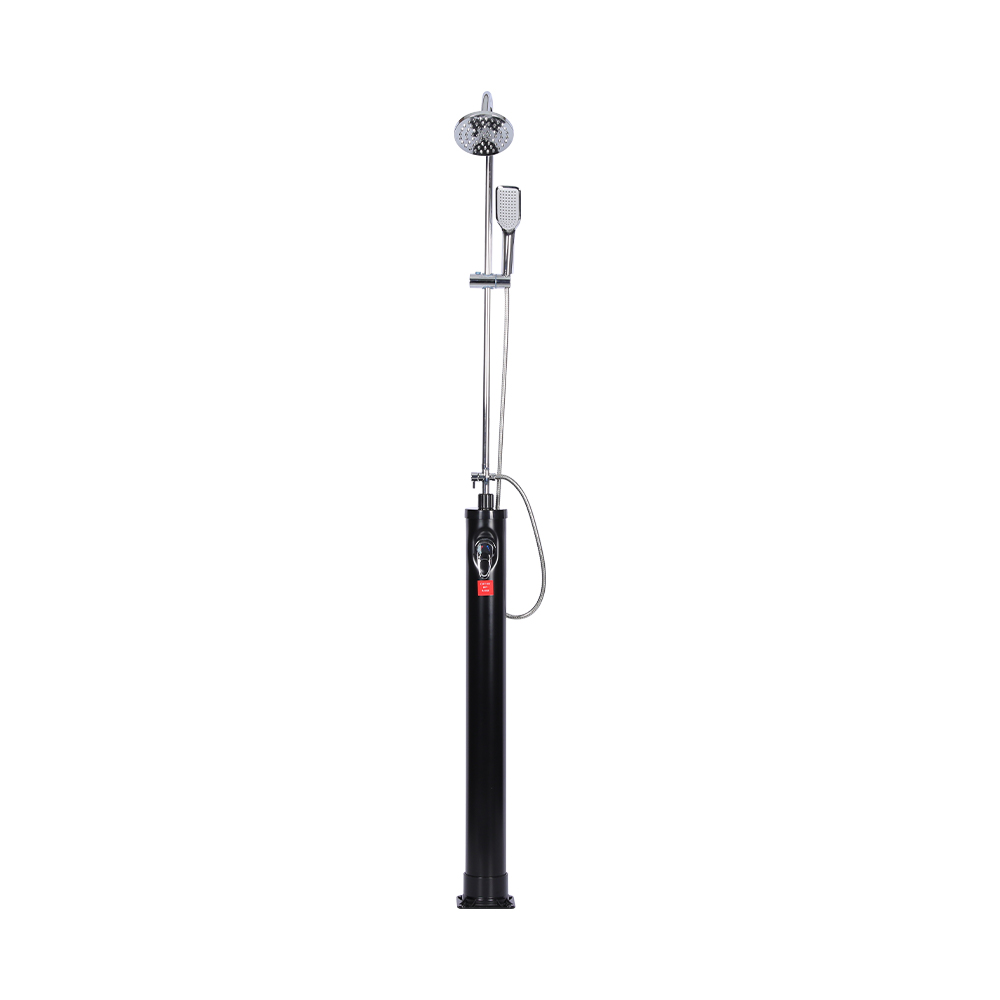 Compact 8L Column Solar Shower with Stainless BaseIdeal for car camping, this 8L unit stands on its own base without needing a branch, and its single-lever mixer gives precise temperature control for efficient showering.View Product →
The showering technique matters as much as the hardware. Wet down, close the valve, soap up, and then open the valve to rinse. This simple habit turns a four-to-five minute continuous flow into a practical eight-to-nine minute shower, because you are not letting water run while you scrub. In a gravity system, a half-open valve often produces an annoying drip rather than a steady stream, so run the valve at full open and control the flow with the showerhead or your hand.
Water Temperature and Heating Time: Realistic Expectations
A solar shower is not a domestic water heater. It does not hold a perfectly steady temperature, and in normal conditions it will not produce scalding water. What it does give you is a comfortable 35–42°C shower when the sun is out and the air temperature is above roughly 18°C. That range is where a solar camping shower is genuinely pleasant, and it is also the range used in most of our product testing.
The chart below shows average heating times from factory measurements using 20°C starting water, a clear sky, and 25°C ambient air. Your real numbers will shift with sun angle, cloud cover, and wind.
| Capacity | Time to 35–42°C | Shower time at 4 L/min | Best camping role |
|---|---|---|---|
| 8L | 2–2.5 hours | 1.5–2 minutes | Solo quick rinse or emergency wash |
| 18L | 2.5–3 hours | 3.5–4.5 minutes | Solo full shower or two quick washes |
| 30L | 3–3.5 hours | 6–7 minutes | Couple, long hair, or generous solo use |
| 35L | 3.5–4 hours | 7–8 minutes | Small family at a static base camp |
| 60L | 4–5 hours | 12–15 minutes | Group sites with vehicle access |
Four variables change these numbers more than anything else. First, ambient temperature: at 30°C the water warms roughly 20% faster than at 20°C. Second, starting water temperature: cold stream water at 8°C needs substantially more solar energy than tap water at 20°C, and it may not reach a comfortable temperature at all in weak sun. Third, wind: wind strips heat from the tank surface and can add 30 to 60 minutes to the wait. Fourth, sun angle: spring and autumn sun, which sits lower in the sky, delivers less energy per square metre than summer sun.
Heat retention after sunset also matters for evening showers. Thicker PVC and stainless steel bodies hold warmth longer than thin-film bags. In our measurements, an 18L unit typically stays above 30°C for about 60 to 90 minutes after sunset in mild weather, which is enough for a late shower if you plan the timing. A 35L or 60L unit holds heat longer simply because it has more water mass, but it also takes longer to reach temperature in the first place.
Choosing the Right Capacity for Your Camping Trip
Capacity is the single most important buying decision. The table below compares the five main sizes in our range based on camping use, not just the number printed on the tank.
| Capacity | Weight when full | Typical heat time | Flow style | Best for |
|---|---|---|---|---|
| 8L | 8 kg | 2–2.5 h | Short rinse | Solo cyclists, hikers, beach days |
| 18L | 18 kg | 2.5–3 h | Full shower | Car campers and couples |
| 30L | 30 kg | 3–3.5 h | Extended shower | Couples with long hair, weekend base camps |
| 35L | 35 kg | 3.5–4 h | Multiple showers | Families at a fixed site |
| 60L | 60 kg | 4–5 h | Group use | Vehicle-accessed group camps |
For a solo weekend trip, 8L is enough if you keep showers short, and it is the easiest size to hang from a branch or to pack inside a car boot. For a couple sharing one unit, 18L is the sweet spot: it gives about four minutes of continuous flow, which becomes eight minutes or more with the wet-soap-rinse method. That is why the 18L column with a base is our most popular all-round camping model. It does not require a tree, the base gives it stability on uneven ground, and it is still light enough for one person to move.
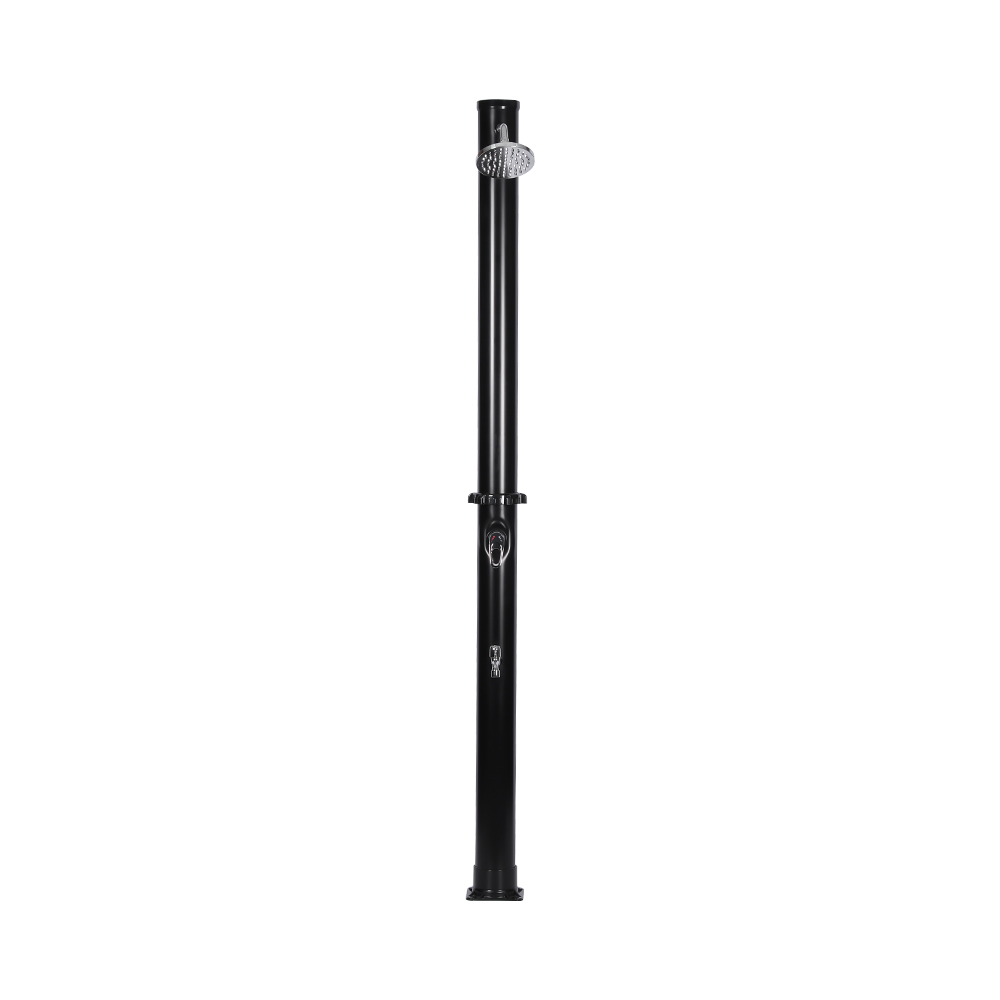 All-Round 18L Column Solar Shower with Stable BaseThis 18L model provides about four minutes of flow per shower, doubling with wet-soap-rinse, and its stable base works well on uneven ground without requiring a tree.View Product →
Once you move to 30L and above, the weight makes the unit a car-camping or base-camp product rather than a hiking product. The advantage is that you stop counting minutes. A 30L tank at a weekend site gives two people six to seven minutes of flow each, and a 35L tank can cover two proper showers in the evening while still leaving water for rinsing sandy feet or washing dishes.
For a detailed look at how larger tanks behave in the field, our solar shower product range is grouped by capacity with full specifications, and the factory can adjust valve height, base type, and colour finishes for custom orders. If you are comparing tanks from different sources, keep three numbers in mind: the flow rate from the showerhead, the maximum water temperature in summer sun, and how long the heat holds after sunset.
A common question is whether bigger is always better. It is not. A larger tank heats more slowly, weighs more, and is harder to hang. If the sun is strong but the evening is cool, an 8L or 18L tank reaches a comfortable temperature faster than a 60L tank, simply because there is less water to heat. Match the capacity to the number of people and to how many hours of sun you actually have, not to the biggest number on the catalogue.
How Much Water Does a Camping Shower Really Use?
Most people overestimate how much water a camp shower needs. A domestic shower uses 8 to 12 litres per minute. A solar gravity shower, by contrast, delivers 3 to 5 litres per minute, and that slower flow is an advantage at camp because it forces you to use less water. The shower is still completely usable; it simply rewards a more deliberate routine.
Here is the realistic arithmetic for a solo camper using the wet, soap, rinse method with a 4 L/min flow rate:
- Initial wet-down: 30 seconds at 4 L/min = 2 litres
- Soap-up and scrub: valve closed, 0 litres, using a soapy cloth
- Rinse: 60 seconds at 4 L/min = 4 litres
- Foot rinse and clean-up: 30 seconds = 2 litres
Add the numbers together and a complete shower is about 8 litres. That means an 18L tank covers two full showers, and a 30L tank covers three. If you only want to rinse off after a swim, an 8L tank is enough for two people, which is why small units remain popular for beach camping and paddle trips.
| Routine | Average water use | Minimum tank size |
|---|---|---|
| Rinse after a swim | 4–5 L per person | 8L |
| Full shower with soap | 8–10 L per person | 18L |
| Shower plus hair wash | 12–15 L per person | 30L |
| Two showers plus dish washing | 20–25 L total | 35L |
These numbers assume you close the valve while you soap. If you leave a gravity shower running continuously, the water disappears fast, and the last person in the group gets a cold partial shower. Teach the whole group the wet-soap-rinse rhythm and a 35L tank stops being a luxury and becomes a normal family daily allowance.
Soap, Hygiene, and Leave No Trace Rules for the Campsite
A camping shower only counts as a good experience if it does not damage the site. Two rules matter more than anything else: distance and soap.
Keep at least 200 feet, about 60 metres, away from any water source. That includes lakes, rivers, streams, and hand pumps. Wash water carries soap, sunscreen, and body oils, even when the soap is biodegradable. The soil acts as a natural filter, which is why the distance rule matters more than the label on the bottle. The same rule applies to your cooking wash water and dish rinse water.
Use biodegradable soap in small amounts. Biodegradable means the product breaks down in the environment, not that it is harmless in large doses. Two or three drops is enough for a full wash. Avoid synthetic fragrances and heavy creams, which persist longer in soil and water and can attract animals to your camp.
Control your grey water. The cleanest method is to shower over a shallow basin or a small dry-dug sump, then pour the used water over a wide area of soil at least 60 metres from camp and water sources. Do not pour it onto plants, and do not leave a puddle that attracts insects and animals. If the site has a designated wash station or grey water pit, use that instead.
The fastest way to feel clean with one litre of water
Wipe your face and neck, wash your underarms and torso with a soapy cloth, rinse the cloth, then move to the groin area and feet. Finish by drying the skin before you dress. This sequence removes more odour-causing residue than a quick full-body wet-down, and it uses about one litre of water from your solar tank.
For privacy, a pop-up tent or purpose-made shower screen makes the whole process practical at most campgrounds. Without one, shower early in the morning or late in the evening when the site is quiet, and wear a swimming costume if you want extra security. Finally, check the regulations of the area you are camping in. Some parks restrict washing entirely outside designated facilities, while private grounds often have specific wash areas. Following those rules keeps the site open for everyone.
Backup Methods When the Sun Does Not Cooperate
Solar showers depend on sunlight, so you need a fallback for dark, wet, or heavily shaded sites. None of these options fully replaces a real shower, but each one keeps you clean enough to sleep comfortably and reduces skin irritation and odour.
Body wipes
Body wipes are the fastest backup. Use one wipe for the face and neck, a second for the torso and underarms, and a third for the groin and feet. Let the skin dry for a few minutes before dressing, because moisture trapped against the skin keeps bacteria active and causes odour.
Sponge bath with warm water
If your solar tank did not heat or you have a kettle, a sponge bath works with half a basin of warm water, one cloth, and a few drops of biodegradable soap. Wash one section at a time, keep the rest of your body covered, and finish by drying with a separate towel. Sponge baths use about two litres of water, less than a third of what a solar shower uses.
Natural water rinse
In warm weather, a lake or river rinse works when the local rules allow it. Keep the 200-foot separation in mind, wear old shoes to protect your feet, and never use soap directly in the water. A swimming costume makes this practical in shoulder season, and a quick-dry towel makes the walk back to camp comfortable.
Carry at least one backup even when the forecast looks perfect. A folded pack of wipes weighs less than 200 grams and saves you from a cold, soapy, miserable evening if the clouds roll in at four in the afternoon.
Common Mistakes Campers Make With Their Shower Setup
- Setting up too late. If heating starts at 5 p.m., the water barely reaches lukewarm before dusk. Fill and position the unit by late morning.
- Overfilling the tank. A completely full tank has no room for thermal expansion and is dangerously heavy to lift. Use the 70–80% rule.
- Hanging in partial shade. Dappled shade cuts effective solar input by 40 to 60%. Find the most open spot, even if it is less private.
- Not testing water temperature. Solar tanks heat unevenly, so the water near the valve can be cooler than the rest. Tip the tank gently to mix, then test on your wrist.
- Skipping the final rinse. Soap left on dry skin causes itching. Use a small amount of water for the final rinse and dry yourself before dressing.
- Leaving water inside after the trip. Stagnant water grows algae and bacteria and damages valve seals. Drain, rinse with fresh water, and dry the tank before storage.
- Expecting domestic water pressure. Gravity flow is gentle by design. A wide showerhead at low pressure feels better than a narrow jet at high pressure.
Most of these mistakes are timing problems, not equipment problems. A little planning fixes all of them.
What to Inspect Before Buying a Camping Solar Shower
Because we manufacture these units, we know exactly where the weak points appear after a season of use. Use this checklist when comparing products, whether they come from our factory or any other source.
- Seam construction. High-frequency welded seams are far stronger than stitched or glued seams. Run your hand along every sealed edge; a rough or uneven weld is a future leak.
- UV stabilisation. The material should be labelled UV-resistant. Non-stabilised PVC turns brittle after one summer and cracks at the folds or hang points.
- Valve quality and serviceability. A metal or reinforced plastic valve with a replaceable seal outperforms a cheap one-piece valve. Open and close it before buying; it should move smoothly and stop drips when closed.
- Hang points. Reinforced hanging loops or a metal frame are worth the extra weight. A thin fabric loop will tear on the first trip.
- Showerhead design. A wide head with multiple small holes gives a soft rain-like flow; a single-hole head produces an aggressive jet that bounces off your skin. The difference matters at gravity pressure.
- Capacity markings. Clear volume marks on the tank help you fill correctly without weighing the unit.
If you are selecting units in volume for a retail or rental programme, also ask about spare parts, replacement valves, and test data for the specific capacity. A unit from a dedicated production line has consistent quality; a unit from a mixed-goods factory is a gamble. In our line, every capacity is built on the same fixtures and tested with the same water quality and pressure procedures.
Caring for Your Solar Shower So It Lasts for Seasons
A solar shower gets rough treatment: strong sun, cold nights, and the occasional drop. In our factory data, most failures come from three causes: UV damage to the tank, valve failure from mineral deposits, and mould from stored water. All three are preventable.
- Rinse the tank after every trip. Fill it halfway, shake it, and drain it twice. This removes soap film and mineral deposits before they harden.
- Dry the tank before storage. Hang it open for a few hours after rinsing. A dry tank will not grow mould or algae.
- Store it out of direct sun. UV degrades PVC and ABS over time. A garage or cupboard is much better than a balcony or shed roof.
- Lubricate the valve. A silicone-based lubricant twice a year keeps the valve moving smoothly. Do not use oil-based products, which attack rubber seals.
- Check the seams. Look for fine cracks at the welded joints before each trip. If the tank shows stress marks near the hang point, replace it before it fails on site.
- Clean the showerhead. Clear the nozzle holes with a pin if the flow turns uneven, or soak the head in a vinegar-water solution overnight to dissolve limescale.
With this routine, a quality solar shower lasts five or more seasons. The units we build are tested under continuous UV exposure and repeated valve cycling before they leave the factory, which is why we can tell you exactly what to inspect and what fails first in real use.
Frequently Asked Questions About Showers While Camping
How long does a solar camping shower take to heat up?
In direct sun at 25°C, an 8L tank takes 2 to 2.5 hours, an 18L tank takes 2.5 to 3 hours, and a 30L to 35L tank takes 3.5 to 4 hours. Cooler air, wind, or weak sun adds time; a hot summer day shortens it.
Can you get a hot shower from a solar shower in cold weather?
Below roughly 15°C ambient temperature, a standard solar shower struggles to reach a comfortable bath temperature. A large unit with generous surface area helps, but in winter we recommend a backup method or a heated source. The physics is simple: cold air pulls heat out of the tank faster than weak winter sun can replace it.
How many people can shower with one tank?
An 18L tank gives one full shower of about four minutes, or two quick two-minute rinses. A 30L tank gives six to seven minutes of flow, enough for two people using the wet, soap, rinse method. For a family, 35L or 60L is the realistic choice.
Is a solar shower better than a battery-powered pump shower for camping?
A solar shower has no battery to charge, no pump to rebuild, and very few parts that wear out. A pump shower works in shade and in the evening if the battery is charged, but it adds weight and another item to manage. For most fixed-site camping, solar is simpler and more reliable. For constantly shaded sites, a pump model may be the only way to get a shower at all.
How do you get privacy when showering at a campsite?
A pop-up privacy tent is the standard solution. Set it up on level ground, hang or place the shower inside, and keep the valve within reach. Without a tent, shower at dusk in a swimming costume and use a large towel as a screen. Many campers use a changing room shelter that doubles as a wash room.
Can you use normal shower gel and shampoo with a solar shower?
Yes, but use biodegradable products when showering outdoors, and keep 200 feet away from natural water sources. Regular shower gel produces foam that breaks down more slowly and is harder to rinse at gravity pressure. A dilute, eco-friendly formula rinses faster and leaves less residue in the soil.
The Bottom Line for Showering at Camp
If you want a real shower while camping, the most dependable route is a solar shower matched to your group size, placed in the sun early in the day, and used with the wet, soap, rinse method. It removes the need for electrical hookups, fuel, and shared facilities, and it leaves no trace when you respect the distance and soap rules.
As the manufacturer behind many of the solar showers sold in Europe and North America, we recommend choosing a unit with welded seams, UV-stabilised material, and a serviceable valve. These three details decide whether your shower is a five-season tool or a single-trip accessory. Whatever capacity you choose, test it at home before the first trip, measure the heating time in your climate, and adjust the setup until the routine feels automatic.
-
How Do You Maintain and Clean Your Solar Shower for Long-Term Use
Empty the Tank After Each Use Maintaining the cleanliness and functionality of your solar shower is ...
-
Comprehensive Guide to Solar Showers: From Portable Bags to Luxury Poolside Units
Introduction to Solar Showers What is a Solar Shower? A solar shower is an innovative and environmen...
-
How to Choose the Perfect 8L Solar Shower for Beach, Pool & Garden Use
Benefits of Using an 8L Solar Shower at the Beach 1. Convenience and Portability for Beachgoers An 8...
-
The Ultimate Guide to 18L Solar Showers: Reviews, Tips, and How-To
Introduction to 18L Solar Showers In recent years, 18L solar showers have become a must-have item fo...
No.27, Fengshan Road, Hangfu Town, Kecheng District, Quzhou City, Zhejiang Province, China
(+86)-17888203192
 Wholesale Outdoor Solar Shower Factory