
 English
 Deutsch
 Español
 Français
Here You Can Get Our Latest Information
Industry News
Comprehensive Guide to Solar Showers: From Portable Bags to Luxury Poolside Units
Introduction to Solar Showers
What is a Solar Shower?
A solar shower is an innovative and environmentally friendly outdoor cleaning solution that utilizes the natural energy of the sun to provide warm water for bathing. Unlike traditional water heaters that require electricity or gas, a solar shower consists of a specialized reservoir designed to absorb solar radiation and transfer that heat to the water stored inside. These devices are typically made from dark, heat-absorbent materials such as reinforced PVC or high-grade TPU to ensure maximum thermal efficiency. Whether it is a portable shower bag hung from a tree or a more permanent outdoor shower fixture installed by a swimming pool, the core principle remains the same: capturing renewable energy to enhance your outdoor lifestyle.
Benefits of Using a Solar Shower
The primary advantage of incorporating a camping shower into your gear list is the combination of comfort and sustainability. Using a solar shower allows adventurers to maintain personal hygiene in remote locations without relying on infrastructure, making it a staple for off-grid living. From an economic perspective, these units are cost-effective as they have zero operating costs after the initial purchase. Furthermore, the environmental impact is significantly lower than portable gas heaters, as they do not emit carbon or consume non-renewable fuels. For those who enjoy a hiking shower after a long day on the trail or a travel shower during a road trip, the ability to wash away salt, sweat, and dirt with warm water can dramatically improve the overall outdoor experience and physical recovery.
Different Sizes and Types Available
Solar showers come in a wide range of capacities to suit different user needs and group sizes. For solo travelers who prioritize a lightweight setup, the 8L solar shower is a popular choice due to its compact nature. Moving up, the 18L solar shower and 35L solar shower models offer a balance between volume and portability, making them ideal for couples or weekend trips. For larger groups or professional base camps, the 60L solar shower provides a substantial water supply that can last for multiple days. Beyond simple bags, there are also premium options like the 30L solar shower made of rigid aluminum, which is designed to stand upright as a more permanent outdoor shower solution for gardens or pool decks.
Factors to Consider When Buying a Solar Shower
Capacity and Intended Use
Choosing the right volume is the most critical decision when selecting a solar shower. The 8L solar shower is the quintessential choice for solo minimalist hikers who only need a quick rinse to remove dust or salt. If you are traveling as a couple or a small group, the 18L solar shower and 35L solar shower models are far more practical, as they provide enough water for multiple consecutive washes without needing a refill. For those established in a fixed location for several days, such as a family at a base camp, the 60L solar shower ensures that everyone has access to warm water throughout the evening. Selecting the wrong size can lead to either an insufficient water supply or a portable shower that is too heavy to hang safely.
Material and Durability
The longevity of your camping shower depends heavily on the materials used in its construction. Most budget-friendly models utilize PVC, which is excellent for heat absorption but can be prone to punctures if not handled carefully. On the other hand, premium outdoor shower units often use TPU, which offers superior resistance to wear and tear, remaining flexible even in colder temperatures. A high-quality 30L solar shower will typically feature reinforced seams and a leak-proof design to prevent water loss during transport. For permanent installations, aluminum or high-density polymers are preferred to withstand constant UV exposure and environmental stress.
Heating Performance and Efficiency
The efficiency of a solar shower is measured by how quickly it can raise the water temperature to a comfortable level. Optimal sunlight exposure is required, and the heating time can vary from two to five hours depending on the ambient temperature and the material of the reservoir. To help you understand the differences in performance across various models, the following table summarizes the typical heating expectations for common sizes.
|
Capacity |
Best Use Case |
Heating Time (Full Sun) |
Portability Level |
|---|---|---|---|
|
8L solar shower |
Solo hiking, quick face wash |
1.5 - 2 hours |
Ultra-Portable |
|
18L solar shower |
Short weekend camping trips |
2.5 - 3 hours |
High |
|
35L solar shower |
Family camping or multi-day road trips |
3 - 4.5 hours |
Moderate |
|
60L solar shower |
Fixed base camps or large groups |
5+ hours |
Low (Fixed focus) |
Portability and Weight
For a travel shower to be effective, it must be easy to carry and store when not in use. A compact 8L solar shower can fold down to the size of a small book, making it perfect for an internal backpack pocket. Conversely, a 30L solar shower made of rigid materials requires a vehicle for transport but offers much higher stability once set up. It is vital to consider the weight of the water itself; since water weighs approximately one kilogram per liter, a full 35L solar shower will weigh about 35 kilograms, requiring a very sturdy support structure or a heavy-duty branch if it is a hanging model.
Essential Features to Look For
Modern solar shower designs include several features that enhance the user experience. A built-in temperature gauge is highly recommended to prevent accidental burns, especially after a long day of intense summer sun. An easy-to-use on/off valve at the showerhead allows for water conservation, which is essential when using a smaller hiking shower. High-end models like the 30L solar shower often include a reinforced handle for easier hanging, a wide filling port for quick refills, and even a water level window so you can monitor your remaining supply at a glance.
Key Features of the Premium 30L Aluminum Standing Solar Shower
The Superiority of Aluminum Construction
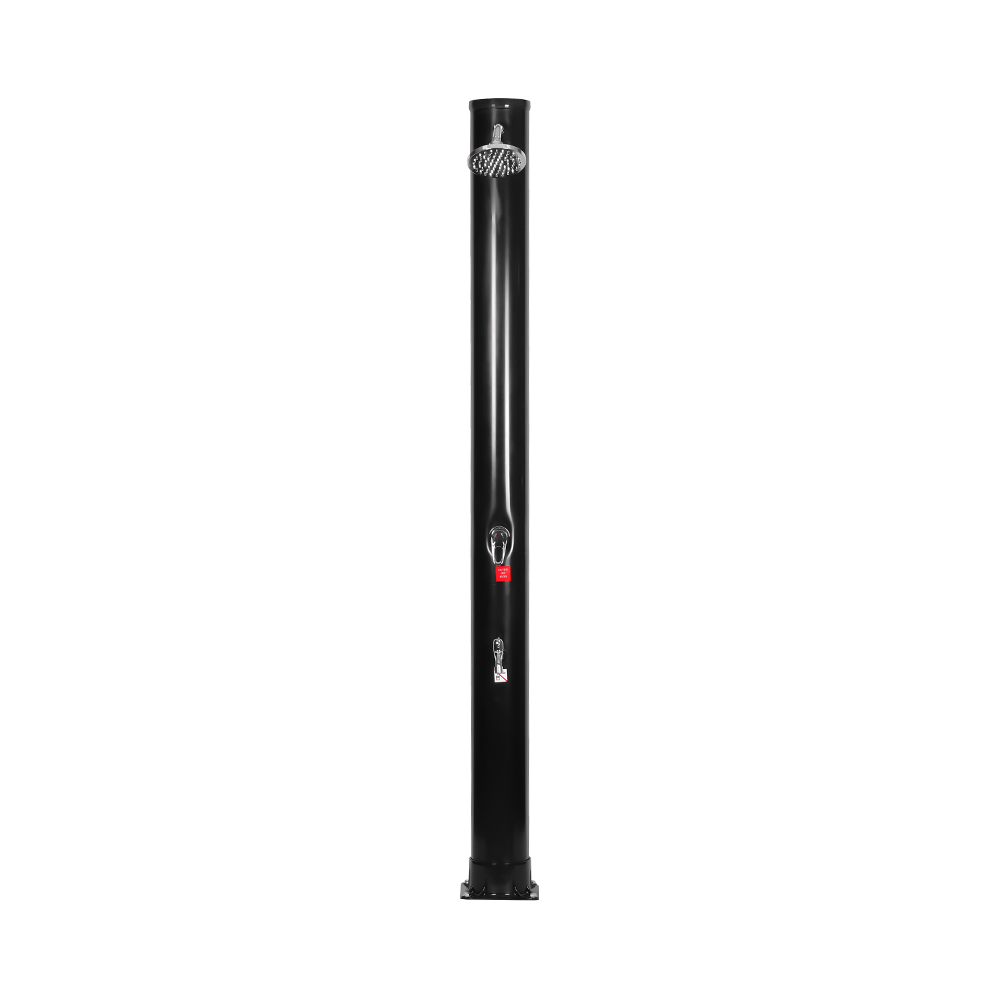
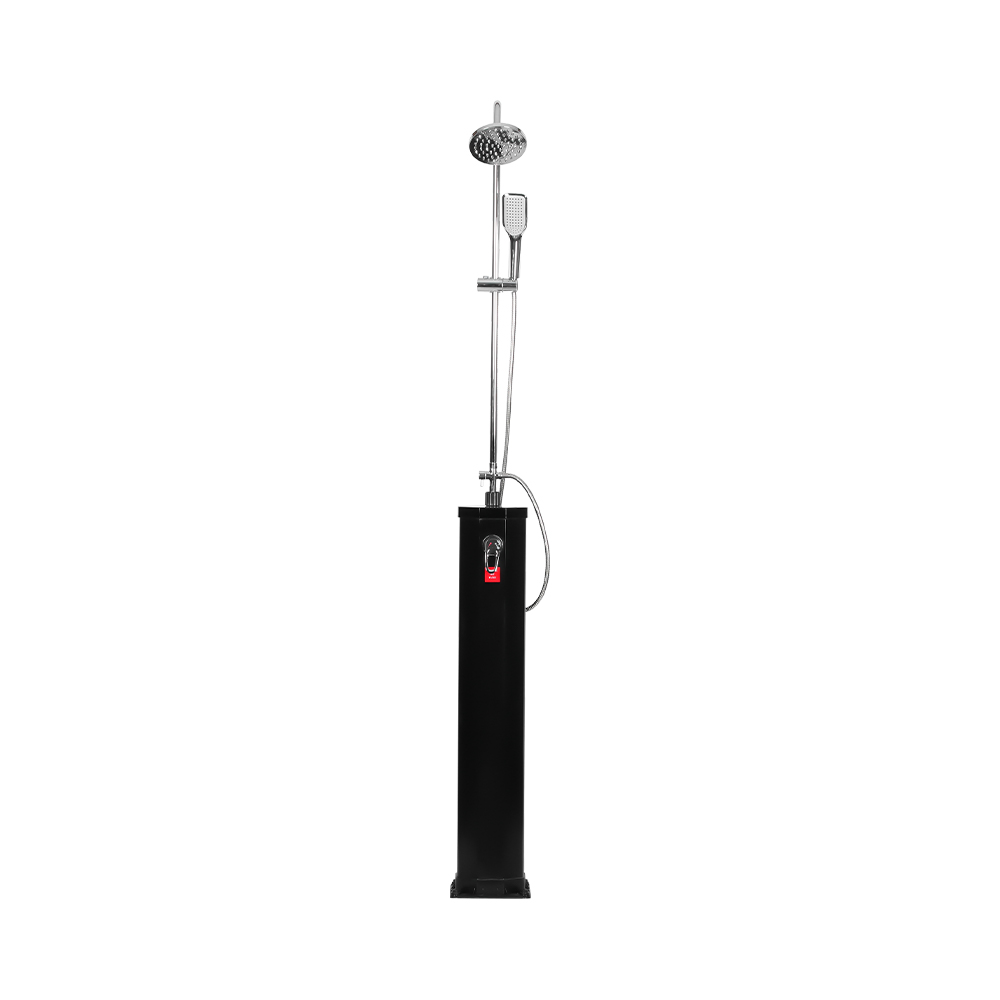
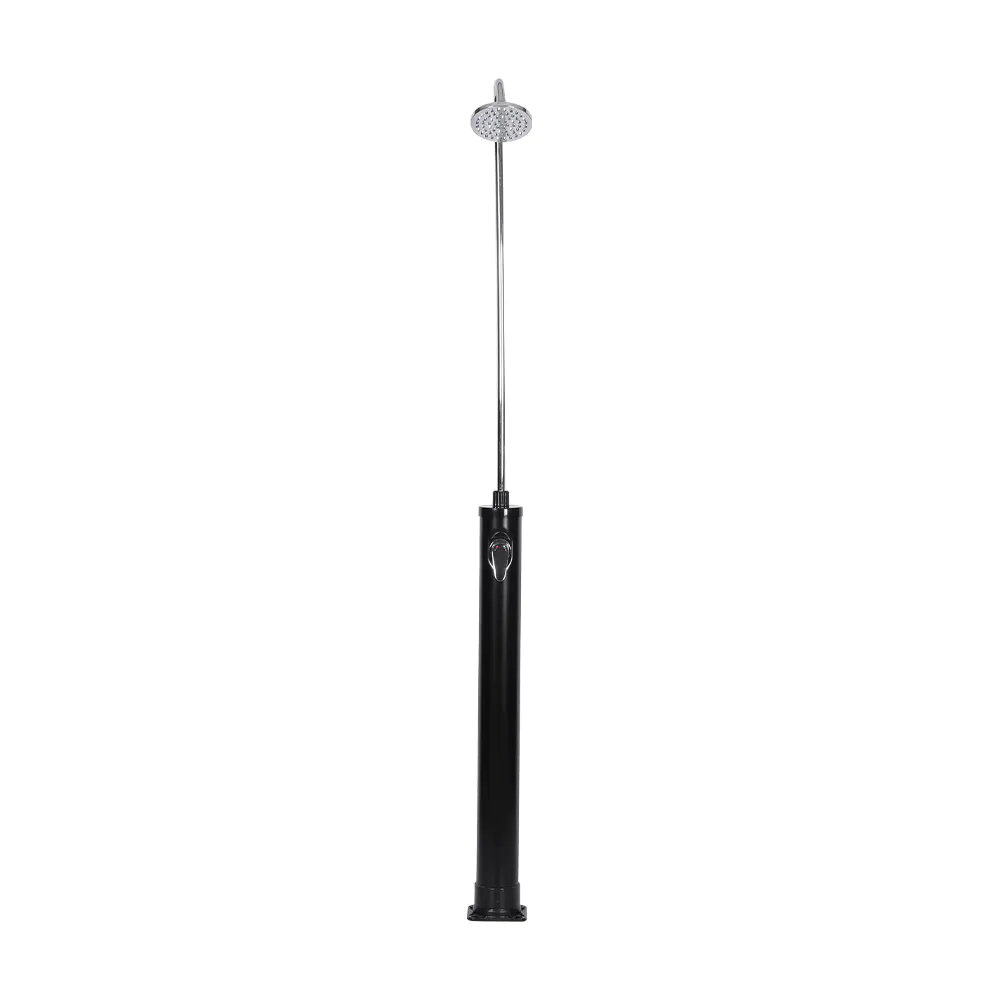
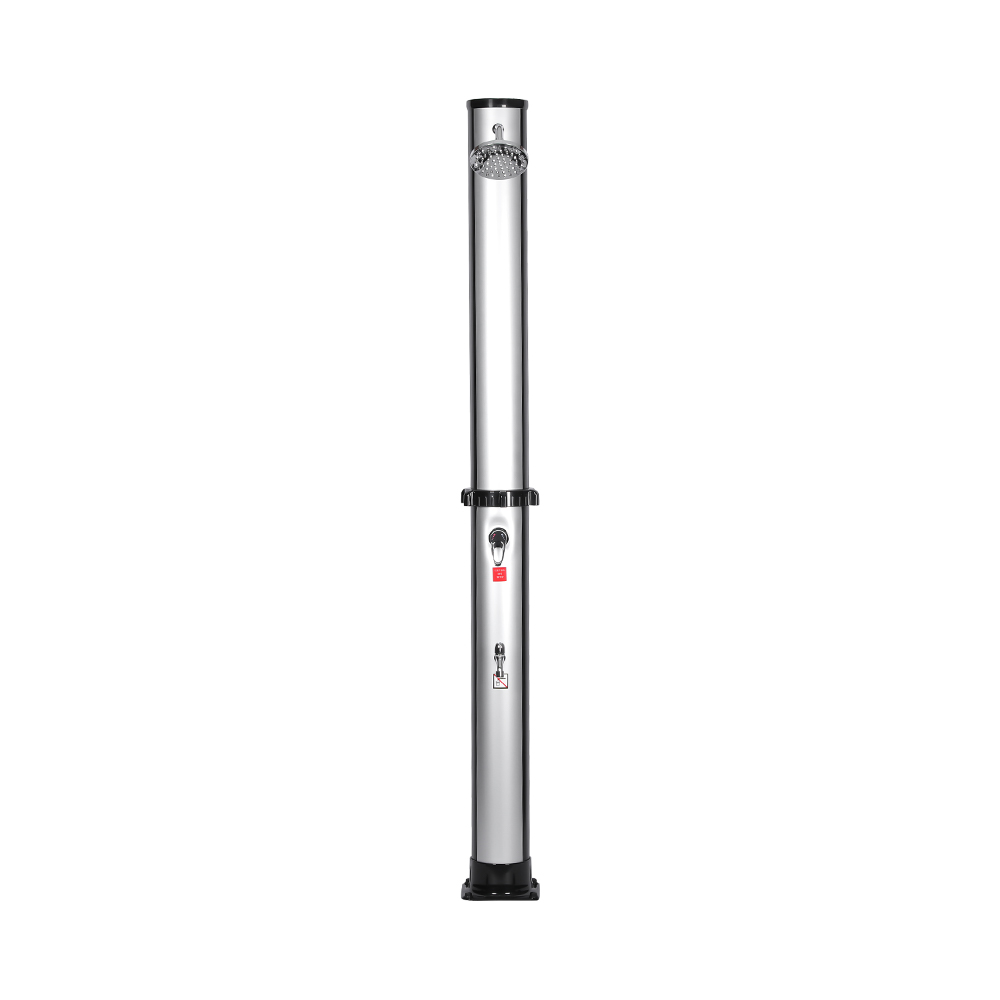
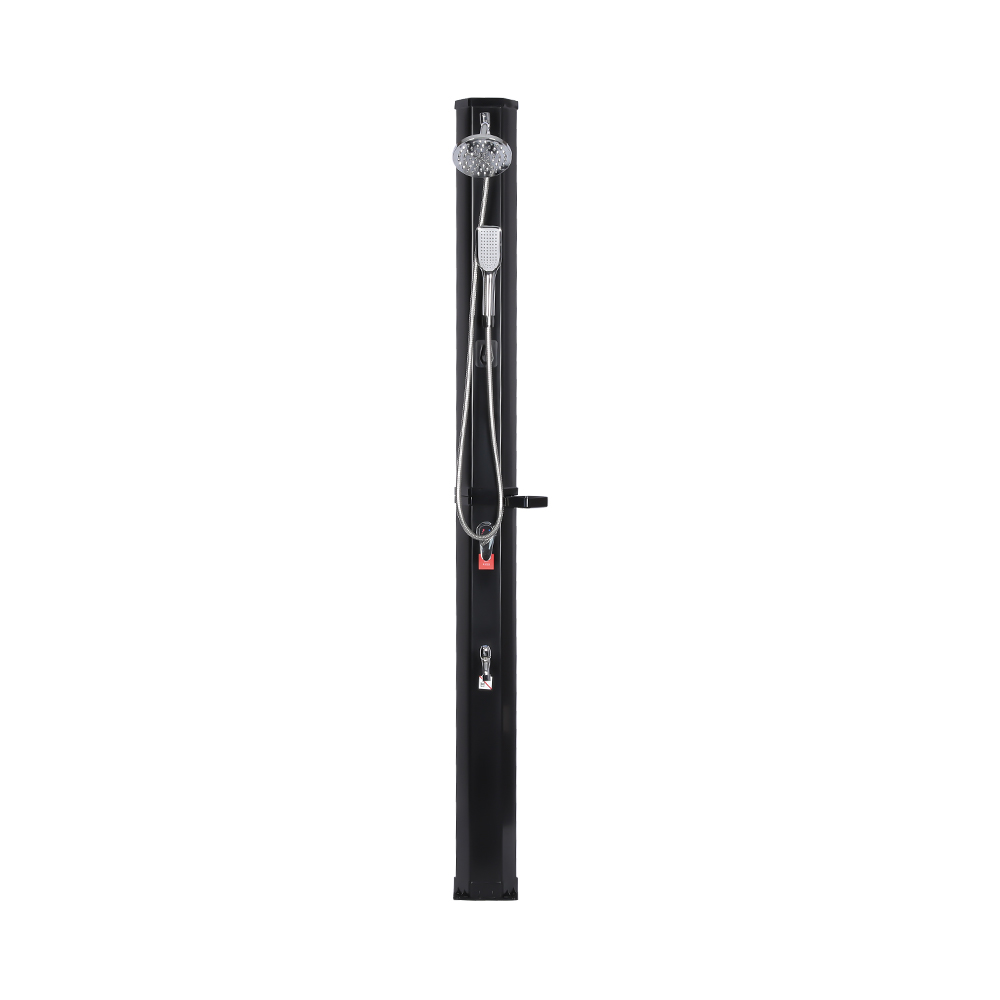
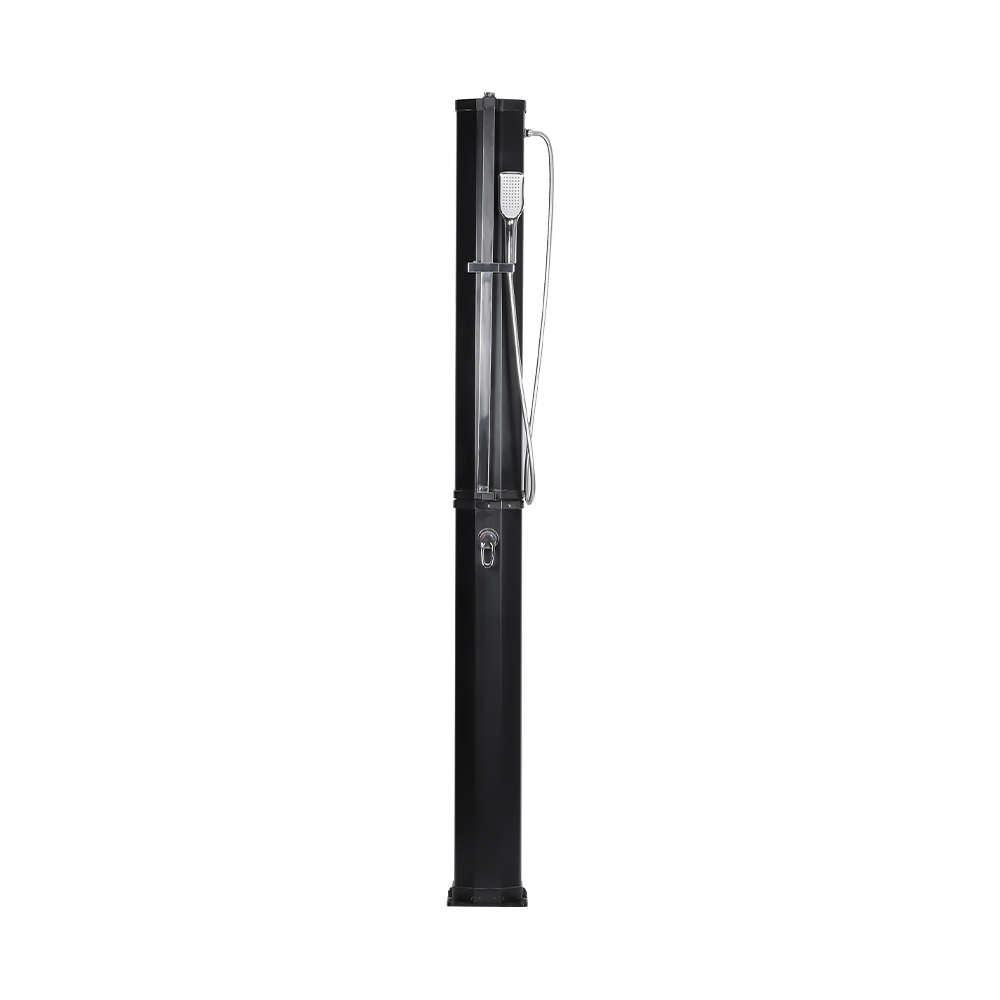
When looking at the high end of the market, the Aluminum Bent Outdoor Swimming Pool Solar Shower stands out as a premier choice for both durability and performance. Unlike a standard portable shower bag, this model uses high-grade metallic materials that offer exceptional heat conduction. This allows the water inside to heat up more rapidly and maintain that temperature for longer periods, even when the ambient air temperature begins to drop. The rigid structure ensures it remains upright and stable, making it a perfect permanent or semi-permanent outdoor shower for a garden or backyard patio.
Design Innovation: The Bent Tube and Aesthetics
The unique "Bent" design of the Aluminum Bent Outdoor Swimming Pool Solar Shower is not just for visual appeal; it is a functional choice. By curving the main pillar, the surface area exposed to the sun is maximized throughout the day, ensuring that regardless of the sun's position, the camping shower is actively absorbing thermal energy. This sleek, modern silhouette allows the unit to blend seamlessly into luxury outdoor settings, providing a sophisticated look that a traditional hiking shower simply cannot match. It transforms a basic utility into a stylish garden feature that enhances the value of your property.
Luxury Bathing with the Outdoor Rain Shower Head Single-Lever Shower Stand
One of the most praised features of this outdoor shower is the inclusion of the Outdoor Rain Shower Head Single-Lever Shower Stand. This component provides a gentle, wide-flow water distribution that mimics the experience of a high-end indoor bathroom. Controlled by a precision Single-Lever system, users can easily adjust the flow and mix hot water with cold water to achieve the perfect temperature. This level of control is rarely found in a basic travel shower, making it a top recommendation for those who refuse to compromise on comfort while enjoying the outdoors.
Integrated Foot Wash and Poolside Convenience
Beyond the main showerhead, these premium units often feature an integrated foot wash tap near the base. This is an essential feature for a swimming pool environment, allowing users to rinse off grass or sand before entering the water. Whether you are using it as a camping shower at a luxury glamping site or as a permanent fixture by your pool, the Outdoor Rain Shower Head Single-Lever Shower Stand provides a comprehensive cleaning station. Its ease of connection to a standard garden hose makes it a versatile solution for any outdoor space.
Scenario-Based Selection: Matching Capacity to Your Lifestyle
The Minimalist Hiker and the 8L Solar Shower: Efficiency in Motion
For those whose primary concern is weight and space, the 8L solar shower is the ultimate hiking shower. It is designed for the fast-and-light enthusiast, capable of being rolled up and tucked into the smallest corner of a multi-day backpack, weighing almost nothing when empty. While the capacity is limited, it is mathematically sufficient for a focused hygiene routine. By utilizing a "low-flow" technique, this volume provides enough water for a refreshing rinse after a strenuous day of trekking, effectively removing salt, sweat, and trail dust. For solo explorers who view a portable shower as a luxury tool for basic hygiene and thermal regulation in the backcountry, the 8L size offers the perfect balance of utility and weight management without encumbering the hiker.
The Road Tripper and the 18L to 35L Range: The Versatile Middle Ground
When your adventure involves a vehicle—be it a 4x4, a converted van, or a family SUV—you have more freedom to choose a larger travel shower. The 18L solar shower and 35L solar shower models are the most popular choices for overlanders and van-lifers who need a multi-purpose water source. These mid-sized units provide a generous amount of water, allowing for a full body wash and even a thorough hair washing session for two people. A 35L solar shower is particularly useful for families on a weekend trip; it ensures that children can be cleaned up after a day of playing in the dirt or swimming in the ocean without the anxiety of running out of hot water halfway through. Additionally, this volume is ideal for rinsing off gear, muddy boots, or even the paws of a four-legged travel companion, making it a staple for any vehicle-supported expedition.
Long-Term Camping and the 60L Solar Shower: The Base Camp Workhorse
For established base camps, seasonal hunting trips, or large family gatherings, the 60L solar shower is the heavy-duty workhorse of the outdoor world. This massive capacity allows for extended use over several days without the need for constant, labor-intensive refilling. Because of its significant weight when full (approx. 60kg), this outdoor shower is usually set up once at the start of the trip and left in its optimal sun-facing position. It serves as a central hygiene station for the entire group, providing enough warm water for dishwashing, morning handwashing, and multiple evening showers. It is the indispensable part of a high-capacity camping shower setup, offering a level of convenience that transforms a rugged campsite into a comfortable living space for a crowd.
The Coastal Enthusiast and Post-Surf Rinsing
For surfers, paddleboarders, and beach lovers, the 20L to 30L capacity range serves as a critical tool for saltwater management. A portable shower in this size category allows for a high-pressure rinse to remove corrosive salt and abrasive sand from expensive wetsuits, boards, and personal gear immediately after leaving the water. This proactive maintenance significantly extends the life of neoprene and technical fabrics while preventing the "salt-crust" discomfort during the drive home. It provides a luxurious transition from the ocean back to the vehicle, ensuring that the interior of your car stays sand-free and your skin remains hydrated and comfortable.
Fixed Poolside Utility and the 30L Standing Model
When the scenario shifts from nomadic travel to residential leisure, the Aluminum Bent Outdoor Swimming Pool Solar Shower becomes the centerpiece of poolside utility. With its 30L internal reservoir, it provides a consistent, high-volume flow that is perfect for pre-swim hygiene and post-swim chlorine removal. Unlike portable bags, this standing unit offers a permanent plumbed-in experience that caters to multiple guests throughout a summer afternoon. It acts as a primary defensive barrier for your pool's filtration system by encouraging users to rinse off body oils and sunscreens before entering the water, ultimately reducing chemical consumption and maintenance costs.
Advanced Tips and Eco-Friendly Practices
Advanced Usage Tips and Thermodynamic Hacks
Achieving a comfortable, warm shower experience in the wilderness requires more than just passive solar heating. A deeper understanding of the scientific principles behind solar showers allows you to significantly improve the device's heat conversion efficiency through clever physical interventions in varying environmental conditions. In changeable climates or when sunlight is less than ideal, applying the principles of conduction, convection, and thermal radiation can drastically reduce heating time and maintain water temperature for longer after sunset. This transition from basic use to advanced optimization requires not only a keen awareness of environmental variables but also the ability to utilize available tools to maximize the energy provided by nature.
Accelerating the Heating Process through Conduction and Convection
To maximize the efficiency of your camping shower, it is essential to understand the principles of heat transfer. Beyond simply placing your unit in direct sunlight, you can utilize thermodynamic hacks to significantly reduce heating time. For a portable shower bag, placing it on a dark, heat-absorbent surface facilitates heat transfer via conduction. These surfaces absorb solar energy and transfer it directly to the water reservoir. Furthermore, convective cooling can be a major hurdle; if you are in a windy area, setting up a simple windbreak around your 18L solar shower or 35L solar shower can prevent the ambient air from stripping away the warmth that the sun has worked so hard to provide.
Using Reflectors and Insulated Retention
Advanced outdoor enthusiasts often employ reflective surfaces to create a "solar oven" effect for their travel shower. By placing a high-visibility emergency space blanket or a foldable aluminum windshield sunshade behind the reservoir, you can bounce extra sunlight back onto the dark material, effectively doubling the solar exposure. This technique is particularly useful for larger units like the 60L solar shower, which naturally take longer to heat. Once the water has reached the desired temperature, if you do not plan to use it immediately, covering the reservoir with an insulated jacket or a dry towel can help retain that thermal energy until evening, allowing for a warm wash even long after the sun has set.
Eco-Friendly Practices and Sustainable Hygiene
While enjoying the pleasure of a warm shower in the wilderness, every outdoor enthusiast bears the inherent responsibility of protecting the fragile ecosystem. The core of modern camping etiquette lies in the practice of "Leave No Trace," meaning our cleaning practices should not cause any potential negative impact on local plants, water sources, or wildlife. By adopting more scientific bathing methods and rigorous water conservation strategies, we can meet our personal hygiene needs while ensuring the pristine beauty and ecological integrity of the natural landscape. This respect for the environment not only reflects the professionalism of outdoor adventurers but is also crucial in ensuring that these valuable natural resources can be enjoyed by future generations.
"Leave No Trace" Environmental Protocol
Maintaining personal hygiene in the wilderness comes with a profound responsibility to protect local ecosystems. When using a hiking shower or any camping shower, it is vital to follow strict environmental protocols to avoid contaminating natural habitats. It is a common misconception that "biodegradable" soaps are safe for immediate contact with water sources; in reality, these products require soil bacteria to break down properly and can be highly toxic to aquatic life. To practice responsible hygiene, always set up your wash station at least 60 meters away from lakes, streams, or rivers. This distance allows the ground to act as a natural filter, stripping away surfactants and contaminants before the greywater reaches the water table.
Water Conservation Techniques for Remote Areas
Water is a precious resource in the backcountry, and even with a large 60L solar shower, efficiency is key. To maximize your supply, we recommend the "military shower" method: wet your body quickly, turn off the showerhead to lather up, and then turn it back on for a final rinse. This technique can allow an 8L solar shower to provide two full rinses instead of just one. Utilizing the precision on/off valve found on high-quality portable shower models is essential for this process, ensuring that every drop of solar-heated water is used with purpose. By conserving water, you not only extend your stay in the wild but also reduce the physical labor of hauling water to your campsite.
Comprehensive Maintenance and Long-Term Care
To ensure your solar shower remains reliable for countless adventures to come, establishing a systematic maintenance and care plan is crucial. As equipment constantly exposed to extreme sunlight, moisture, and fluctuating temperatures, the shower is highly susceptible to environmental damage. Proper care extends beyond basic cleaning after use, encompassing everything from deep disinfection to seasonal frost protection. Through meticulous inspection and proper storage, you can effectively prevent premature material aging, internal mold growth, and catastrophic failures due to structural damage. This careful attention to your equipment not only protects your investment but also ensures that your shower is always in optimal condition when you need it most.
Winterizing the 30L Aluminum Solar Shower
For owners of the premium 30L solar shower made of aluminum, winterization is the single most critical maintenance task for ensuring the unit's longevity. Unlike flexible bags, rigid aluminum columns are susceptible to damage from freezing water. Before the first hard frost of the season, you must completely drain all water from the column, the internal piping, and the rain shower head. If water is left inside, it will expand as it freezes, potentially cracking the aluminum shell or shattering the internal Single-Lever valves. It is often recommended to disconnect the unit from the garden hose and store it in a garage or shed, or at the very least, leave the drainage valves open to allow for moisture evaporation.
Cleaning Techniques to Prevent Mold and Algae
Whether you use a heavy-duty 60L solar shower or a compact 8L solar shower, internal cleanliness is paramount. Over time, stagnant water can lead to the growth of mold, mildew, or algae inside the reservoir. After every trip, you should clean the interior with a mild solution of warm water mixed with a tablespoon of vinegar or a specialized camel-bag cleaning tablet. For flexible travel shower bags, ensure the unit is hung upside down with the cap open until it is bone-dry inside. Storing a damp portable shower can lead to material degradation and unpleasant odors, so never fold your gear for long-term storage until you are certain all moisture has been eliminated.
How to Use a Solar Shower?
Step-by-Step Setup Guide
Selecting the Optimal Location for Maximum Exposure
The success of your solar-heated bath begins with strategic placement. Begin by finding a level, unobstructed area with maximum southern exposure (in the Northern Hemisphere) to capture the strongest rays. For a standing model like the 30L solar shower, stability is paramount; ensure the base is securely bolted to a concrete pad or weighted down on a flat, solid surface to prevent tipping. If you are using a portable hiking shower, identify a live, load-bearing tree branch rather than a dead one. It is critical to remember that a full 35L solar shower weighs approximately 35kg (77 lbs); the structural integrity of your hanging point must be verified for safety before you even begin the heating cycle to avoid sudden collapse.
Filling, Sealing, and Priming the System
When filling your portable shower, use the cleanest water source available to avoid clogging the fine nozzles of the showerhead. Fill the reservoir to about 90% capacity to allow for thermal expansion, ensuring the cap is cross-threaded and tightly sealed to prevent slow leaks. For a standing outdoor shower, connect your high-pressure garden hose and activate the flow. You must "prime" the system by running the water until all "spitting" stops; this purges trapped air bubbles from the internal column. Trapped air acts as an insulator, creating "cold spots" that significantly reduce the overall efficiency of the solar heating process and result in an inconsistent water temperature.
Professional Tips for Maximizing Heating Efficiency
Strategic Timing and Sun Tracking Techniques
For the hottest possible water, timing is your most valuable tool. It is highly recommended to set up your camping shower in the early morning to catch the peak UV hours between 10 AM and 2 PM, when solar radiation is at its most intense. For high-capacity units like the 60L solar shower, you may need to rotate the unit slightly every hour to track the sun’s path, ensuring the internal water column is heated evenly from all sides. If you are using a travel shower in a fixed position, try to tilt the bag slightly so it sits perpendicular to the sun's rays, maximizing the energy density hitting the surface area of the bag.
Internal Temperature Management
In many portable shower designs, the water in the hose is the first to cool down because it is not surrounded by the bulk of the warm reservoir. To combat this, keep the showerhead and hose tucked close to the warm body of the reservoir or coiled on top of the dark bag during the heating phase. This prevents that initial "cold shock" when you first turn the valve on. For those using a 30L solar shower, allowing the unit to stand in full sun for at least 4 hours is the industry standard for achieving a comfortable 38°C to 42°C (100°F to 108°F) temperature range.
Essential Safety Precautions
Scald Prevention and Rigorous Temperature Testing
Solar radiation can be deceptively powerful. On a hot summer day, the stagnant water inside a 30L solar shower or a 35L solar shower can easily reach temperatures exceeding 50°C (122°F), which can cause severe scalds in seconds. Always perform a rigorous "touch test" by running a small stream of water over the sensitive skin of your inner wrist before stepping under the full flow. If the water is dangerously hot, you must temper it by adding cool water to the reservoir or, if using a premium standing outdoor shower, utilizing the single-lever mixer to blend in cold water from the hose until a safe temperature is reached.
Secure Mounting and Load Verification Standards
Ensuring secure mounting is a non-negotiable safety standard for any hanging camping shower. A mechanical failure in the hanging strap or hook of an 18L solar shower or larger can result in a heavy mass falling directly onto the user, causing serious injury. Always double-check the integrity of your nylon straps, metal hooks, and mounting brackets for signs of fraying or stress fractures. For permanent outdoor shower installations, conduct regular monthly checks of the base bolts and plumbing connections to ensure the unit remains stable and leak-free during periods of high winds or heavy seasonal use.
Maintenance and Care of Solar Shower
Cleaning and Disinfecting Your Shower
Routine Interior Sanitization and Biofilm Removal
To prevent the buildup of harmful bacteria, biofilm, and stubborn algae, your solar shower requires a comprehensive deep cleaning every 3 to 5 uses, or immediately before any period of long-term storage. For a portable shower, fill the bag with a mixture of lukewarm water and a few drops of mild, pH-neutral dish soap. Agitate the solution by shaking the bag vigorously for several minutes, then rinse repeatedly with fresh water until no soap residue remains. For deeper microbial disinfection, use a weak solution consisting of one part white vinegar to ten parts water. Allow this mixture to sit in the reservoir for at least 30 to 45 minutes to effectively neutralize lingering fungal spores or bacteria. For large standing models like the 30L solar shower, it is recommended to periodically flush the internal column with a chlorine-free descaling agent to maintain hygienic water flow.
Advanced Showerhead and Valve Precision Maintenance
The high-end rain shower head can easily become obstructed by calcium and mineral deposits, especially if you rely on hard water from municipal lines or wells. To maintain peak performance, unscrew the head monthly and submerge it in a concentrated vinegar bath for several hours to dissolve accumulated lime scale. Additionally, inspect the single-lever mixing valve to ensure it operates smoothly across its full range of motion. If the lever begins to feel gritty or stiff, apply a small amount of professional-grade, silicone-based, food-safe lubricant to the internal cartridge. This simple step prevents internal seal degradation and ensures that your 30L solar shower maintains consistent water pressure without developing frustrating drips or internal leaks.
Proper Storage Techniques to Avoid Material Degradation
The Golden Rule: Ensuring 100% Internal Dryness
The single most frequent cause of premature failure in a camping shower is the presence of residual moisture during storage. For flexible 18L solar shower or 35L solar shower bags, hang them upside down with the filler cap and showerhead valve fully removed in a well-ventilated, shaded area until the interior is completely "bone-dry" to the touch. A professional tip is to insert a clean, dry microfiber towel or a specialized plastic spacer into the bag to prevent the interior walls from touching. This facilitates continuous airflow and prevents the material from sticking together—a common issue known as "blocking," which can cause the fabric to tear or delaminate when the bag is unfolded for the next season.
Optimizing Environmentally Controlled Storage
Avoid the mistake of storing your travel shower in locations subject to extreme temperature fluctuations or intense direct sunlight, such as uninsulated attics, metal garden sheds, or car trunks. Extreme heat causes PVC materials to become brittle and TPU to lose its essential structural elasticity, leading to cracks at the fold lines. The ideal storage environment is a cool, dry, and dark closet. We recommend storing your hiking shower in a breathable mesh storage bag rather than a sealed airtight plastic bin. This allows any microscopic amounts of residual moisture to escape naturally, preventing the development of musty odors or material rot during the off-season.
Extending the Lifespan of Your Investment
UV Protection and Exterior Surface Integrity
Although solar showers are engineered to thrive in sunlight, prolonged, year-round exposure to harsh UV radiation will eventually degrade the polymer chains within the material, making it prone to leaking. To maximize the lifespan of your portable shower, always move it into the shade or stow it away once your bathing session is concluded. For premium aluminum models like the 30L solar shower, the exterior finish is also subject to environmental wear. Applying a coat of high-quality, UV-resistant automotive wax to the aluminum column once per year creates a sacrificial barrier against acid rain, bird droppings, and oxidation, ensuring the unit retains its premium aesthetic and structural integrity for a decade or more.
Systematic Hardware, Strap, and Seal Inspection
Perform a systematic "pre-flight" inspection of all load-bearing and sealing components of your hiking shower before every trip. Pay close attention to the reinforced stitching on the hanging handles and the physical integrity of the metal or plastic hooks. Look for "stress whitening"—a clear sign that the plastic is nearing its breaking point—or any fraying along the edges of the nylon webbing. If any defects are found, replace the straps or hooks immediately to avoid a catastrophic drop. For the 30L solar shower, examine the base plate for signs of corrosion and ensure all anchoring bolts are tightened to the manufacturer's torque specifications. Regular inspection of rubber O-rings and gaskets is also essential; replacing a 50-cent seal can prevent a major water leak that could ruin your camping shower experience.
References / Sources
-
Solar Shower Factory — “Comprehensive Guide to Solar Showers: From Portable Bags to Luxury Poolside Units”
-
Business Research Insights — “Solar Shower Market Size and Share”
-
Allied Market Research — “Solar Showers Market Size, Share, Trends Analysis and Forecast”
-
How Do You Maintain and Clean Your Solar Shower for Long-Term Use
Empty the Tank After Each Use Maintaining the cleanliness and functionality of your solar shower is ...
-
Comprehensive Guide to Solar Showers: From Portable Bags to Luxury Poolside Units
Introduction to Solar Showers What is a Solar Shower? A solar shower is an innovative and environmen...
-
How to Choose the Perfect 8L Solar Shower for Beach, Pool & Garden Use
Benefits of Using an 8L Solar Shower at the Beach 1. Convenience and Portability for Beachgoers An 8...
-
The Ultimate Guide to 18L Solar Showers: Reviews, Tips, and How-To
Introduction to 18L Solar Showers In recent years, 18L solar showers have become a must-have item fo...
No.27, Fengshan Road, Hangfu Town, Kecheng District, Quzhou City, Zhejiang Province, China
(+86)-17888203192
 Wholesale Outdoor Solar Shower Factory