
 English
 Deutsch
 Español
 Français
Do You Need a Drain for an Outdoor Shower? | Solar Shower Factory
After a swim, a long day of gardening, or a trip to the beach, you step into an outdoor shower and rinse off. The water that runs off your body has to go somewhere, and suddenly the question becomes practical rather than theoretical: do I need a drain for an outdoor shower?
Here is the direct answer: for most freestanding solar showers, you do not need a drain. If the unit stands on grass, gravel, or sand, at least a couple of metres from the house, the small volume of water it releases simply soaks into the ground. Whether you need a drain depends on four factors: how much water the shower uses, where you place it, what kind of ground sits underneath, and what your local rules allow.
The Short Answer: When Can You Skip a Drain?
A solar shower holds between 8 and 60 litres of water, and a typical rinse uses only part of that. By comparison, a standard indoor or plumbed outdoor shower uses roughly 50 to 100 litres per session. That difference in volume changes everything about drainage. Ten to twenty litres is a bucket and a half. Spread over a few minutes of showering, it is nothing more than a light watering of your lawn.
Run this quick self-test:
- Is the shower freestanding, with no connection to house plumbing?
- Is it installed on grass, gravel, sand, or another permeable surface?
- Is it at least 1 to 2 metres away from the house foundation?
- Does your local area allow small volumes of used shower water to soak into garden soil?
If you answered yes to all four, you almost certainly do not need a drain. If any answer is no, keep reading, because the solution is still usually simple.
Why Solar Showers Change the Drainage Question
The type of outdoor shower you choose determines how much drainage planning you actually need. A plumbed shower is a permanent fixture connected to your water supply. It delivers high volume on demand and needs a real drainage plan. A solar shower is a self-contained, freestanding unit that heats its own water and releases it only while you press the valve. This is not a cosmetic difference; it is a fundamentally different water system.
| Feature | Plumbed Outdoor Shower | Solar Shower |
|---|---|---|
| Water supply | Connected to house pipes | Built-in tank, no plumbing |
| Water per use | 50 to 100 litres or more | 8 to 60 litre tank capacity |
| Drainage need | Usually required | Optional on permeable ground |
| Installation work | Pipework, permits, sometimes excavation | Place, fill, and use |
| Placement | Fixed to a single spot | Can be moved anywhere |
Water Volume: Why 8L to 60L Matters
An 8-litre solar shower holds about the same volume as two or three standard watering cans. A 60-litre model approaches what you would use in one indoor shower, but you rarely empty it in a single rinse, and the water flows only while you operate the showerhead. Pour a bucket of water onto a healthy lawn and it disappears within minutes, which is exactly what a solar shower does on a small scale. This is why the solar shower product range spans from compact 8-litre units to 60-litre family models, and why even the largest capacity rarely leaves a puddling problem in an average garden.
Placement Flexibility: Freestanding Design Advantages
Because a freestanding unit does not need a wall mount or a pipe connection, you can install it in the single best spot on your property for water absorption. Grass beside a flower bed, a gravel strip, or a sandy patch all handle its output without engineered drainage. Some models add another layer of flexibility: a solar shower with a mobile stainless-steel base can be relocated whenever the ground underneath needs a rest, which stops any one patch of soil from becoming waterlogged.
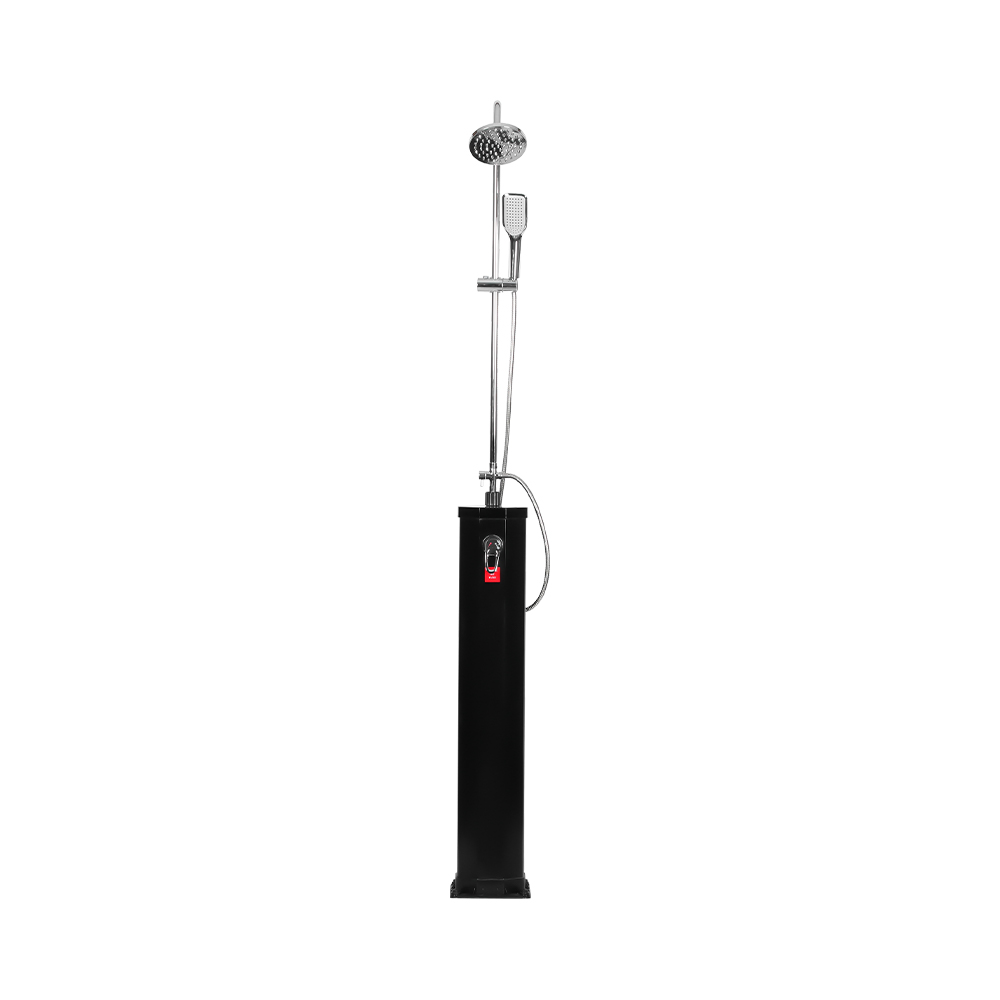 Custom LY18L09-B 18L Poolside PVC Solar Shower with Mobile Stainless Steel Head Quzhou Haihong Electrical Equipment Co.,Ltd. is China LY18L09-B 18L Poolside PVC Solar Shower with Mobile Stainless Steel Head Shower Sup...View Product →
4 Drainage Scenarios: Which One Is Yours?
Your installation site decides the answer more than any other factor. Find the scenario that matches your yard.
Scenario A: Garden or Lawn Centre
This is the classic solar shower setup. The unit stands on grass, a garden edge, or open lawn, well away from buildings. Water falls onto permeable soil and disappears. No drain is needed. The only requirement is that the ground is level enough to avoid pooling in a low spot.
Scenario B: Poolside Hardscape
Pool surrounds are usually concrete, stone, or tile, and none of those absorb water. Runoff sits on the surface and creates slippery patches, especially when mixed with sunscreen and pool chlorine. You have two practical options: place a gravel-filled tray or grate under the shower so water filters into a substrate below, or choose a compact unit. Small-capacity poolside solar shower options limit the volume that ever touches the hardscape, which keeps the area safer and reduces the need for a formal drain.
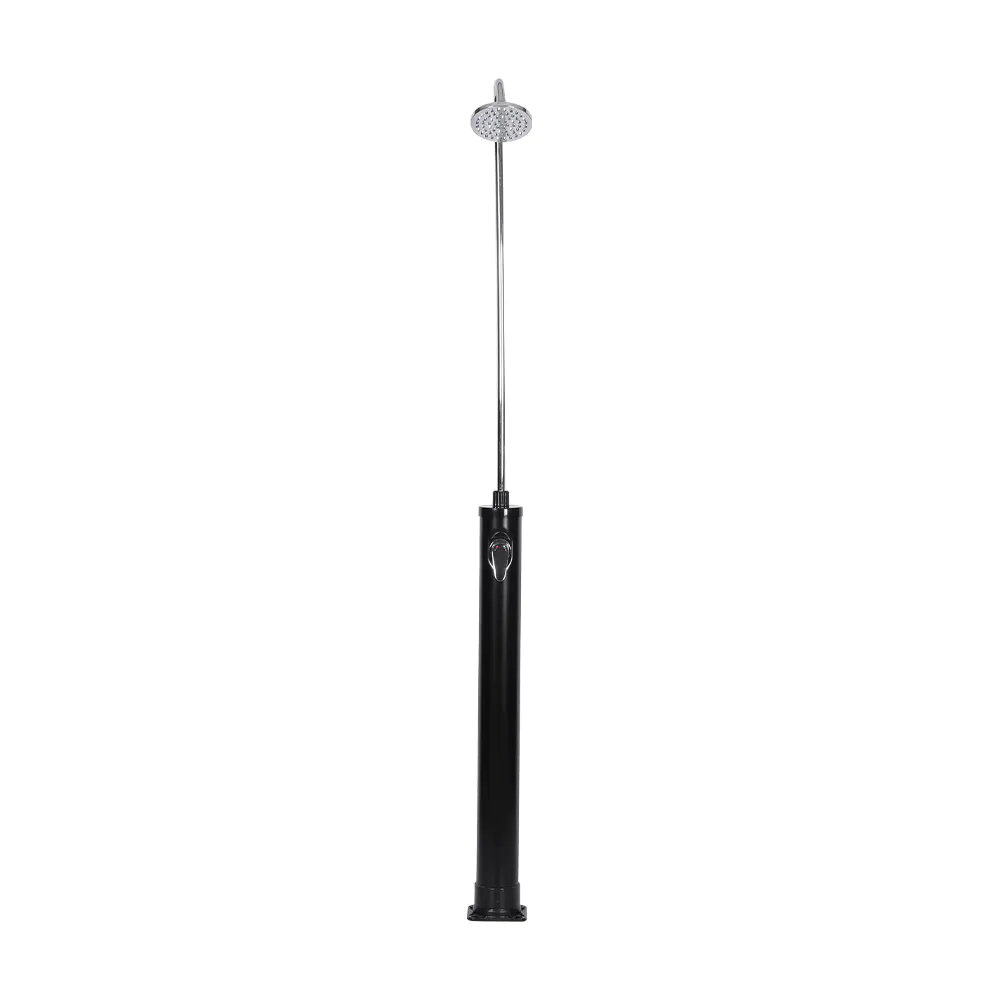 Custom LY08L02 8L Swimming Pools Outdoor Solar Garden Shower Suppliers, OEM/ODM Quzhou Haihong Electrical Equipment Co.,Ltd. is China LY08L02 8L Swimming Pools Outdoor Solar Garden Shower Suppliers and OEM Factory, de...View Product →
Scenario C: Close to the House Exterior Wall
Rinsing directly against the house is the situation to avoid. Water that repeatedly saturates the soil next to a foundation can seep into basements or crawl spaces and, over years, contribute to structural problems. If the wall is your only available spot, keep the shower at least 1 metre away and direct runoff away from the building with a shower pan or a flexible diverting hose that leads to a planted area.
Scenario D: Balcony, Deck, or Wooden Floor
Wood and raised surfaces have nowhere for water to go. Left unchecked, a shower on a deck will stain, warp, and eventually rot the boards, and on a balcony the runoff will bother the space below. This is the only scenario where drainage equipment is non-negotiable: use a waterproof shower tray that collects the water and routes it through a hose to a drain or garden bed, or choose a model with an integrated base tray.
Drainage Options From Simplest to Most Involved
If your scenario does call for drainage, the solutions range from nearly free to full landscaping projects. Here they are, ordered by effort.
- Natural percolation. The ground does the work. Zero cost, zero maintenance, and ideal for garden soil that absorbs water quickly. Test it first, using the method below.
- Gravel base. A 5 to 10 cm layer of gravel or crushed stone under the shower spreads the water and keeps mud away. Simple and affordable on both grass and hardscape. If you prefer a cleaner finish, solar shower base and floor accessories
 Custom Solar Shower Accessories Manufacturers, SuppliersHaihong Electrical Equipment Co.,Ltd. is China Solar Shower Accessories Manufacturers and Suppliers, Provides Custom Solar Shower Accesso...View Product → such as WPC boards keep the unit elevated and let air circulate underneath, so the area stays dry without any permanent drain. Difficulty: simple. Maintenance: rake the gravel occasionally to keep it open.
 - Shower pan. A shallow catch basin collects runoff, and a flexible hose moves it to a garden bed or a drain connection. Moderate cost and effort, and the right choice near the house or on a deck. Difficulty: moderate. Maintenance: rinse the pan occasionally to keep the hose clear.
- Dry well. A pit roughly a metre deep, filled with gravel and installed below the shower. Runoff drains into the pit and disperses slowly into the surrounding soil. This is the solution for heavy clay or chronically wet patches. Difficulty: complex, because it requires digging. Maintenance: low.
- French drain. A gravel trench with a perforated pipe that carries water several metres away from the shower. The most labour-intensive option, and the most reliable when water must travel a long distance or the soil absorbs almost nothing. Difficulty: complex. Maintenance: check the pipe outlet for blockages in spring.
How to Test Your Soil's Absorption
Before you invest in any drainage, run a ten-minute percolation test.
- Dig a hole about 30 cm deep where the shower will stand.
- Fill it with water and let it drain completely.
- Refill it and time how quickly the water level drops.
As a rough guideline, if the water level falls more than 2.5 cm in 30 minutes, your soil absorbs well enough for a solar shower. If water still sits in the hole after an hour, plan for a gravel base, a dry well, or a shower pan instead.
Avoiding Common Drainage Mistakes
Most outdoor shower drainage problems come down to four repeated errors.
- Ignoring the foundation. Water that collects against the house wall season after season can cause real damage. Always keep a clearance of at least 1 metre.
- Installing in a low spot. Any depression in the yard collects runoff, turns to mud, and attracts mosquitoes. Choose a raised, level, well-drained position.
- Forgetting winter. In cold climates, water left in a fixed pan or drain line can freeze, crack the pipe, and create expensive repairs. A freestanding solar shower can simply be drained and stored for the season.
- Assuming greywater rules do not apply. Some municipalities restrict where any outdoor shower water can go. A five-minute check with local authorities prevents a costly retrofit later.
Building Codes and Greywater Rules: What You Should Check
Regulations vary from city to city and country to country, so no single article can give you a universal legal answer. What is consistent is the pattern: the less water you produce and the simpler the installation, the fewer permit questions you face. A freestanding solar shower releasing a few litres of biodegradable soapy water onto grass is, in most areas, treated as garden-use greywater (the used water from your shower) rather than as a permanent plumbing fixture. A fixed shower pan, a dry well, or any connection to a sewer line, on the other hand, usually triggers permit requirements.
Two practical steps:
- Call your local building department and ask two questions: does this type of shower need a permit, and where is greywater legally allowed to drain?
- Choose biodegradable soap. Garden-safe products keep the runoff soil-friendly and keep you on the right side of most greywater rules.
As a manufacturer that exports solar showers to more than 30 countries, we see the same pattern everywhere: low water volume and no plumbing add up to minimal drainage obligations, regardless of the local rulebook.
Recommended Setup by Shower Type
Once you know your scenario, match it to the right shower type.
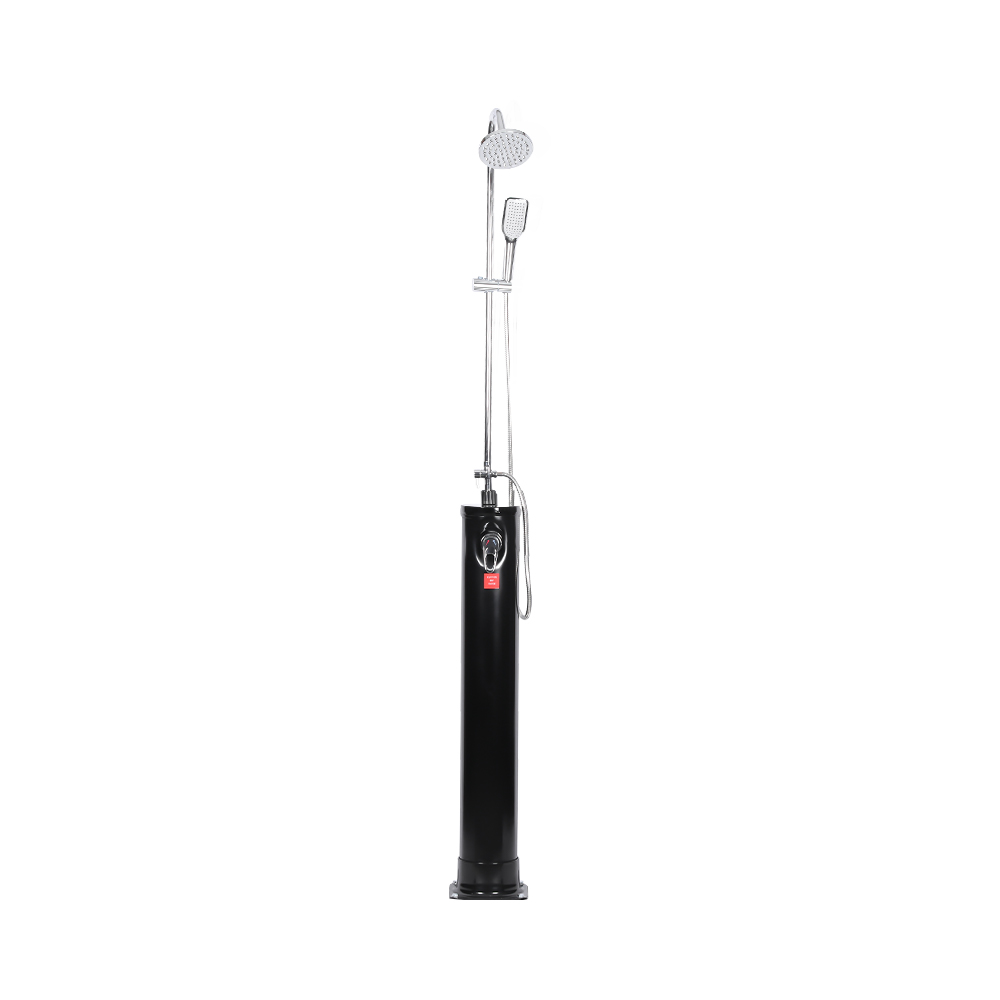
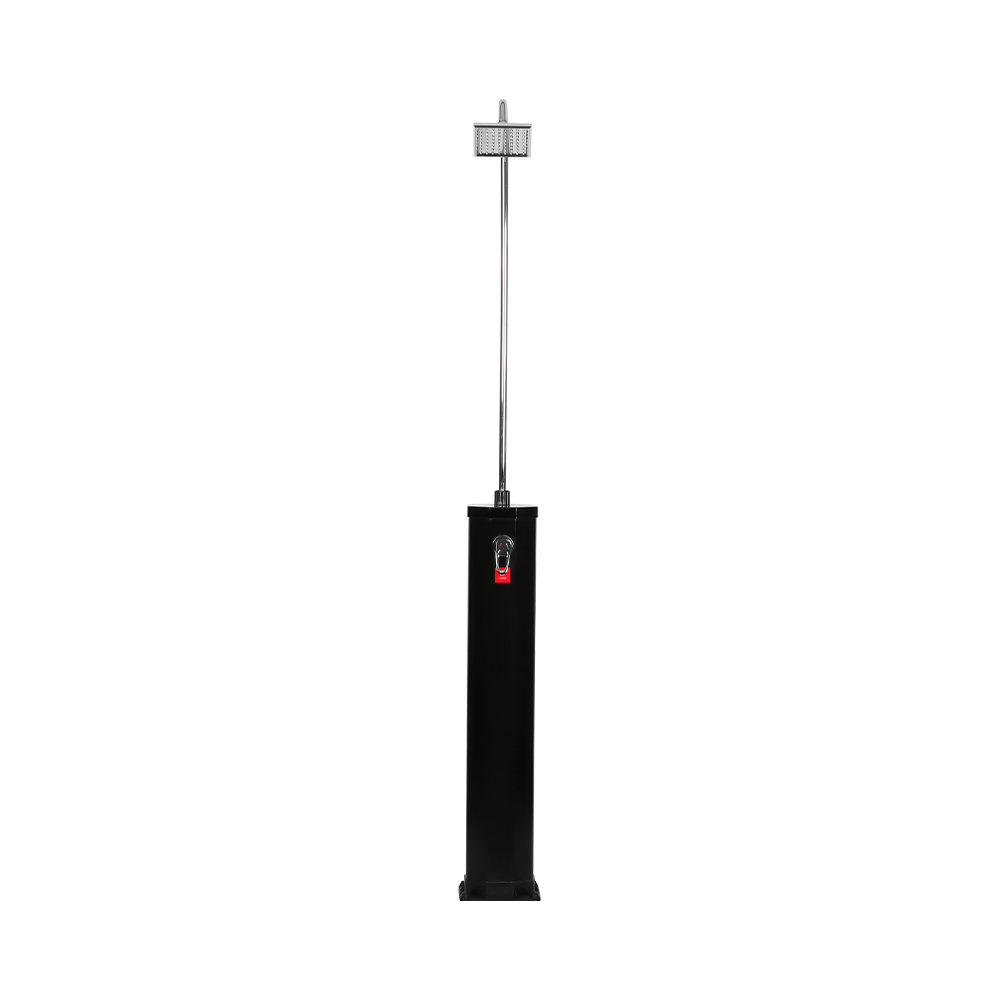
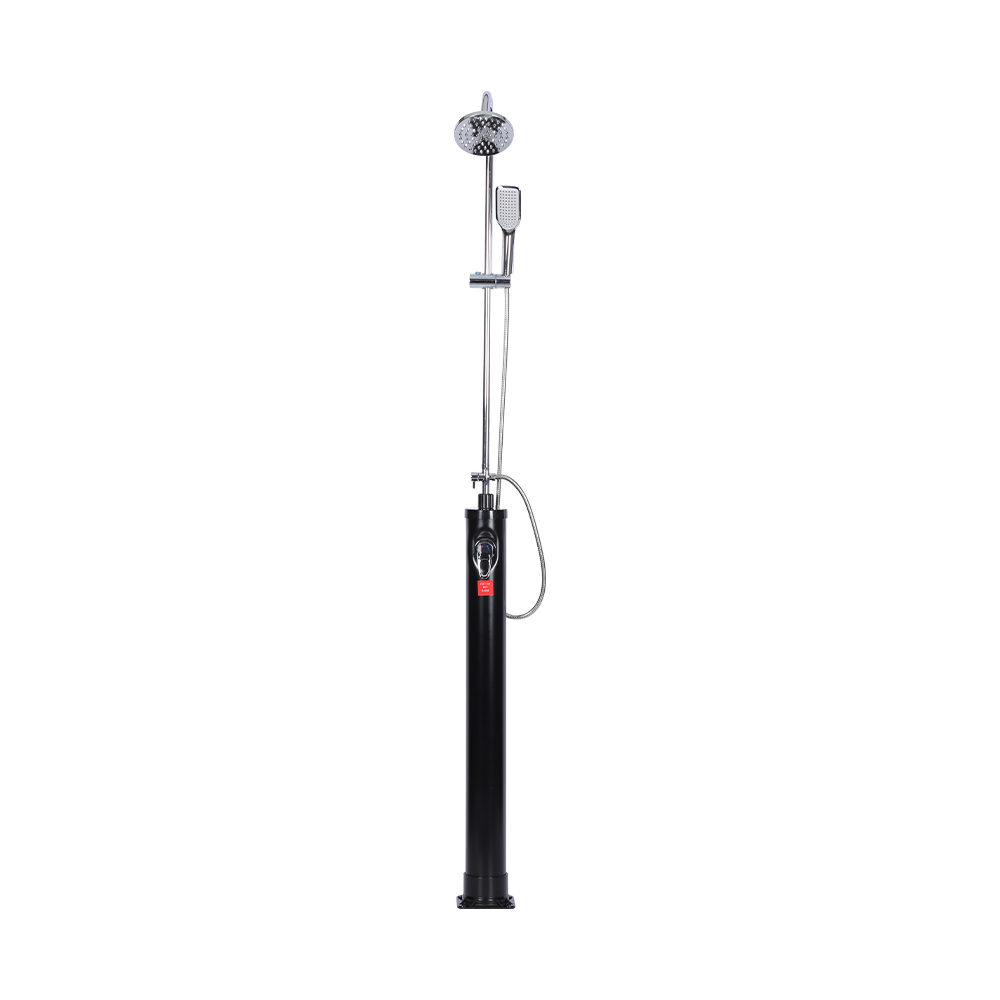
Fixed garden models. Larger units in the 30 to 60 litre range are built for a permanent spot in the yard. Place them on level grass or a garden edge, ideally over a gravel base or a WPC board. In most gardens they need no drain at all. Large-capacity garden solar shower models give you family-sized water volume while leaving the same minimal drainage footprint as smaller units.
Mobile models. Units on a detachable or wheeled base are the practical answer for mixed surfaces. Use them on grass when the ground is dry, then move them onto a gravel tray when you want them beside the pool. Rotating the position distributes the water and prevents any single area from becoming saturated.
Portable models. Small, carryable showers are the simplest case of all. You fill them by hand, use them, and empty any remaining water after the session. There is no drainage question to answer.
Final Verdict: What's Right for Your Backyard?
Work through this final decision flow and you will have your answer.
- What is the surface under the shower? Grass, gravel, or sand points to no drain. Concrete, wood, or compacted clay points to some form of drainage.
- How close is the house? More than 1 to 2 metres of clearance means the foundation is safe. Closer means use a pan or a diverting hose.
- What type of shower are you installing? A freestanding solar shower is low-volume and relocatable. A plumbed shower requires a full drainage plan.
- What does your local authority say? A five-minute phone call settles the legal question.
If you are installing a freestanding solar shower on grass or gravel, away from the house, you almost certainly do not need a drainage system. If you are building on a deck, a balcony, or beside a pool, a gravel base, a shower pan, or a mobile unit solves the problem without turning your yard into a construction site. Plan around water capacity and comfort, not excavation, and your outdoor shower installation will stay simple from start to finish.

-
How Do You Maintain and Clean Your Solar Shower for Long-Term Use
Empty the Tank After Each Use Maintaining the cleanliness and functionality of your solar shower is ...
-
Comprehensive Guide to Solar Showers: From Portable Bags to Luxury Poolside Units
Introduction to Solar Showers What is a Solar Shower? A solar shower is an innovative and environmen...
-
How to Choose the Perfect 8L Solar Shower for Beach, Pool & Garden Use
Benefits of Using an 8L Solar Shower at the Beach 1. Convenience and Portability for Beachgoers An 8...
-
The Ultimate Guide to 18L Solar Showers: Reviews, Tips, and How-To
Introduction to 18L Solar Showers In recent years, 18L solar showers have become a must-have item fo...
No.27, Fengshan Road, Hangfu Town, Kecheng District, Quzhou City, Zhejiang Province, China
(+86)-17888203192
 Wholesale Outdoor Solar Shower Factory