
 English
 Deutsch
 Español
 Français
Are Outdoor Showers Worth It? Pros, Cons & Smart Buying Tips
It is a hot summer afternoon. The kids have been in the pool for hours, and every trip back into the house trails wet footprints, chlorinated water, and sand across the kitchen floor. You mop twice a day and wonder whether an outdoor shower would finally fix it. It would. The real question is whether it is worth the money, the space, and the effort.
The honest answer is yes for many households, but it depends on three variables: how you plan to use it, which type you choose, and how much installation you can handle. This guide weighs the real pros and cons and explains why solar-powered outdoor showers change the value equation for most buyers.
What Exactly Counts as an Outdoor Shower?
The term covers three very different products, and that difference decides everything about cost, installation, and daily usefulness.
- Plumbed fixed shower: connected to the home water supply, with drainage and often an electric or gas heater. Installation usually needs a plumber, and upfront costs run into the thousands.
- Portable shower: a lightweight bag or freestanding unit you fill with water. Zero installation and full mobility, but limited capacity, and water temperature depends entirely on the sun.
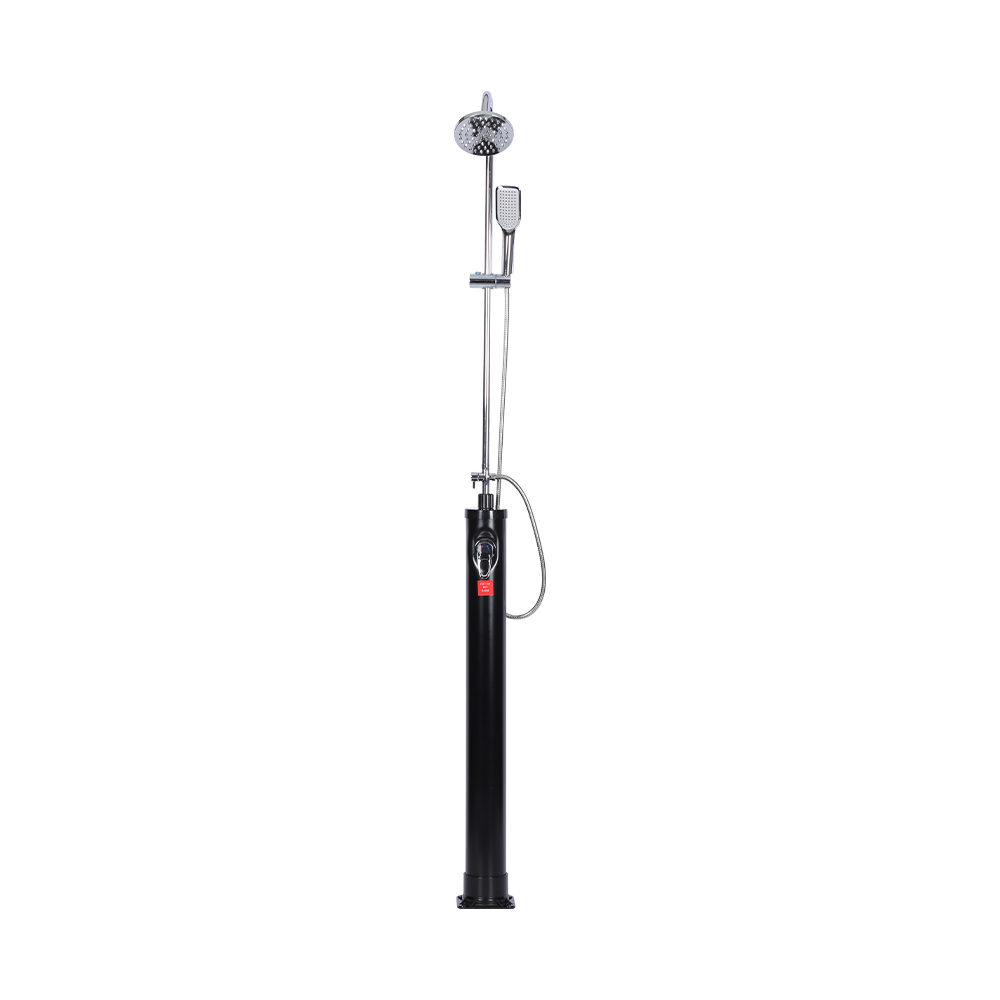
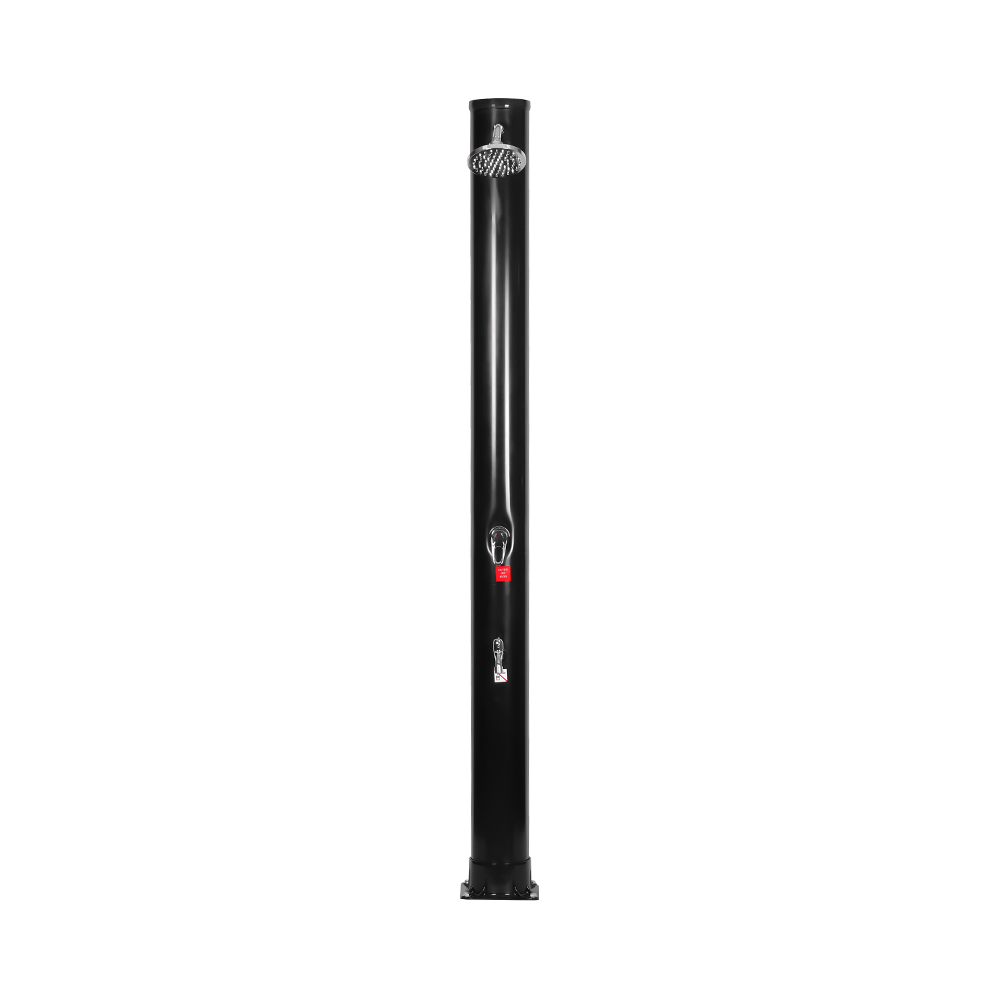
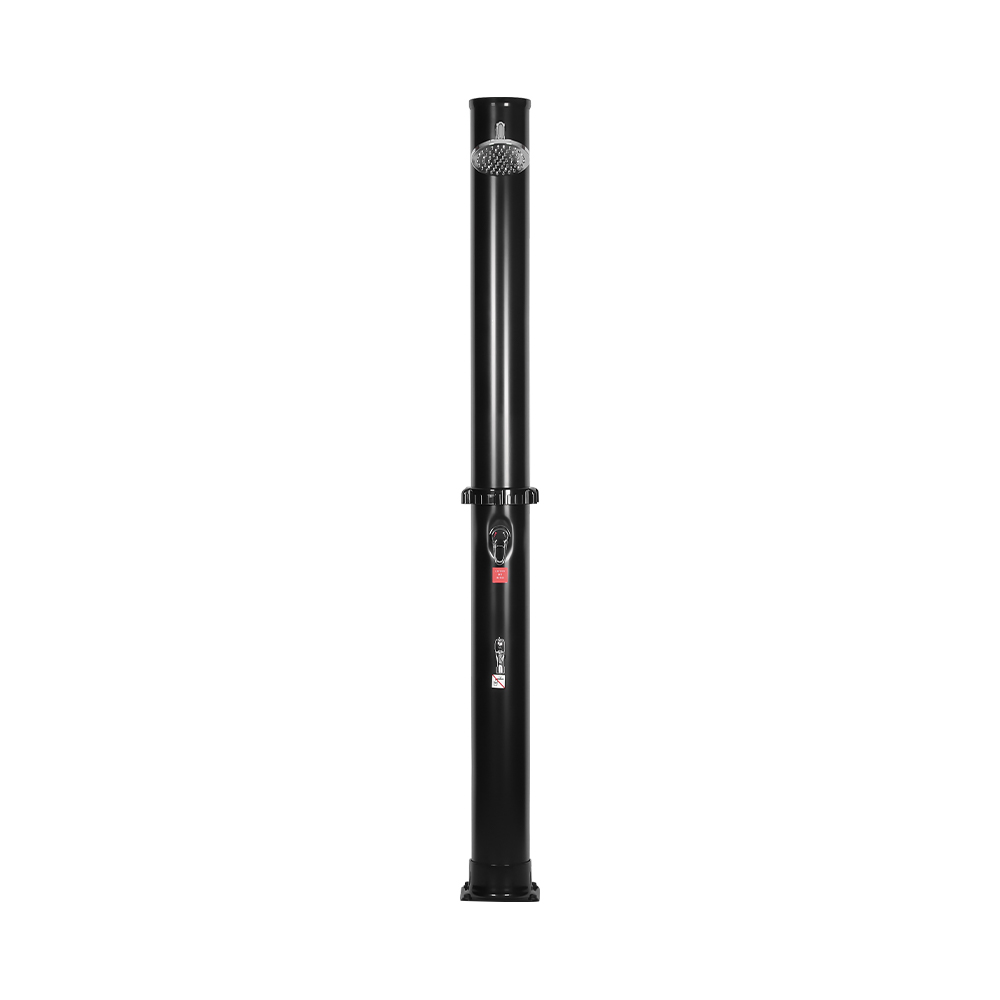
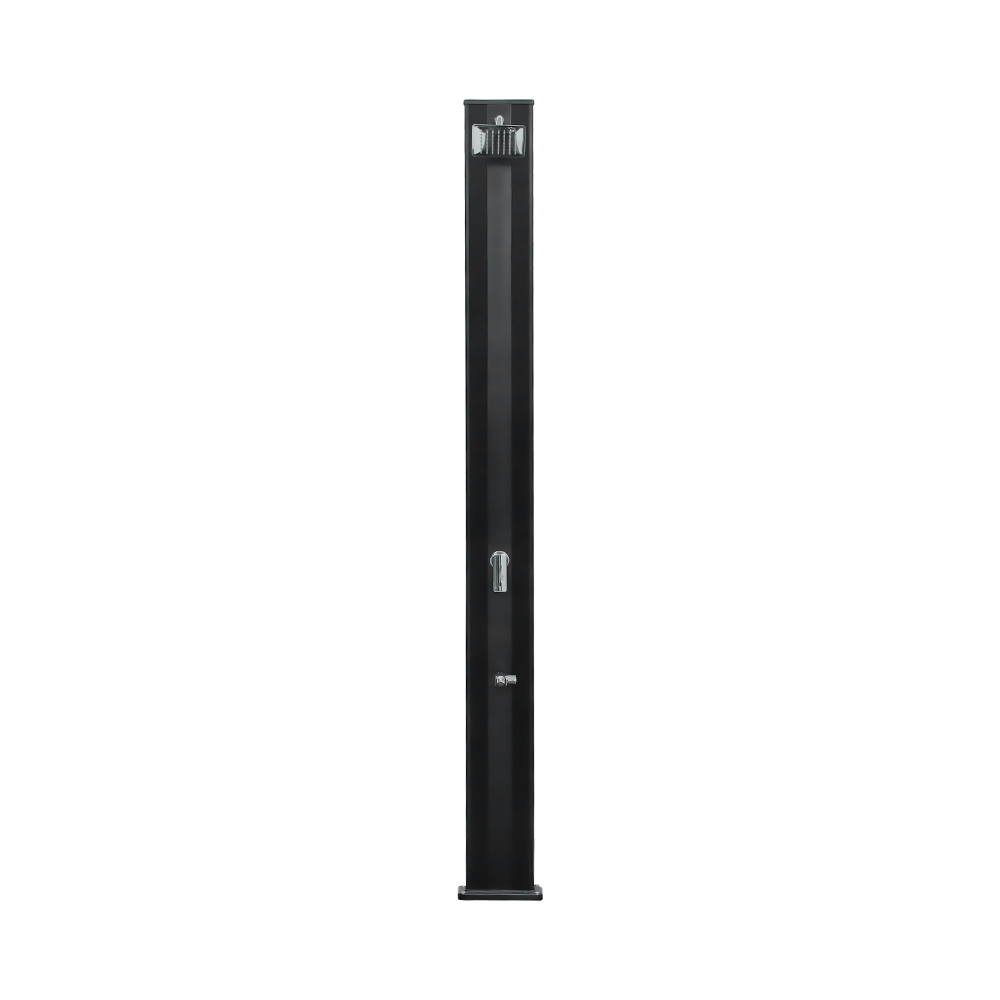
- Solar off-grid shower: a freestanding unit with an integrated tank that absorbs sunlight and warms water without electricity, gas, or plumbing. You connect a garden hose or fill the tank, and the sun does the work. Capacities range from 8 to 60 liters.
An 8-liter unit holds enough for a quick one- or two-person rinse. A 60-liter unit supplies a genuinely comfortable full shower, and an 18- to 35-liter unit covers most poolside needs. The type you pick determines whether this is a $100 weekend purchase or a $3,000 construction project.
The Undeniable Benefits: When an Outdoor Shower Feels Worth Every Cent
Keep Sand, Chlorine, and Mud Where They Belong
The strongest argument for an outdoor shower is the simplest: a 30-second rinse keeps the mess outside. Pool owners wash off chlorine, sunscreen, sand, and grass before anyone steps inside. Beachgoers strip off salt and sand, pet owners hose down muddy paws, and parents clean sandy feet before a snack break. Each rinse saves a trip through the house and reduces the mopping and vacuuming that would otherwise follow.
Zero Operating Cost with Solar Power
Here is where solar changes the financial math. A plumbed outdoor shower draws from your water supply and, if you want warm water, uses gas or electricity to heat it, and every use adds to your utility bill. A solar outdoor shower uses heat that is already hitting your backyard. No wiring, no gas line, no meter running. Once the unit is in place, the cost of each shower is effectively zero.
That changes the value equation. A $200 solar shower used fifty times a summer costs about $4 per use in the first year and close to nothing after that. Compare that with heating water in a plumbed outdoor shower, and the savings are significant. If you want to see how real solar units are built, explore our solar shower collection to compare capacities, materials, and mounting styles.
Expanding Your Living Space
An outdoor shower turns a blank stretch of wall or fence into something that feels like a small resort. After a swim, you rinse off in the open air, wrap in a towel, and walk in clean. Many owners say it adds a vacation feel to an ordinary backyard, and in warm climates it can even be a minor selling point for the home.
The Honest Drawbacks: When It May Not Live Up to Expectations
Seasonal Limits in Cooler Climates
A solar outdoor shower only performs as well as the weather allows: pleasantly warm water on a sunny July afternoon, cold water on a cloudy fall morning. In freezing climates, the unit must be drained and stored for winter. So in colder regions, an outdoor shower is a seasonal feature, not a year-round one. That is still worthwhile if you swim and entertain outdoors for four or five months, but set the expectation now. In sunny places such as Arizona, California, or the Mediterranean, the shower earns its keep for most of the year.
Privacy and Comfort Considerations
Standing under an open shower feels different when a neighbor's window faces your backyard, so survey the sight lines before choosing a spot. A corner position, a hedge, a fence panel, or a dedicated enclosure all solve this, and WPC (wood-plastic composite) boards offer weather-resistant privacy without a permanent structure.
Comfort also depends on wind and temperature. A breezy spot makes cold water feel colder, and evening showers in early spring can be brisk. Thoughtful placement handles most of this, but these are real reasons some installations end up underused.
The Risk of Sitting Unused
I would not be honest if I ignored the feedback that appears in nearly every community discussion: some owners say their outdoor shower sat unused for years. The reasons are consistent: an awkward location, unpredictable temperature, or a type that did not match the household's routine. A shower that is hard to reach or hard to fill gets skipped.
The way to avoid this is to choose the right type. A freestanding or mobile solar shower can be moved to where you actually spend time, adjusted when patterns change, and stored away in winter. That flexibility removes the single biggest cause of regret.
Solar vs. Plumbed Outdoor Showers: Which Changes the "Worth It" Math?
Most homeowners realistically choose between a plumbed fixed shower and a solar off-grid shower. They solve the same problem, but the cost and effort are completely different.
| Factor | Plumbed Fixed Shower | Solar Off-Grid Shower |
|---|---|---|
| Installation | Trenching, pipework, drainage, and often electrical work. A professional is usually required. | No plumbing, no wiring, no permits. Unpack, assemble, and fill the tank. |
| Upfront cost | Typically $1,500 to $5,000 or more including labor. | Typically $50 to a few hundred dollars depending on capacity and material. |
| Operating cost | Water plus gas or electricity for heating on every use. | Free solar heat; effectively zero operating cost per use. |
| Water pressure and flow | Steady municipal supply with normal pressure. | Gravity-fed; lower pressure, but sufficient for rinsing and showering. |
| Warm water reliability | Hot water on demand if the unit is heated. | Depends on sunlight; warmest after a sunny day, cool in cloudy weather. |
| Mobility | Permanent; cannot be relocated. | Many models can be moved, stored, or repositioned. |
The value math is straightforward. A plumbed unit offers comfort and permanence, but arrives with a multi-thousand-dollar invoice and a construction project. A solar unit offers nearly zero installation, nearly zero running cost, and a low entry price, at the price of weather dependence and smaller capacity. For most families, especially those weighing whether the purchase will actually be used, the solar option makes the answer yes.
For anyone still deciding between categories, our comprehensive guide to solar shower types covers the full range, from portable bags to larger poolside units.
How to Choose the Right Outdoor Shower So It Actually Gets Used
Choosing a shower is the easy part. Choosing the right one is what separates a fixture you use daily from one that becomes a rusty coat rack.
Match Capacity to Your Real Scenario
Capacity determines how many people can shower in sequence and how complete each shower can be.
- 8 liters suits quick rinses: washing sand off feet, rinsing chlorine out of hair, and cleaning up after the beach or a camping trip. For this kind of use, a compact 8L unit is light, easy to install, and quick to warm up.
- 18 to 30 liters handles two or three poolside rinses in a row, or one longer shower, which suits most small families.
- 35 liters and above is for households where several people shower in sequence and want a steadier flow. A high-capacity 35L solar shower
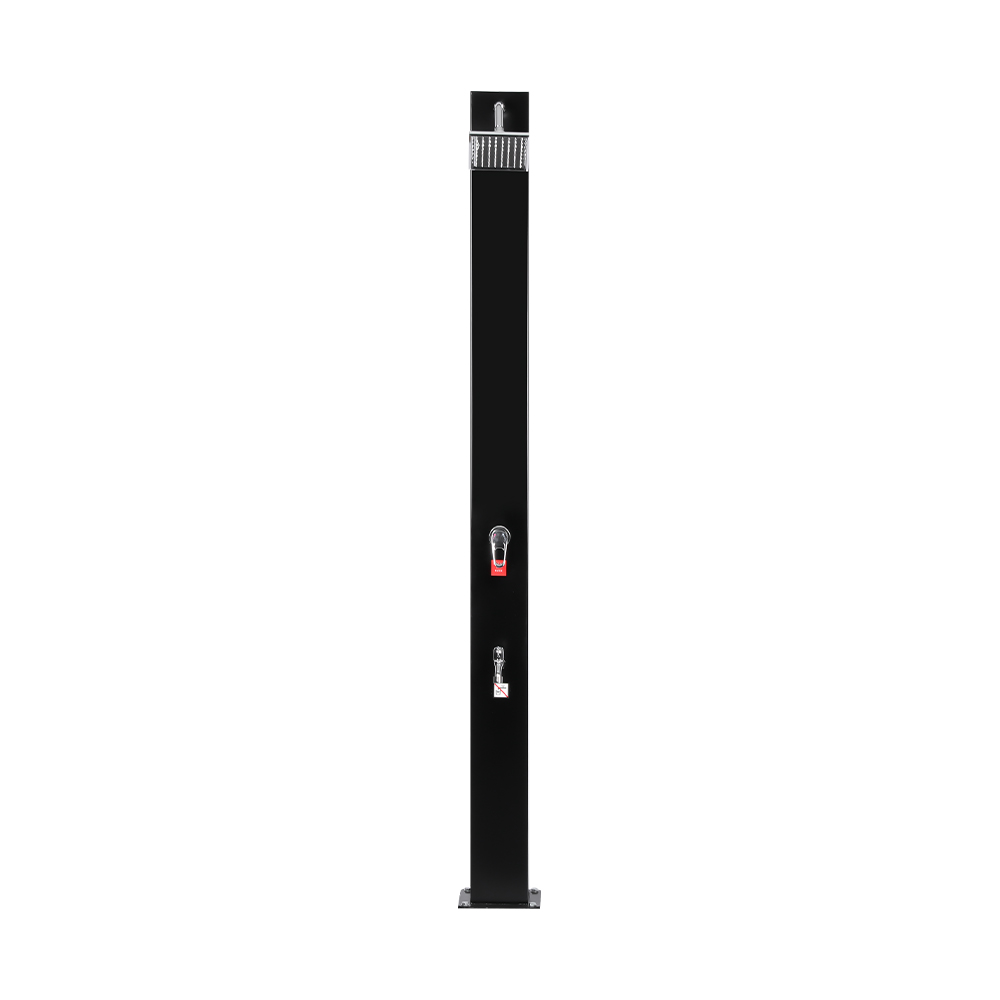 Custom LY35L04-SS High-Capacity Outdoor Solar Shower Suppliers, OEM/ODM Factory Quzhou Haihong Electrical Equipment Co.,Ltd. is China LY35L04-SS High-Capacity Outdoor Solar Shower Suppliers and OEM Factory, details:Th...View Product → serves a family of four through a full afternoon by the pool.
If you entertain often or want a full shower after swimming, 35 liters is the sweet spot. If you only need a rinse, 8 liters is enough.
Choose Material Based on Your Climate and Durability Needs
Material decides how many summers the shower survives. PVC is the budget option: light, easy to clean, durable for seasonal use. ABS is tougher, more sun-resistant, and available with a chrome finish that fits a modern pool area. If durability and appearance both matter, an ABS chrome-finished solar shower model is the practical middle ground. Aluminum and stainless steel offer the strongest structure and most premium feel at a higher price.
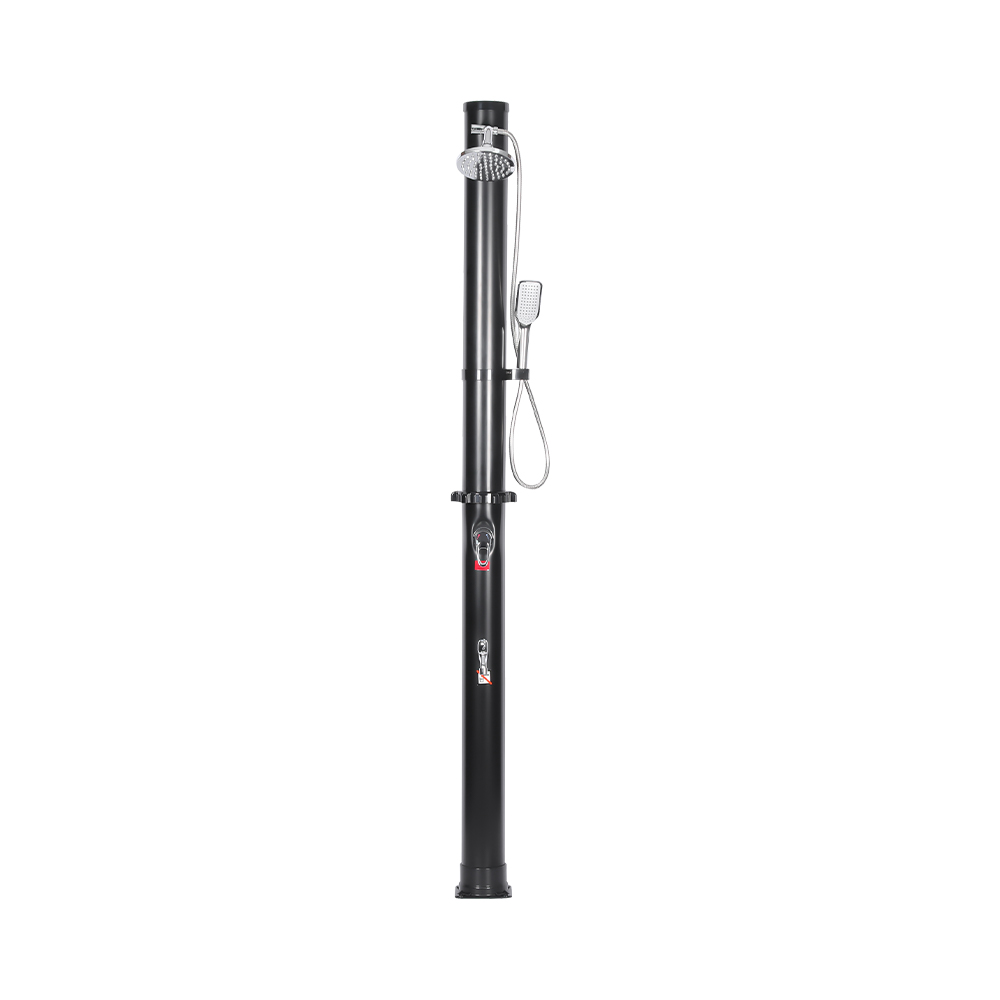 Custom LY18L05-HB 18L Two Section ABS Chrome Shower Head Solar Shower Outdoor GaQuzhou Haihong Electrical Equipment Co.,Ltd. is China LY18L05-HB 18L Two Section ABS Chrome Shower Head Solar Shower Outdoor Garden Showe...View Product →
Consider Mobility vs. Permanence
Finally, decide whether the shower lives in one spot forever or follows your routine. A fixed installation makes sense with a dedicated pool area and certain position. But if you might move the shower or want to store it over winter, choose a mobile model. A poolside solar shower with mobile stainless steel base can be repositioned to catch the sun, tucked out of sight for privacy, and moved indoors when the season ends. That flexibility alone prevents the most common reason outdoor showers go unused.
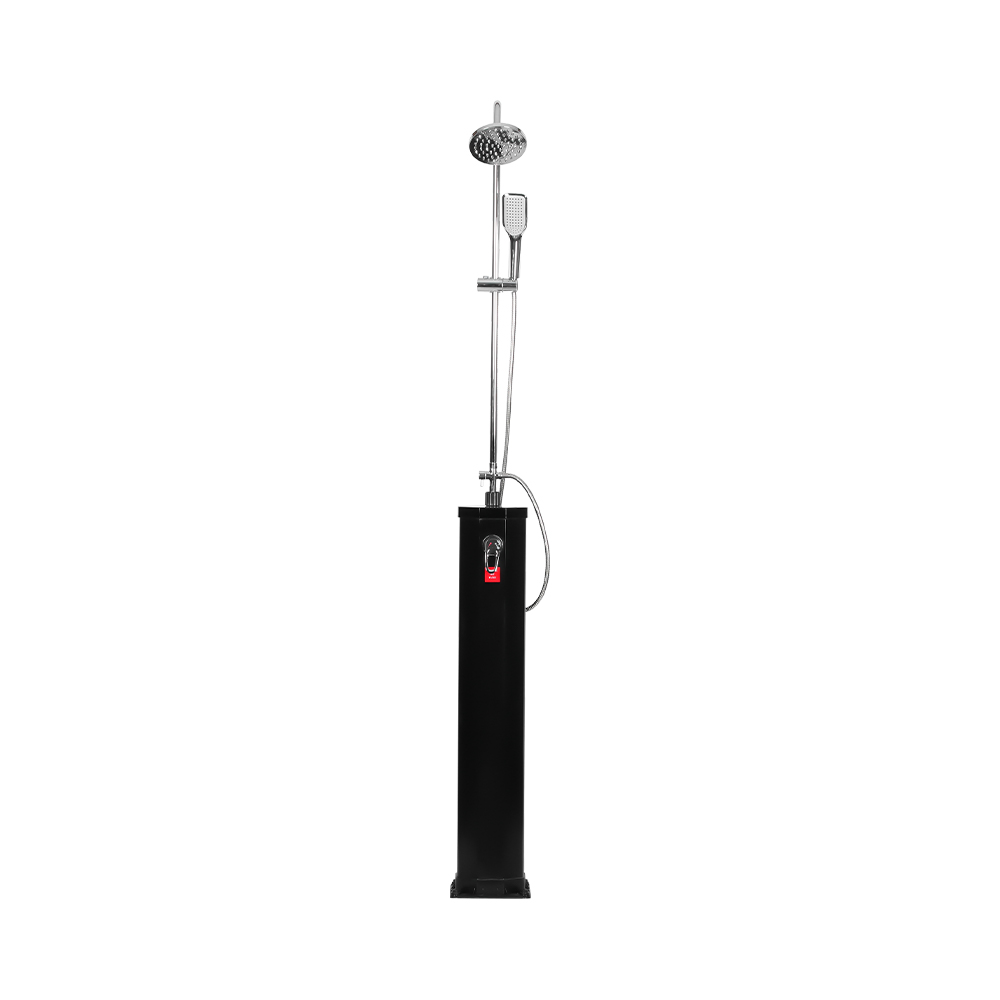 Custom LY18L09-B 18L Poolside PVC Solar Shower with Mobile Stainless Steel Head Quzhou Haihong Electrical Equipment Co.,Ltd. is China LY18L09-B 18L Poolside PVC Solar Shower with Mobile Stainless Steel Head Shower Sup...View Product →
The Bottom Line: Is an Outdoor Shower Worth It for You?
Here is the direct answer. For pool owners, beach regulars, and anyone who comes home dusty, sandy, or chlorinated several times a week, an outdoor shower is worth it. The rinse saves real time and cleaning effort, and a solar model does it at essentially no running cost. For RV and camping households, a portable solar shower is one of the most practical purchases you can make.
For households without a pool, without sandy hobbies, and without much outdoor summer life, the honest answer is no. A shower used four times a year is not worth the space or the price, no matter how attractive the idea sounds.
If you are in the first group, the smartest route is a solar outdoor shower: low entry cost, no installation project, no utility bills, and no permanent commitment. Match the capacity to your household, choose a material that suits your climate, and pick a model that can move. Do that, and the answer is a confident yes.

-
How Do You Maintain and Clean Your Solar Shower for Long-Term Use
Empty the Tank After Each Use Maintaining the cleanliness and functionality of your solar shower is ...
-
Comprehensive Guide to Solar Showers: From Portable Bags to Luxury Poolside Units
Introduction to Solar Showers What is a Solar Shower? A solar shower is an innovative and environmen...
-
How to Choose the Perfect 8L Solar Shower for Beach, Pool & Garden Use
Benefits of Using an 8L Solar Shower at the Beach 1. Convenience and Portability for Beachgoers An 8...
-
The Ultimate Guide to 18L Solar Showers: Reviews, Tips, and How-To
Introduction to 18L Solar Showers In recent years, 18L solar showers have become a must-have item fo...
No.27, Fengshan Road, Hangfu Town, Kecheng District, Quzhou City, Zhejiang Province, China
(+86)-17888203192
 Wholesale Outdoor Solar Shower Factory