
 English
 Deutsch
 Español
 Français
Here You Can Get Our Latest Information
Industry News
Do Outdoor Solar Showers Work? Yes, If You Have the Right Sun and Size
Does an outdoor solar shower actually deliver a warm shower? The short answer is yes, but only when the unit gets enough direct sun and the capacity matches the number of people using it. A 30L tank placed in a shaded corner on a cool day will stay lukewarm, and that is a set-up problem rather than a product failure. When you understand how the heating works, what the real temperature gain looks like, and which capacity serves your outdoor routine, a solar shower becomes a dependable piece of summer equipment.
Our factory team has been designing and testing outdoor solar showers since 2010. Every PVC column, ABS showerhead, and aluminum bracket that leaves our production line goes through a heat-up check and a flow test before shipping. The information below reflects what we see in real daily use, not just on paper.
Set realistic expectations: an outdoor solar shower gives you a warm, comfortable outdoor rinse, not a high-pressure indoor shower. It is best used between spring and early autumn, when the midday sun can actually warm the water to a comfortable level.
How a Solar Shower Actually Heats Water
Every solar shower works on the same physical principle: a black or dark surface absorbs sunlight, converts it into heat, and transfers it into the water inside the tank. Light-colored surfaces reflect most of that energy, which is why nearly every effective solar tank is black. The darker the surface, the faster the temperature climbs.
No electricity or pump is needed. As the water close to the tank surface warms up, it becomes less dense and rises; the cooler water sinks and takes its place. This natural circulation slowly heats the whole volume, and the warmest water collects at the top, where the outlet pipe draws from. That is why a simple freestanding solar column can supply warm water reliably as long as the sun stays on it.
Different capacities behave differently in full sun, with an ambient temperature around 25°C:
| Capacity | Full-sun heat-up time | Usable shower time | Best match |
|---|---|---|---|
| 8L | 45-75 minutes | 2-3 minutes | One quick rinse |
| 18L | 60-100 minutes | 4-6 minutes | 1-2 people |
| 30L | 90-130 minutes | 6-8 minutes | 2-3 people |
| 35L | 100-150 minutes | 7-9 minutes | 2-3 people |
| 60L | 150-200 minutes | 10-14 minutes | 4 or more people |
These values assume the tank is placed in unblocked sunlight for at least four hours before use. If the water starts at 15°C and the sun stays strong, an 18L model should easily reach 35-40°C by mid-afternoon.
What a Real Heating Curve Looks Like
Heating is not linear. The first hour produces the fastest temperature gain, then the curve flattens because warmer water loses heat to the surrounding air faster. A typical 18L tank on a sunny day, with a morning start and an ambient temperature near 25°C, gives a curve like this:
Example heating curve for an 18L solar shower column
By 2 PM, 18L of water is around 42°C, which is warm enough for a genuinely comfortable shower. If the ambient temperature rises to 30°C, the final water temperature can go higher; if the sky is partly cloudy or the wind is strong, expect a few degrees less.
Pressure is part of the "does it work" question, too. Most solar showers are gravity-fed, so the height of the tank relative to the showerhead sets the water pressure. A 2m-high column gives a steady, rinsing flow, and a showerhead with smaller outlet holes increases the force of the spray even at the same height.
Choosing the Right Capacity for Your Setup
Capacity is the most common reason people believe solar showers don't work. If three people queue up for an outdoor shower after a swim and the tank holds only 8L, the water runs out after a short rinse. The product didn't fail; the volume didn't match the task. Matching tank size to your routine is the first step to a satisfying experience.
For most home backyards, an 18L column with a stable base is the safest starting point. It gives one or two people a realistic 4-6 minute rinse, heats up in a reasonable time, and doesn't dominate the garden visually.
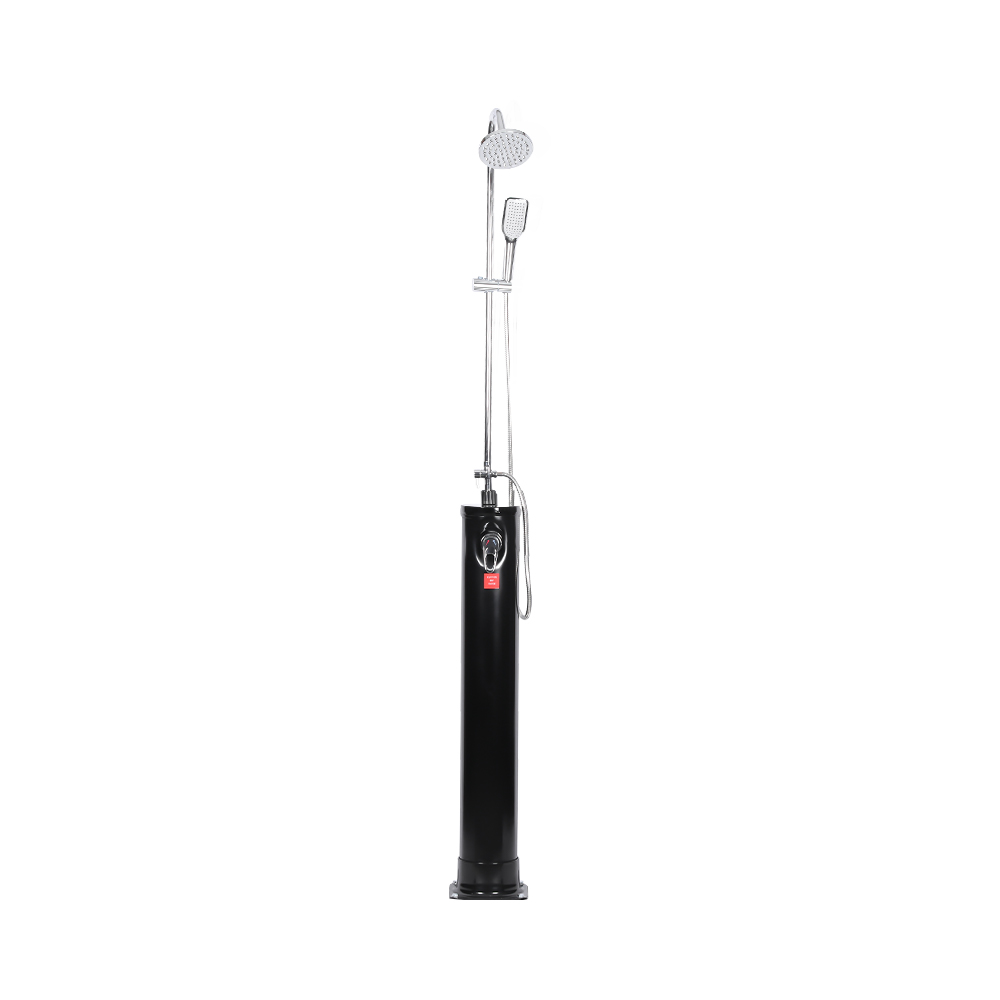
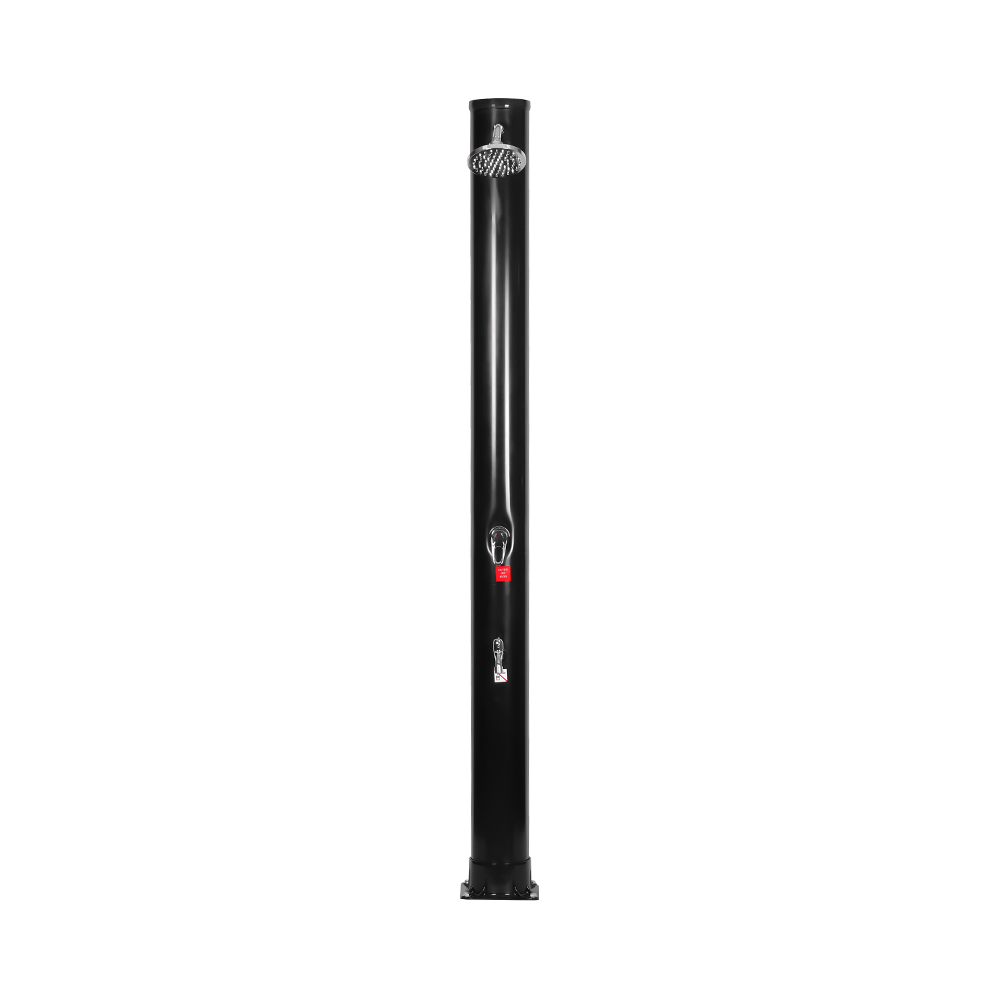
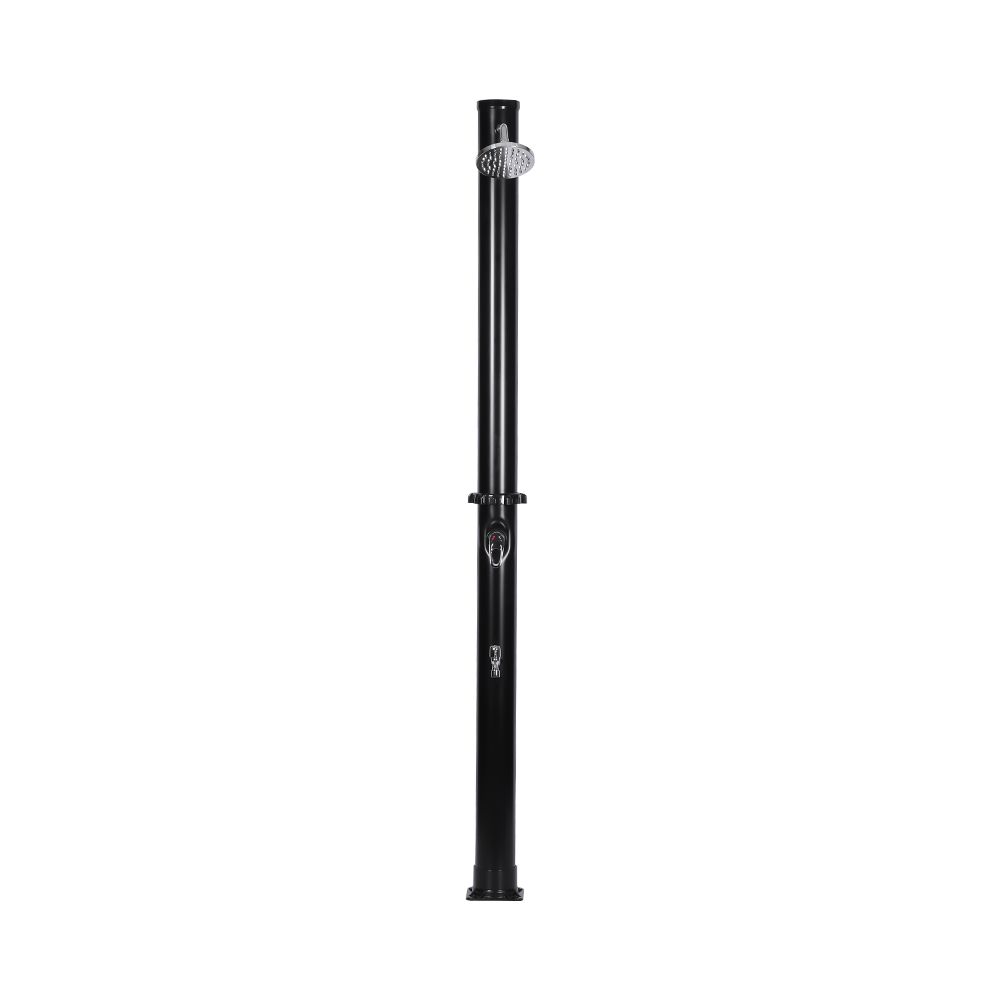 LY18L01 18L PVC Solar Shower Column with Base for GardensAn entry-level 18-liter column suits small backyards and short rinses. Its stable base and adjustable rain head make it a safe choice for first-time solar shower buyers.View Product →
If your family regularly spends whole afternoons outside, move up to 35L or 60L. Larger tanks take longer to heat, but they also hold heat longer once the sun has warmed them.
Design Details That Decide Performance
Capacity decides quantity; design decides quality. When comparing solar showers, look at these four details before you commit.
- Tank material and color: black PVC tanks absorb solar radiation effectively and are lightweight. ABS adds impact resistance and is common on showerheads and upper columns. Aluminum or stainless steel frames provide stability for higher-mounted units.
- Anti-water accumulation: water that stays trapped in low bends or flat sections of the pipe cools down and stays cold, reducing the tank's usable capacity. A well-designed model drains fully so every drop of water stays in the sun-heated circuit.
- Showerhead design: a rain-style head covers a wider area and feels closer to an indoor rinse; a hand-held head with small openings creates higher spray pressure. The physical feel of the spray matters more than the claimed flow rate.
- UV resistance: an outdoor unit sits in the sun for hundreds of hours each summer. UV-resistant PVC and ABS resist fading and cracking, so the structure keeps its strength over multiple seasons.
Anti-water accumulation is the detail most buyers miss, yet it has a direct effect on how long the warm water lasts. If the bottom of the pipe collects cold water, that cold water mixes with the warm supply and shortens the useful shower time. Choosing a model designed to eliminate trapped water gives you a more consistent temperature from the first seconds of the shower.
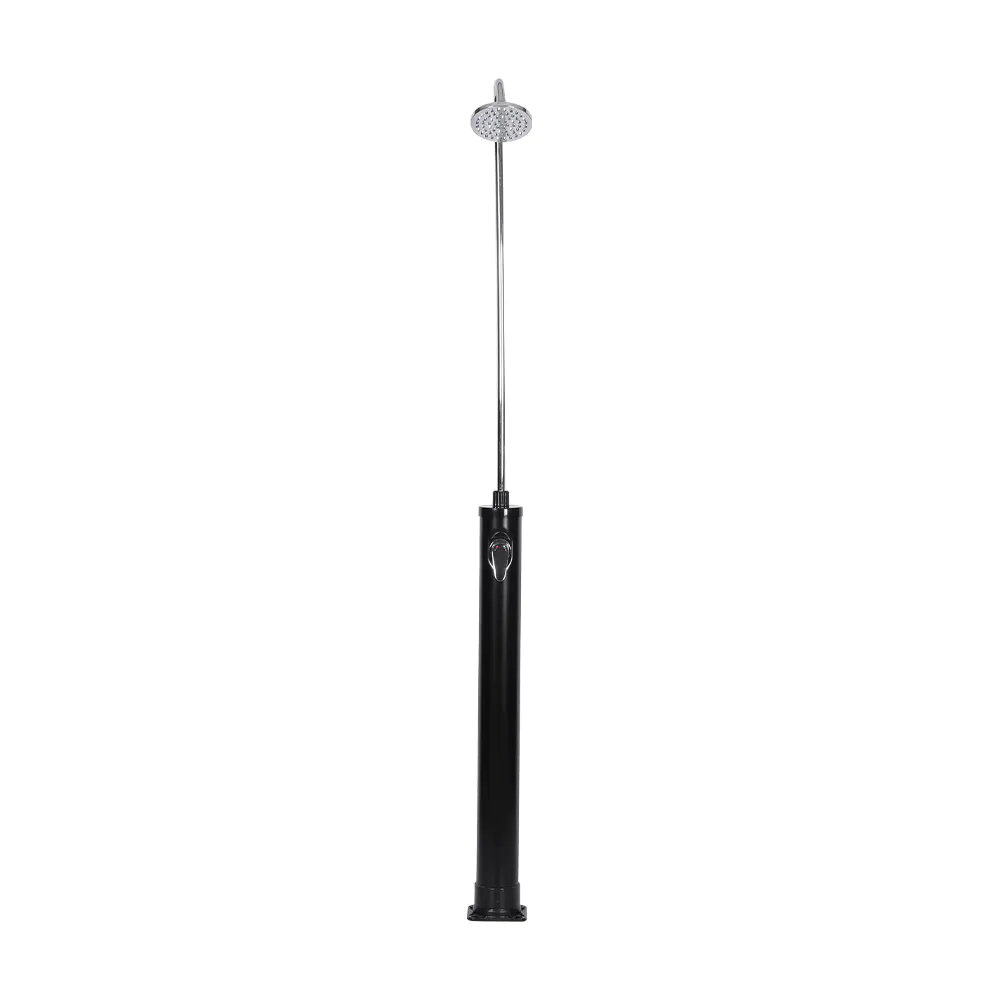
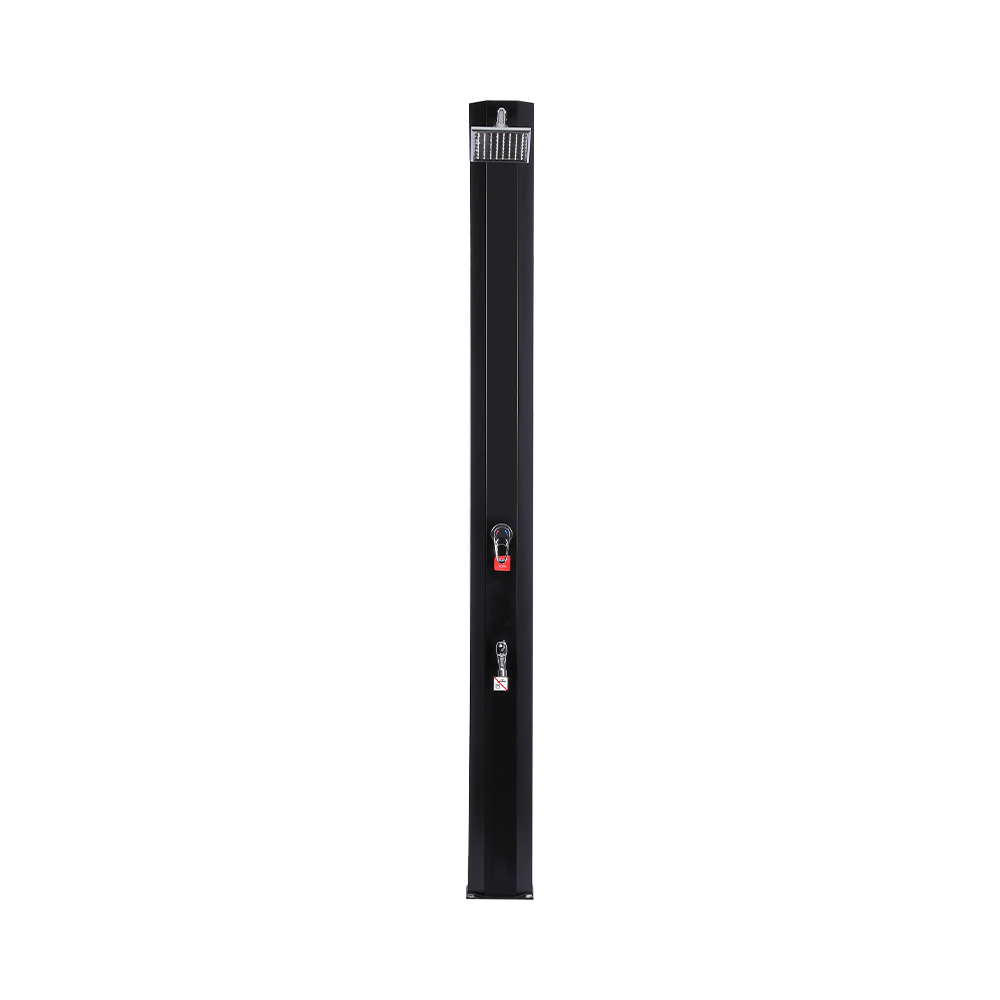 LY35L05-SS Anti-Water Accumulation Solar Shower with Metal TrayThis model prevents cold water pooling to keep temperatures steady, heats up to 60°C in full sun, and includes a tray for toiletries. Compact disassembly aids storage.View Product →
Portable shower bags work on the same solar principle, but they rarely match the pressure and capacity of a freestanding column. A column mounts higher, holds more water, and delivers a steadier spray, which is why most backyard buyers prefer it over a bag.
When an Outdoor Solar Shower Makes Sense, and When It Won't
It helps to define the right use case, because a solar shower is not a universal shower replacement. It earns its place in specific outdoor situations.
Good use cases
- Poolside rinsing after swimming, where people just need to wash off chlorine and cool down.
- Beach houses or seaside gardens with no easy hot water supply near the outdoor shower area.
- Backyard use after gardening, cycling, or light exercise on warm days.
- Camping trips, especially in sunny weather with access to a solid hanging point.
- Washing pets or rinsing sandy gear outside.
Poor use cases
- Cold, cloudy climates where the ambient temperature stays below about 18°C.
- Locations that receive less than three to four hours of direct sun.
- Anyone who needs full household-pressure water flow.
- Early-morning full-body washing, because the water is coolest after the night.
For a poolside setup used by several people, a large-capacity column is the most practical option because the water has the whole day to heat while the pool is being used.
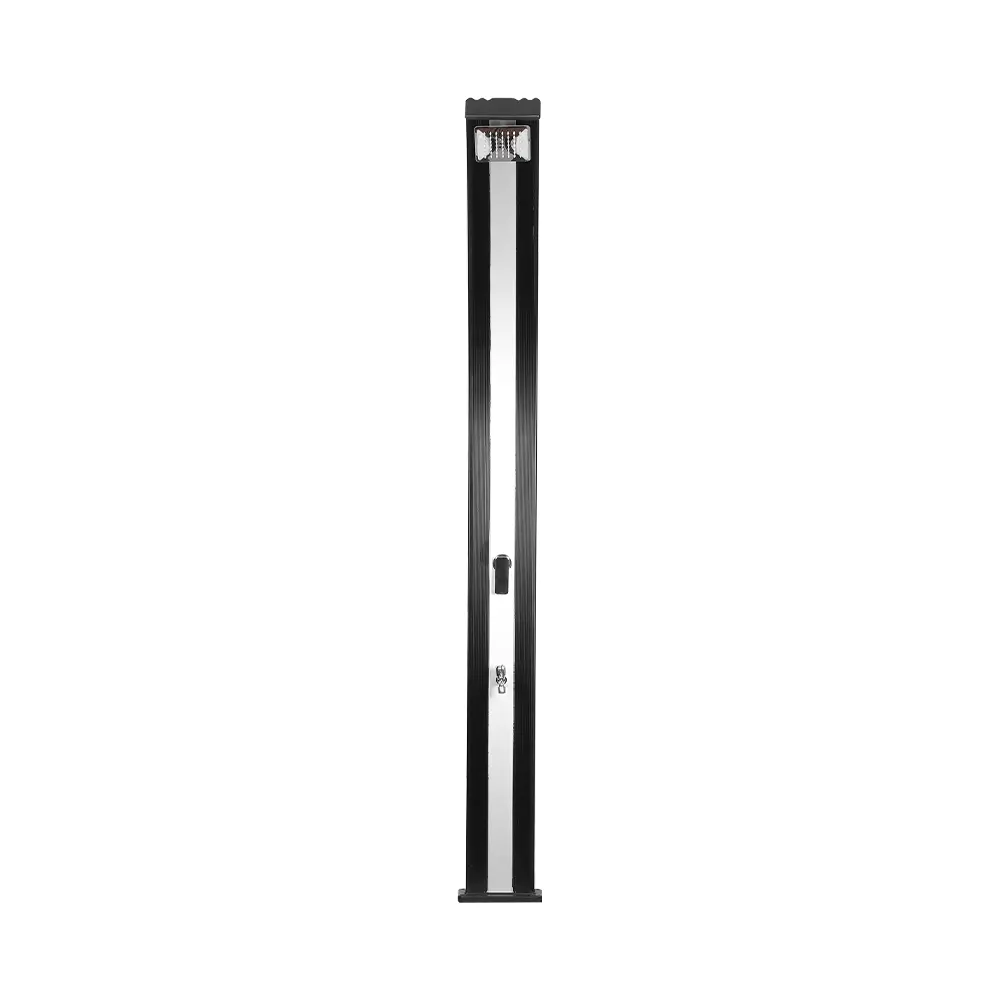
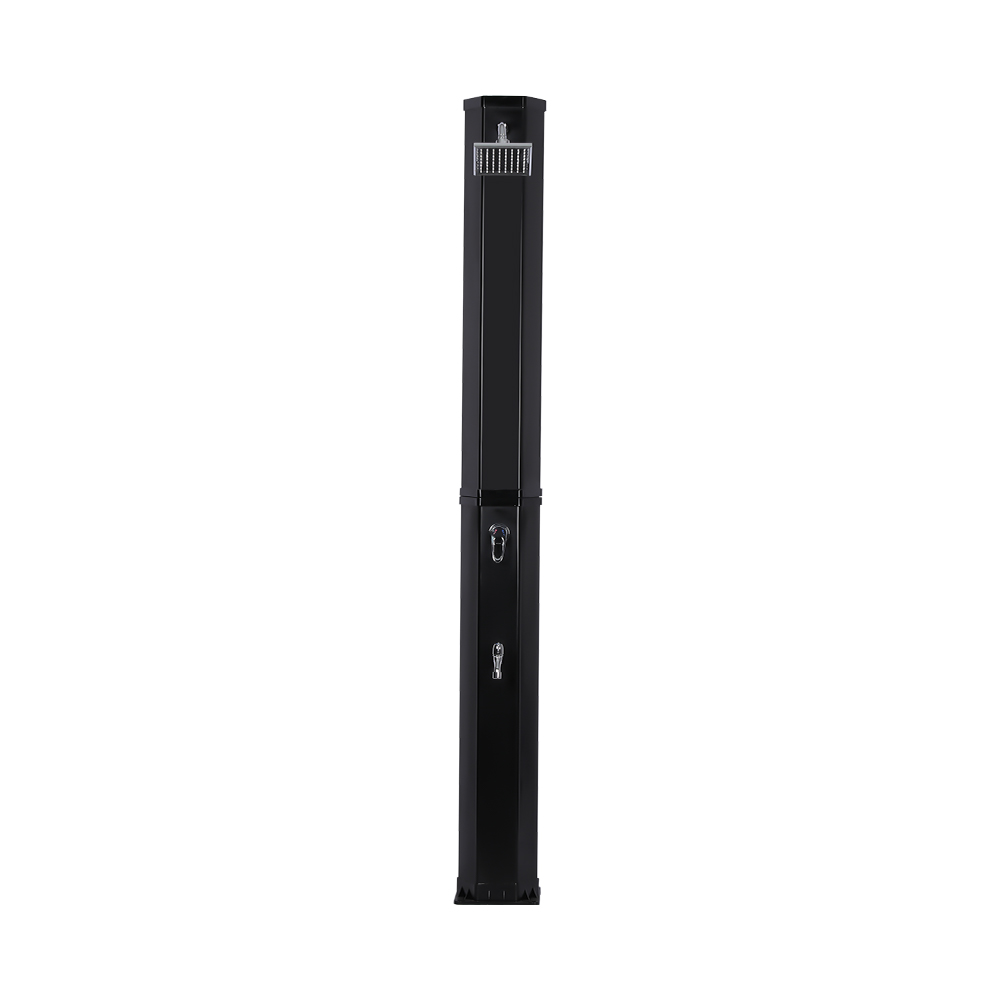 LY60L01 Extra Large Rain Head Garden Solar Shower with Metal BaseA 60-liter capacity suits busy poolside use, giving water all day to heat. The oversized adjustable head and UV-resistant build offer durable, flexible showering for multiple people.View Product →
Six Practical Ways to Improve Performance
Once the unit is in place, you control most of its effectiveness through positioning and daily habits.
- Choose the sunniest spot. The tank should face the sun for at least four hours around midday. Avoid walls that cast a shadow onto the tank for most of the day.
- Fill it in the morning. If you fill the tank at 8 AM, the water is already warming while the sun rises. Filling at noon wastes the best solar hours.
- Mount the tank as high as practical. A higher tank creates more gravity pressure, which makes the spray feel stronger and rinsing easier.
- Use a shut-off valve or push-button showerhead. Stopping the flow while soaping saves the warmest water for the rinse phase and extends the usable shower time by a third.
- Drain and rinse the tank regularly. Stale water can develop a smell after several days. Draining is quick, and it also prevents mineral build-up inside the pipe and showerhead.
- Fully drain the system before freezing weather. Ice expands and can crack PVC columns and ABS heads. A unit that drains completely is the easiest to winterize.
Cleaning and year-round care are straightforward, but a few details are worth checking. Our solar shower maintenance guide explains the draining frequency, cleaning agents, and winter protection steps that keep a unit in top condition for many seasons.
Frequently Asked Questions
How hot does an outdoor solar shower get?
On a sunny day with 25-30°C ambient temperature, an 18-35L tank can reach 40-45°C. In cooler or cloudier conditions, expect about 10-15°C above the ambient temperature, which will feel lukewarm.
How long does a solar shower take to heat up?
Most models produce usable warm water after one to two hours in full sun. A small 8L bag can be warm in under an hour, while a 60L column may need most of the day to heat the full volume.
Do solar showers work on cloudy days?
They still absorb some solar radiation through thin cloud, but the temperature gain is small. On a seriously overcast day, the water may reach only 25-30°C. Plan around sunny periods if you need reliable warmth.
How long does the water stay warm?
A well-insulated tank loses heat slowly after the sun drops, so water can stay usable for one to two hours after peak sunlight. In late afternoon, an 18L tank is usually still pleasantly warm; by the next morning it will be back to ambient temperature.
Do I need a drain beneath a freestanding solar shower?
Most freestanding solar showers drain directly onto grass, gravel, or decking. If you prefer a dry standing area or local rules require greywater management, put a shower base or a wood-composite board under the unit.
Can I leave water in the tank overnight?
You can, but the water will be cold in the morning, and stagnant water can develop algae over long periods. It's better to drain the unit after the last use of the day, especially if the temperature is expected to drop near freezing.
What to Check Before You Buy
Use this quick checklist when you compare different models:
- Capacity that matches your user count: 8L for solo rinses, 18L for couples, 35L for families, 60L for poolside groups.
- At least four hours of direct sun at the planned installation spot.
- UV-resistant PVC or ABS materials, with a durable black tank surface.
- An anti-water accumulation structure in the tank and lower pipe.
- A sensible mounting height and a stable base design.
- A shut-off function at the showerhead to preserve warm water.
Outdoor solar showers work within a clear set of physical limits. Give them full sun, match the capacity to the people using them, and choose a model with a well-thought-out tank design, and you get a simple warm-water outdoor rinse all season. If you are still weighing options, start with our solar shower product range and compare capacities side by side.
-
How Do You Maintain and Clean Your Solar Shower for Long-Term Use
Empty the Tank After Each Use Maintaining the cleanliness and functionality of your solar shower is ...
-
Comprehensive Guide to Solar Showers: From Portable Bags to Luxury Poolside Units
Introduction to Solar Showers What is a Solar Shower? A solar shower is an innovative and environmen...
-
How to Choose the Perfect 8L Solar Shower for Beach, Pool & Garden Use
Benefits of Using an 8L Solar Shower at the Beach 1. Convenience and Portability for Beachgoers An 8...
-
The Ultimate Guide to 18L Solar Showers: Reviews, Tips, and How-To
Introduction to 18L Solar Showers In recent years, 18L solar showers have become a must-have item fo...
No.27, Fengshan Road, Hangfu Town, Kecheng District, Quzhou City, Zhejiang Province, China
(+86)-17888203192
 Wholesale Outdoor Solar Shower Factory