
 English
 Deutsch
 Español
 Français
Here You Can Get Our Latest Information
Industry News
Why is a solar heated outdoor shower the ultimate upgrade for your backyard pool
Elevating the backyard and poolside experience has driven property owners to seek premium, eco-friendly amenities. Traditional cold rinses no longer suffice for sophisticated outdoor living. As an elegant fusion of green technology and landscape aesthetics, the solar heated outdoor shower has become a staple for premium villas, private pools, and beachfront resorts. Requiring zero electricity or gas, it relies entirely on absorbing solar radiation to heat water, providing an elevated and comfortable washing experience.
For individuals looking to upgrade their exterior spaces, understanding the mechanical design, core specifications, and selection criteria of a high-quality outdoor solar shower is essential to making an informed investment.
Technical Mechanics and Core Advantages of a solar heated outdoor shower
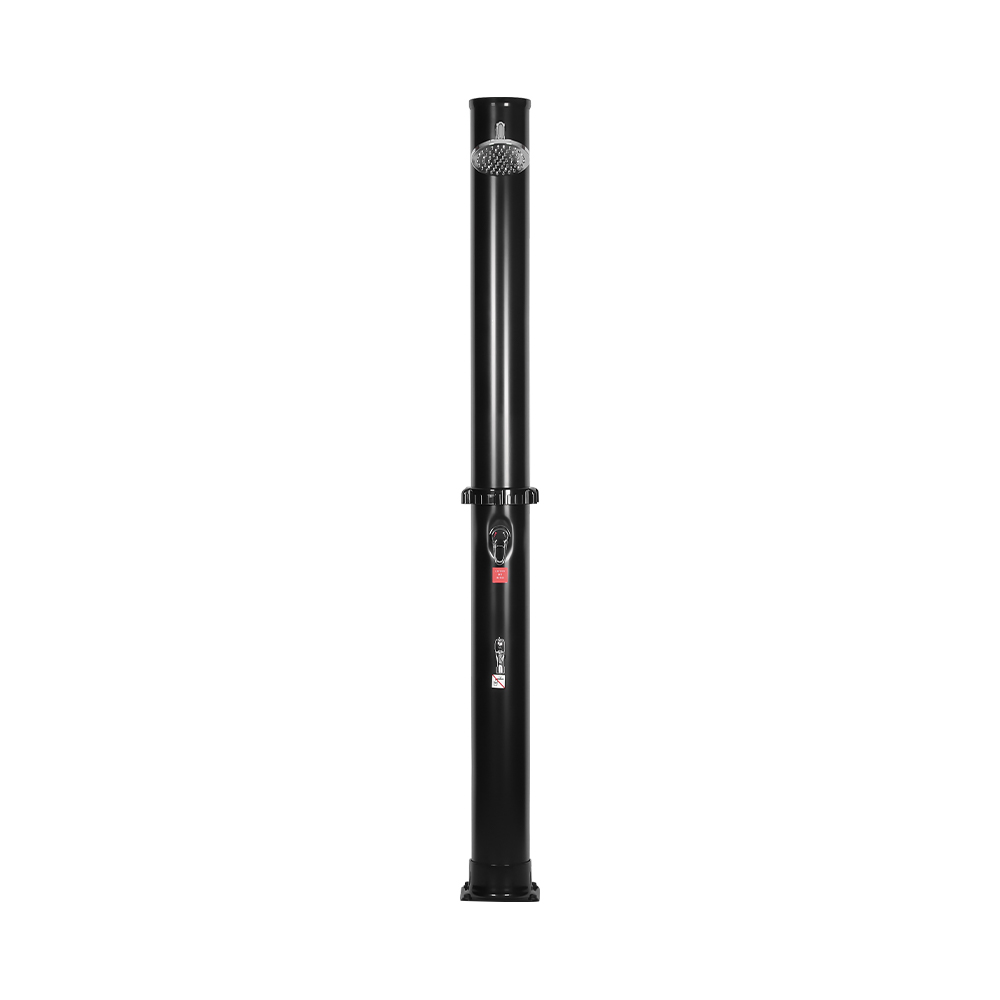
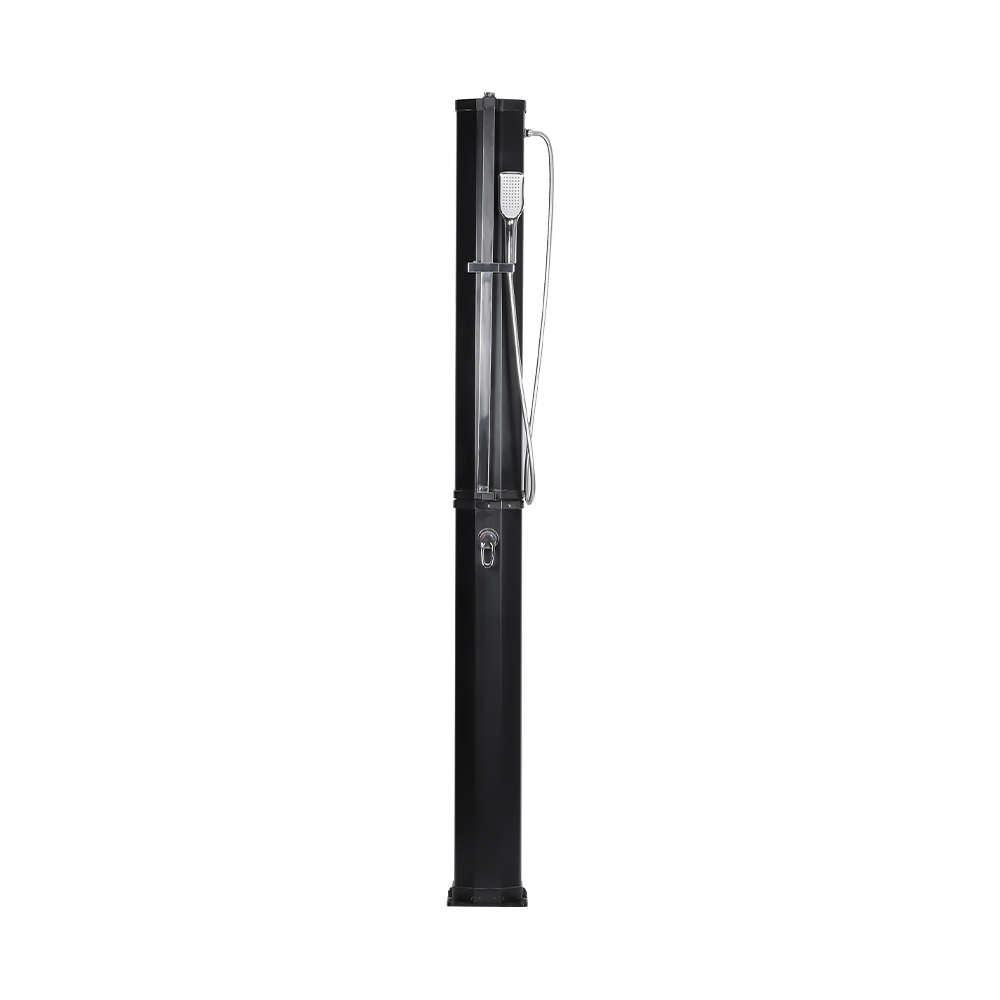
The engineering of a solar heated outdoor shower revolves around its integrated collector-and-storage column. High-end models utilize UV-resistant polymer materials, such as specialized PVC, ABS, or anodized aluminum alloys. These materials feature surface coatings optimized for maximum solar absorption.
When cold water enters the internal reservoir via a standard garden hose, the trapped solar energy transfers heat through natural convection. Because warm water lowers in density and rises, while colder water settles at the base, a continuous thermal cycle forms inside the cylinder. This prevents localized overheating. Under optimal summer sunlight, internal water temperatures can rapidly reach up to 60 degrees Celsius (140 degrees Fahrenheit). Utilizing a built-in mixer valve, users can easily blend the heated water with incoming cold water from the hose to achieve a customized, safe, and comfortable temperature.
Performance Benchmarks: Structural Specification Comparison
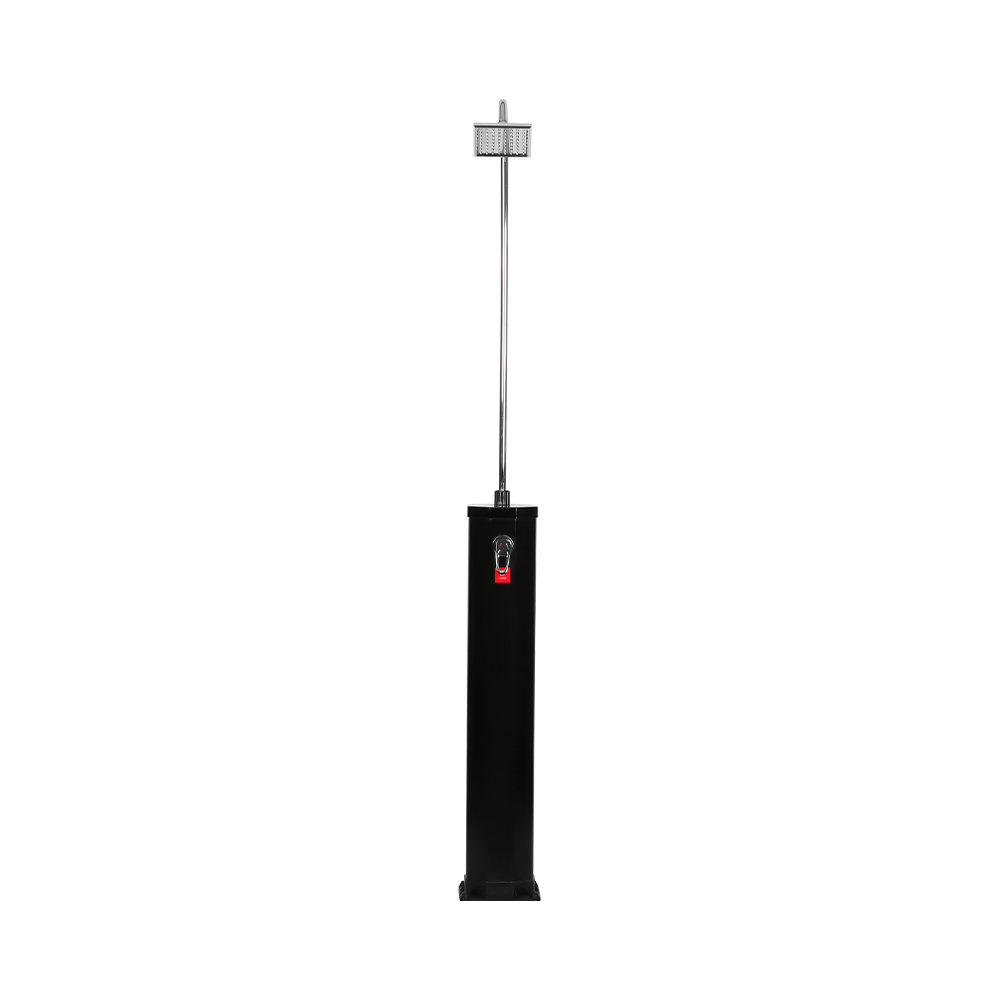
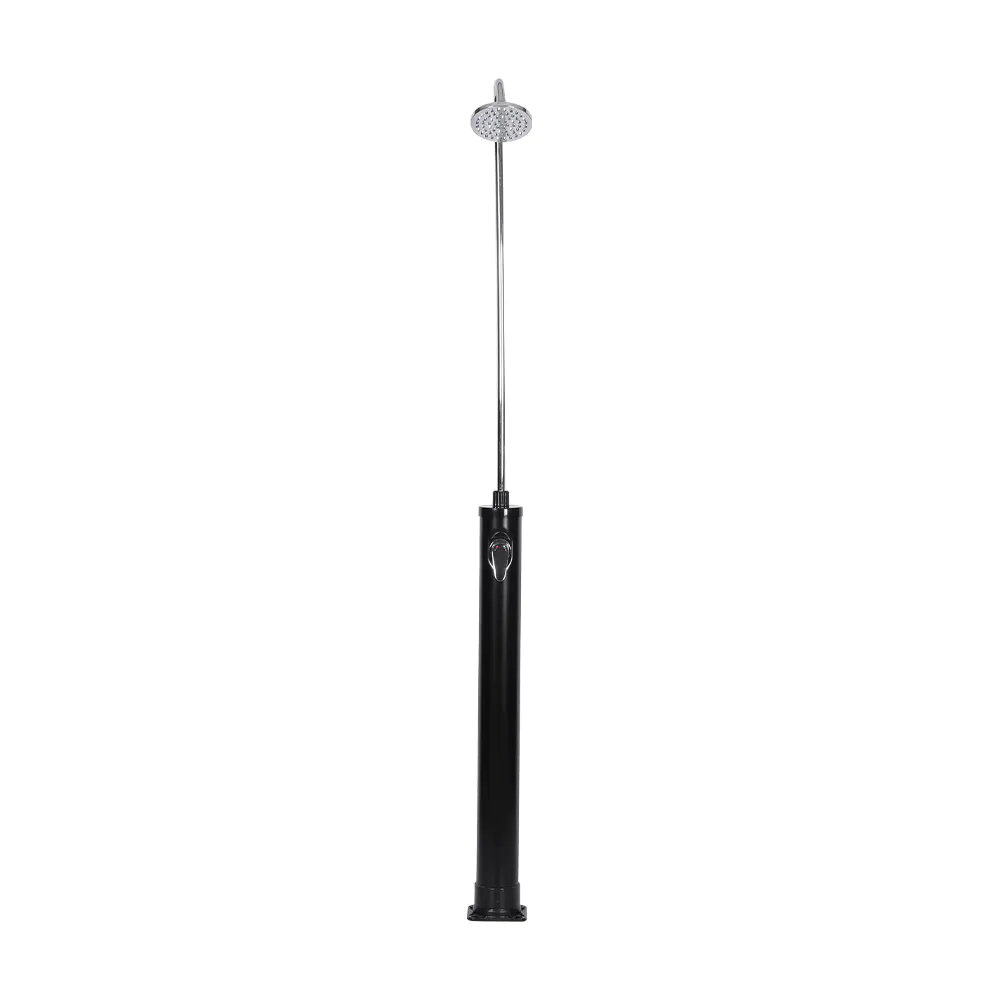
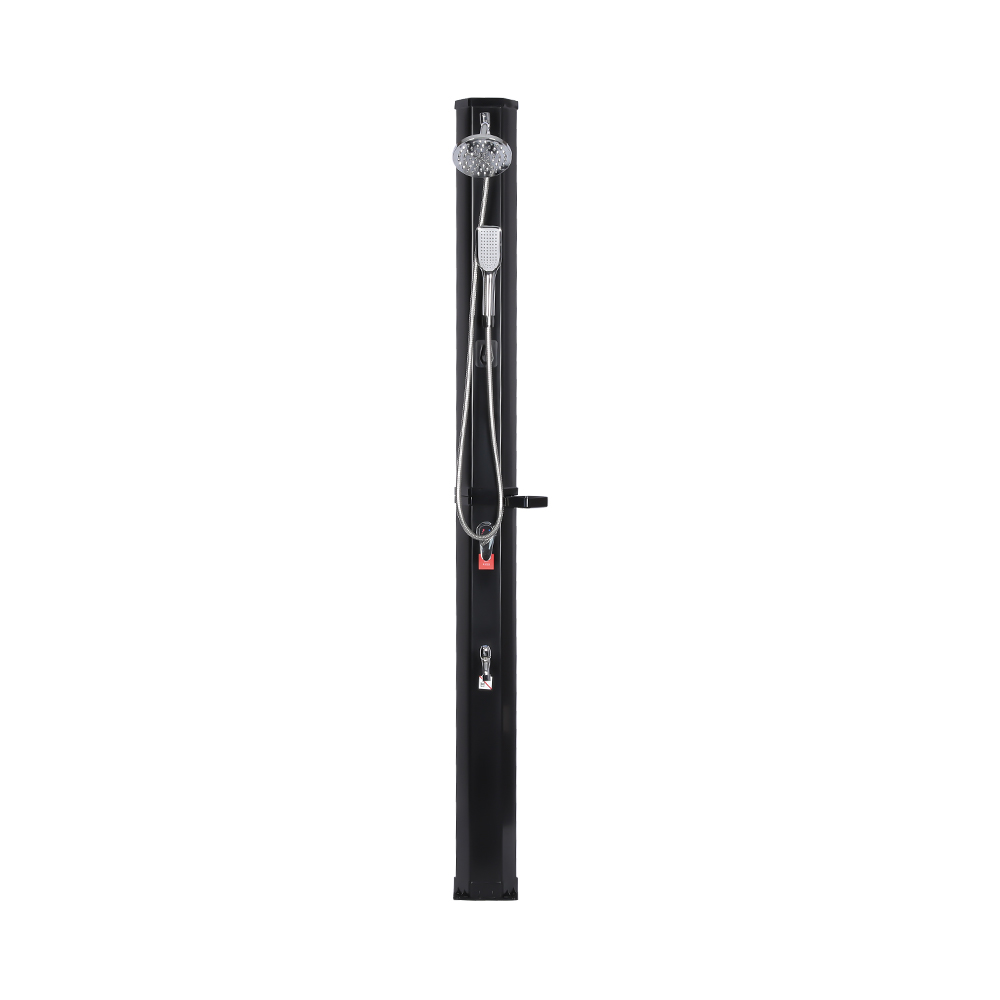
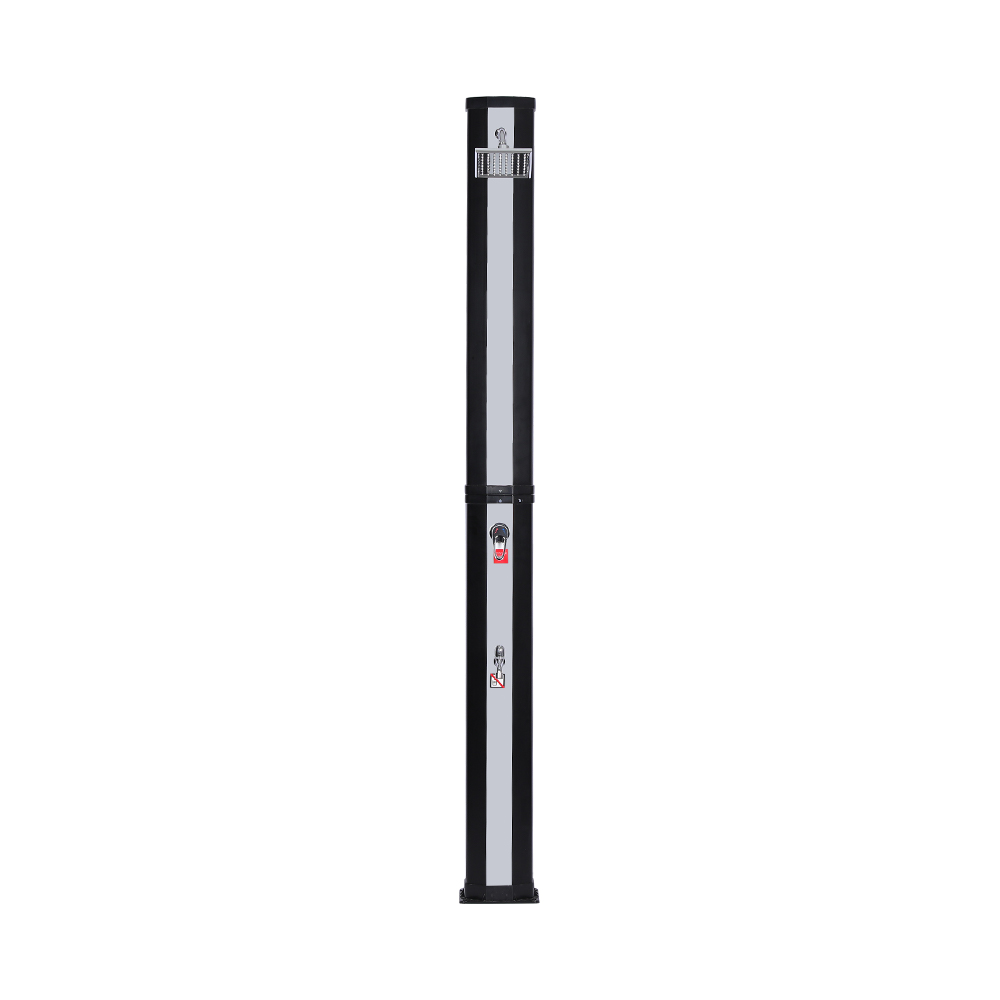
When selecting a solar powered outdoor shower for different residential setups—such as a single-user garden rinse versus multi-user poolside gatherings—it is critical to evaluate water tank capacity, structural durability, maximum water pressure capacity, and thermal efficiency. Below is a detailed technical analysis comparing two prominent configurations:
| Key Technical Specification | Compact High-Efficiency System | Large-Capacity Premium System |
| Core Functional Target | Suited for daily backyard, gardening, or pet washing | Suited for pool perimeters and continuous multi-user rinsing |
| Water Capacity | 20 Liters / 5.3 Gallons | 40 Liters / 10.6 Gallons |
| Chassis Material | Eco-friendly anti-corrosive PVC with chrome ABS | Heavy-duty anti-UV PVC with brass and chrome fittings |
| Max Water Pressure Support | 3.0 Bar / 43.5 PSI | 3.5 Bar / 50.8 PSI |
| Peak Heating Temperature | 55 degrees Celsius (131 degrees Fahrenheit) | 60 degrees Celsius (140 degrees Fahrenheit) |
| Included Standard Components | Overhead shower head, single-lever mixer valve | 360-degree swivel shower head, mixer valve, independent foot wash faucet |
| Base Installation Requirement | Expansion anchors on solid concrete or timber deck | Reinforced heavy base, pre-drilled 4-hole anchor layout |
As detailed in the technical specifications, installations intended for active pool areas benefit greatly from a 40-liter outdoor solar shower equipped with an independent foot wash faucet. This lower tap allows users to easily rinse off grass clippings, sand, and dirt before entering the pool. This targeted rinsing reduces debris contamination, minimizes the load on pool filtration hardware, and decreases the consumption of chemical water treatments.
Technical Solutions for Common Field Inquiries
Addressing structural implementation and environmental resilience helps clear up technical uncertainties regarding outdoor installation.
Does outdoor installation require complex plumbing integration?
No. Standard solar powered outdoor shower models are engineered for standalone plug-and-play convenience. The intake configuration features a standard 1/2-inch or 3/4-inch quick-connect fitting, allowing for direct attachment to a standard flexible garden hose. The primary requirement is anchoring the heavy base plates securely to a flat concrete pad, stone foundation, or reinforced deck. This stable base prevents tilting or swaying when the column is filled to maximum water capacity or subjected to strong winds.
How does the system perform during overcast periods or freezing winters?
A solar heated outdoor shower depends on thermal radiation. On cloudy days, the heating rate drops significantly, and reduced thermal retention limits the availability of hot water. Because the entire unit is exposed to natural elements, seasonal winterization is mandatory in regions where temperatures drop below freezing. Before the first frost, users must shut off the water supply and drain all remaining water from the storage tank and the internal valves. Any residual water freezing inside can expand, cracking the polymer column or damaging the internal ceramic cartridge. Proper seasonal maintenance protects the structural integrity and extends the operational lifespan of the system to over eight to ten years.
-
How Do You Maintain and Clean Your Solar Shower for Long-Term Use
Empty the Tank After Each Use Maintaining the cleanliness and functionality of your solar shower is ...
-
Comprehensive Guide to Solar Showers: From Portable Bags to Luxury Poolside Units
Introduction to Solar Showers What is a Solar Shower? A solar shower is an innovative and environmen...
-
How to Choose the Perfect 8L Solar Shower for Beach, Pool & Garden Use
Benefits of Using an 8L Solar Shower at the Beach 1. Convenience and Portability for Beachgoers An 8...
-
The Ultimate Guide to 18L Solar Showers: Reviews, Tips, and How-To
Introduction to 18L Solar Showers In recent years, 18L solar showers have become a must-have item fo...
No.27, Fengshan Road, Hangfu Town, Kecheng District, Quzhou City, Zhejiang Province, China
(+86)-17888203192
 Wholesale Outdoor Solar Shower Factory