
 English
 Deutsch
 Español
 Français
Which Outdoor Shower Fits Your Garden, Pool, or Camping Needs
In modern courtyard design, swimming pool facilities, and outdoor camping gear, high-quality sanitary systems are becoming core elements to enhance life quality and spatial functionality. From traditional hot and cold water courtyard showers to green devices utilizing renewable energy, various solutions have emerged in the market to meet different scenario needs. This article deeply analyzes the core technical architecture, installation points, and performance differences of garden shower and outdoor shower systems to help users make optimal technical selections based on actual application scenarios.
Classification and Application Architecture of Multi-Scenario Outdoor Showers
Outdoor shower equipment can be mainly divided into two categories based on their energy supply, fixed structure, and application scenarios: fixed architectural-grade systems and mobile portable systems.
Architectural-Grade Fixed Shower Systems
These systems usually serve as extensions of residential buildings or swimming pool facilities, requiring extremely high weather resistance and stable water pressure control.
outdoor garden shower: Frequently used in high-end villa courtyards or landscape gardens. Its piping system mostly adopts a concealed design, and the valve body must possess resistance to frost cracking and ultraviolet aging.
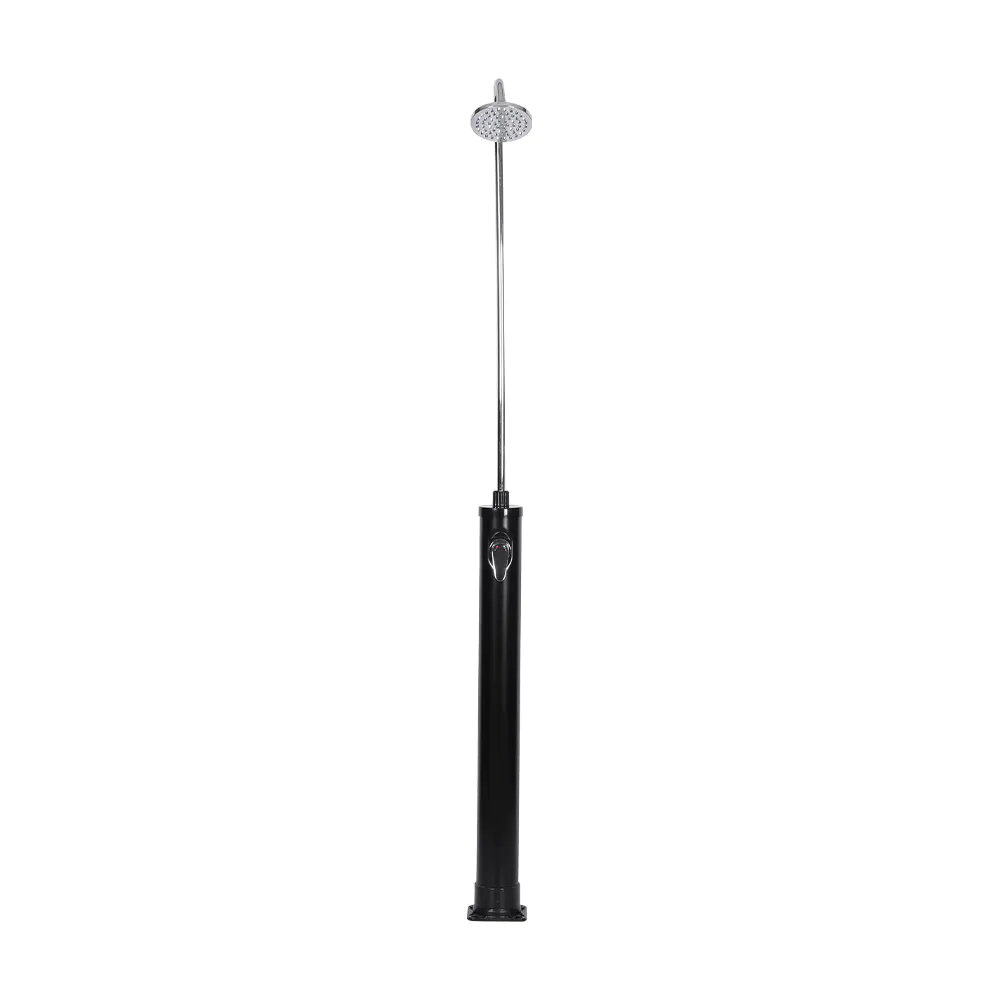
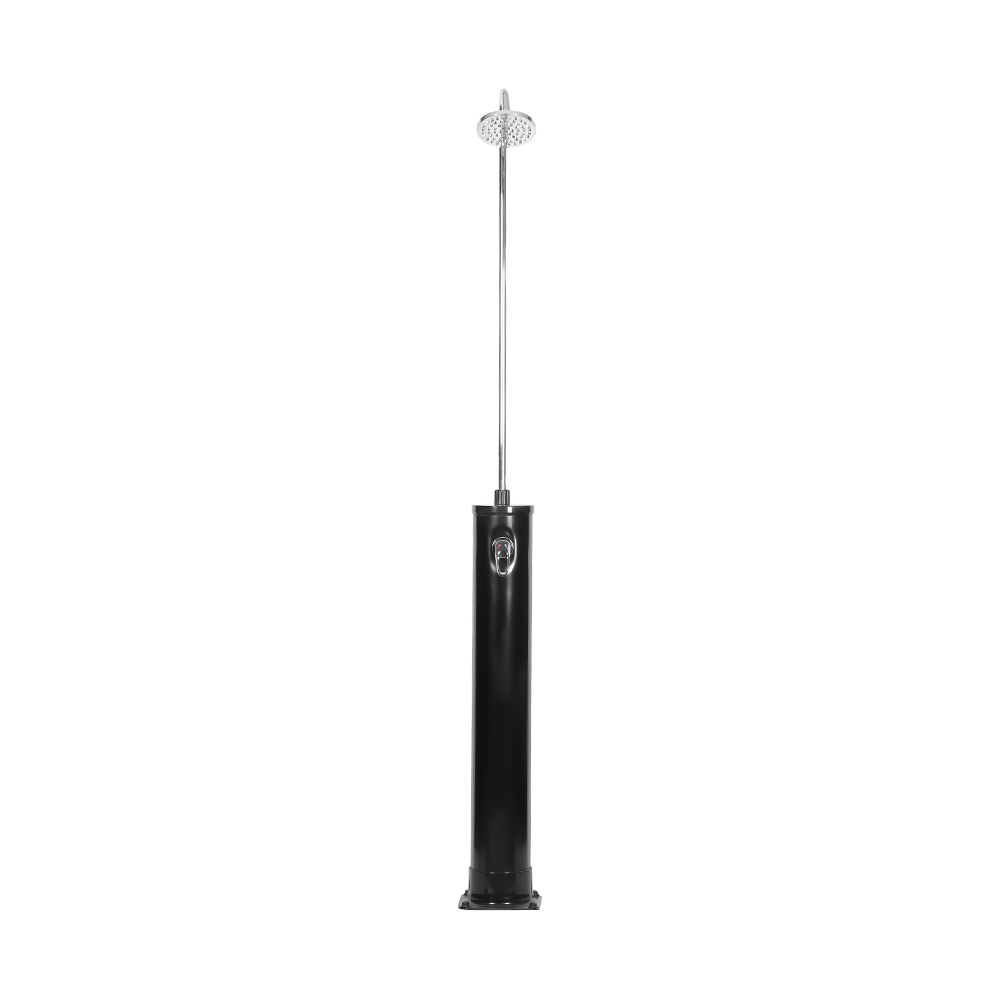
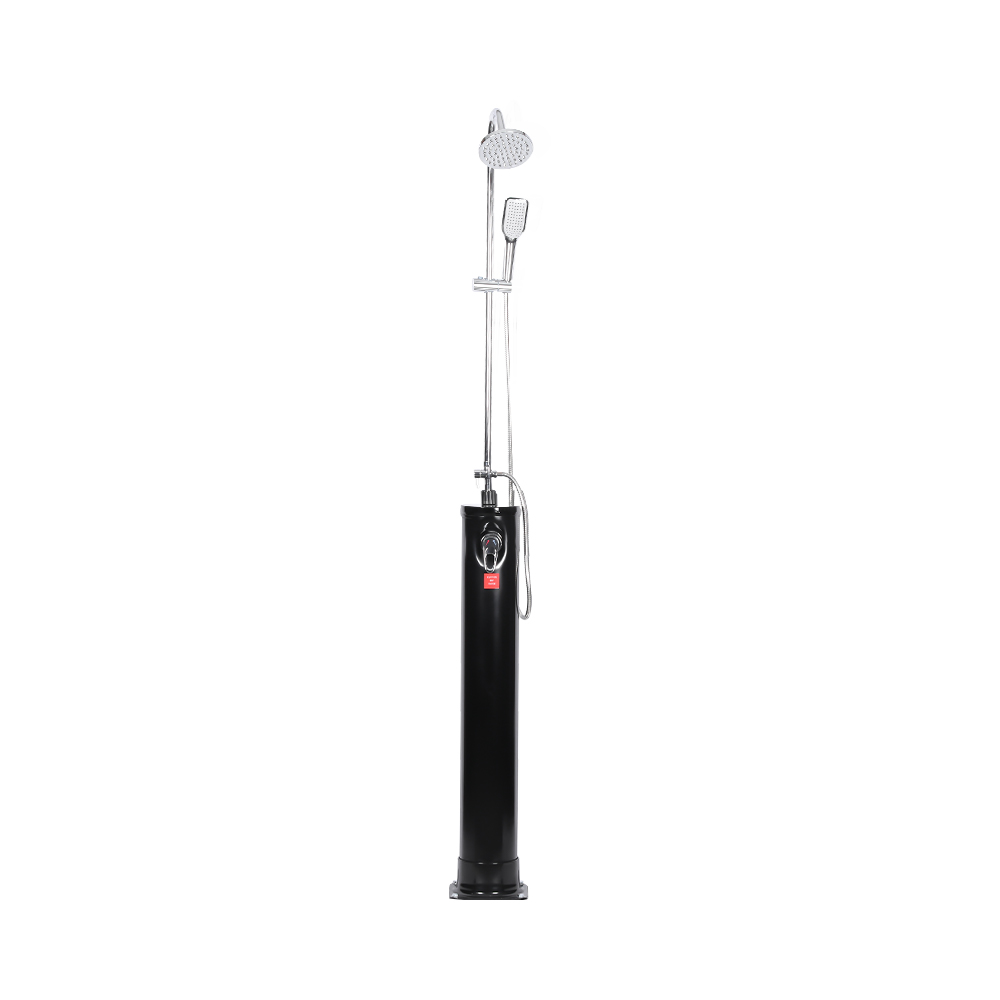
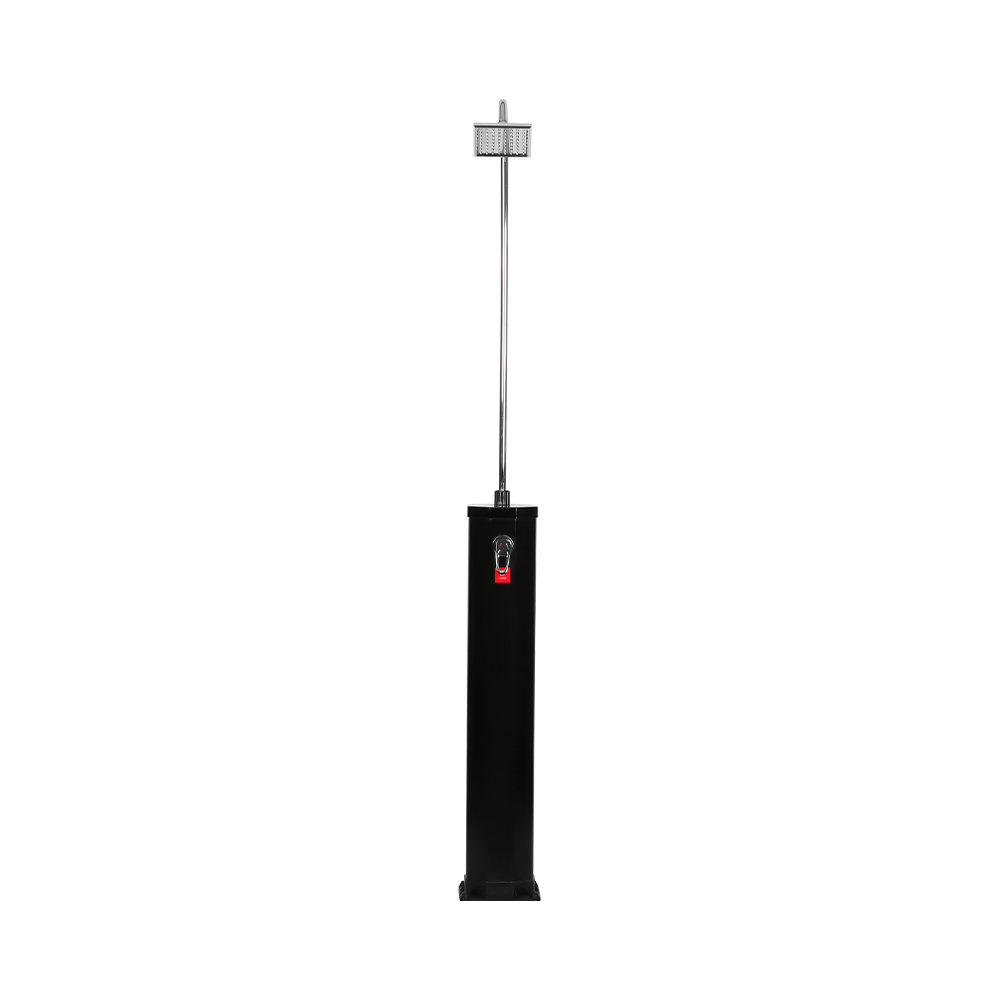
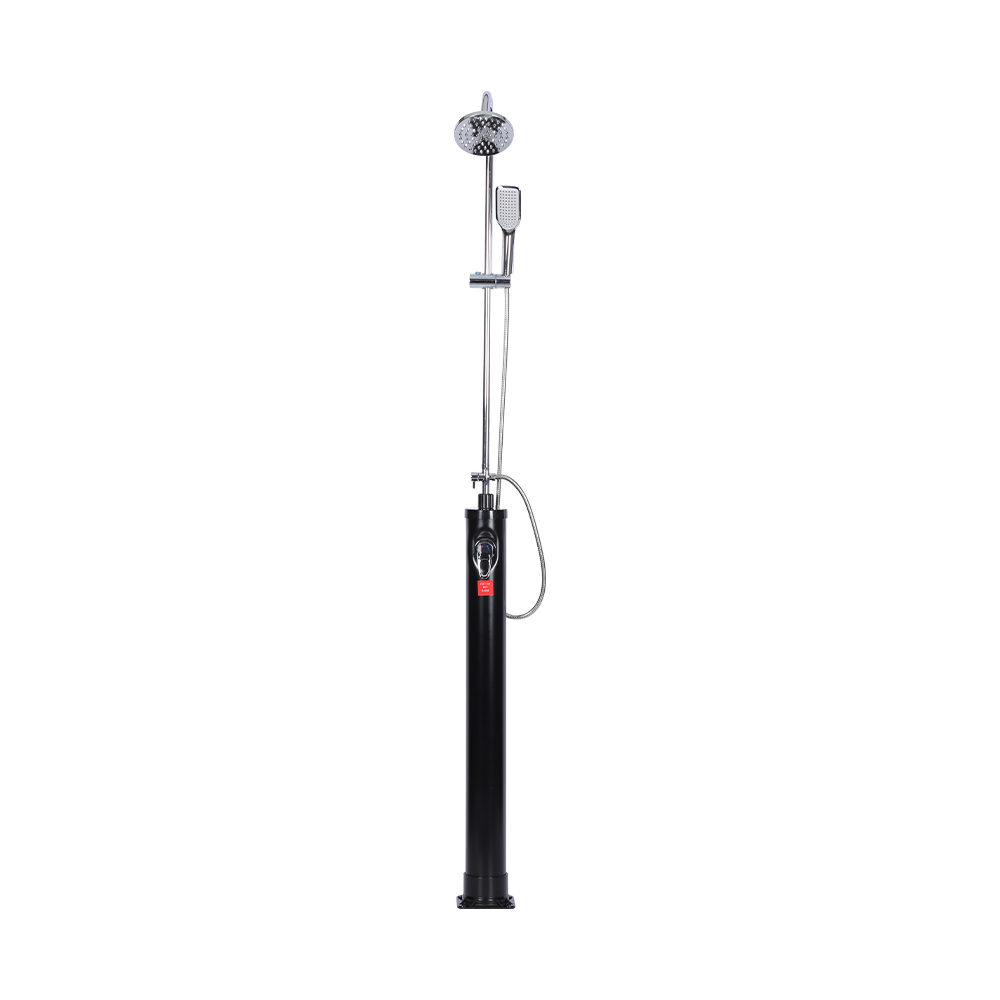
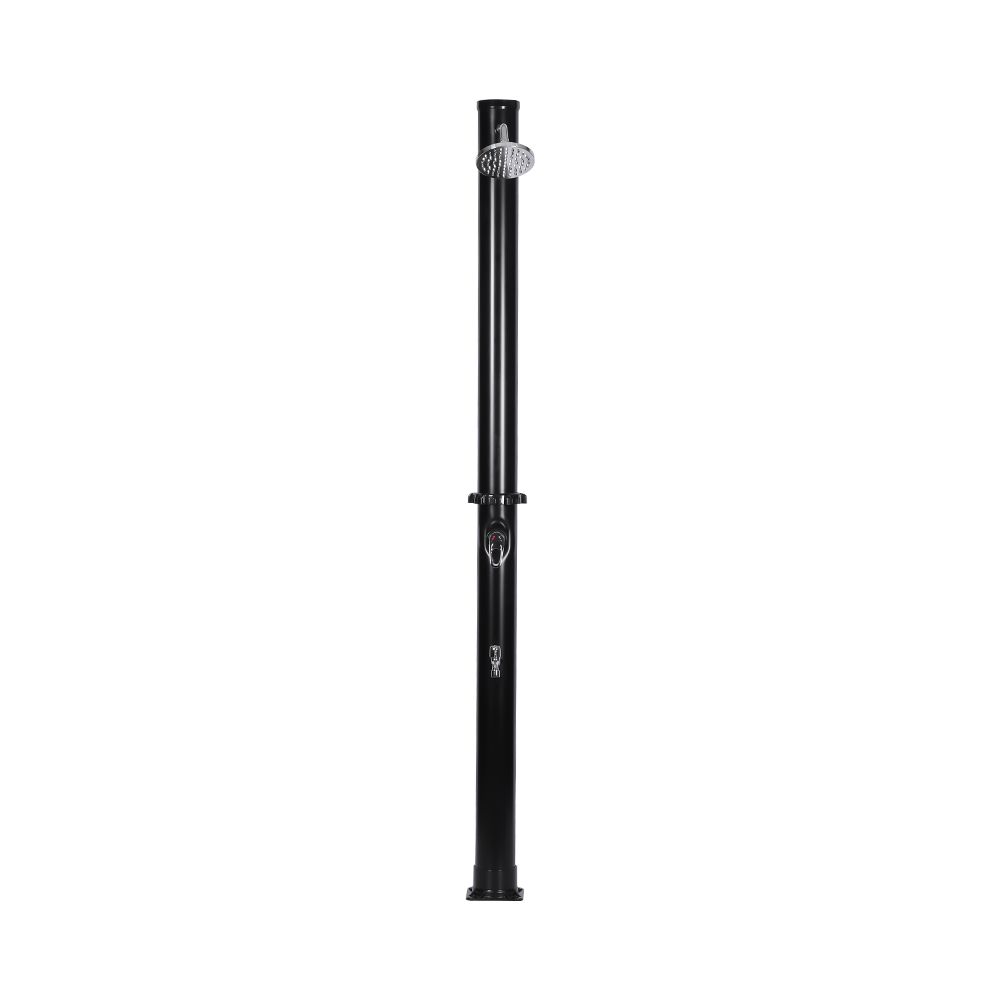
outdoor solar pool shower: Specifically designed for open-air swimming pools and private beaches. Its core function lies in using solar radiation energy to preheat the rinsing water, rapidly removing chlorine ions, salt, or sand particles from the body surface to protect the pool water balance while reducing cleaning pressure on indoor main bathroom systems.
Portable and Off-Grid Shower Systems
outdoor portable showers: This type of equipment breaks through the limitations of traditional pipe networks. Usually integrating micro electric water pumps, rechargeable lithium batteries, or foot-operated pressure structures, it can directly utilize water buckets or vehicle-mounted water tanks for water supply, serving as core equipment for outdoor camping, field operations, and temporary campsite washing.
Thermal Efficiency: Analysis of High-Efficiency Solar Heat Collection Technology
In off-grid or energy-saving outdoor sanitation, solar garden shower and solar power outdoor shower represent the core evolution direction of current technology. The core mechanism does not rely on photovoltaic power generation to drive electric water heaters, but rather uses efficient solar thermal utilization technology for fluid heating.
These systems usually design a high-capacity heat-absorbing water storage cavity inside the integrated column. The outer shell uses composite materials with high absorption and low emissivity (such as multi-layer anti-corrosion coated aluminum alloys or special heat-resistant polymers) to maximize the capture of solar radiation. When cold water enters from the bottom, it gradually heats up through thermal convection inside the cavity. Well-engineered designs are equipped with an integrated single-handle mixing valve, allowing users to precisely adjust the cold-to-hot ratio to prevent scalding caused by excessively high temperatures in the solar single-line water supply.
Core Parameter Comparison and Selection Reference
| Performance and Technical Parameters | Fixed Standard Systems (outdoor shower / garden shower) | Integrated Solar Systems (solar garden shower / outdoor solar pool shower) | Mobile Portable Systems (outdoor portable showers) |
| Main Structural Materials | 316 Stainless Steel / Precision Cast Copper | Anti-UV Engineering Plastics / Anodized Aluminum Heat Pipe | ABS Engineering Plastics / Food-Grade Silicone Hose |
| Heat Source Supply Method | Connected to Residential Pressurized Hot Water Network or External Gas Boiler | Solar Radiation Thermal Energy (Passive Heat Collection) | External Preheated Water Storage / Passive Cold Water Rinsing |
| Standard Water Capacity | Unlimited (Continuous Online Supply) | 20L / 30L / 40L Common Specifications | 10L - 25L (Depending on Portable Water Bag/Bucket) |
| Working Water Pressure Range | 0.15 MPa - 0.45 MPa | 0.20 MPa - 0.35 MPa | 0.05 MPa - 0.15 MPa (Self-Contained Micro Pump Pressurization) |
| Installation Technical Requirements | Requires Pre-buried Supply and Drainage Pipelines, Concrete Foundation Curing | Requires Level Ground Expansion Bolt Fixing, External Hose Connection | Zero-Base Fast Plug-in, Hook or Bracket Adsorption |
| Core Weatherability Indicators | Chlorine Ion Corrosion Resistance, Anti-Freezing Valve Core in Winter | Anti-UV Aging Valve Body, High Temperature Expansion Stability | Drop Resistance, High Interface Sealing to Prevent Leakage |
Technical Bottleneck Resolution: Salt Spray Corrosion and Pipeline Drainage Design
When deploying outdoor solar pool shower or solar power outdoor shower in practical applications, the equipment is exposed to harsh natural conditions such as ultraviolet rays, high humidity, and even high salt spray (coastal environments) for a long time. Two engineering problems must be solved:
Material Corrosion Resistance Grade
Ordinary stainless steel is highly prone to pitting corrosion in swimming pool water environments containing chlorine ions or in sea breezes. High-standard outdoor system valve cores and surface pipe fittings should adopt stainless steel of no less than SUS316 grade, or brass with strict anti-corrosion electroplating. The surface of the heat collection column needs an anti-UV coating to avoid material embrittlement and fading under long-term sun exposure.
Winter Anti-Freezing Drainage System
In severe cold regions, pipeline water accumulation freezing and volume expansion are the main causes of valve body and heat collection cavity rupture. The engineering design must include a bottom one-button drainage valve. Before the arrival of the winter suspension period, the water supply must be cut off and the residual water inside the column body and the mixing valve cavity must be completely drained to ensure that the system can restart and run normally in the spring of the following year.
-
How Do You Maintain and Clean Your Solar Shower for Long-Term Use
Empty the Tank After Each Use Maintaining the cleanliness and functionality of your solar shower is ...
-
Comprehensive Guide to Solar Showers: From Portable Bags to Luxury Poolside Units
Introduction to Solar Showers What is a Solar Shower? A solar shower is an innovative and environmen...
-
How to Choose the Perfect 8L Solar Shower for Beach, Pool & Garden Use
Benefits of Using an 8L Solar Shower at the Beach 1. Convenience and Portability for Beachgoers An 8...
-
The Ultimate Guide to 18L Solar Showers: Reviews, Tips, and How-To
Introduction to 18L Solar Showers In recent years, 18L solar showers have become a must-have item fo...
No.27, Fengshan Road, Hangfu Town, Kecheng District, Quzhou City, Zhejiang Province, China
(+86)-17888203192
 Wholesale Outdoor Solar Shower Factory