
 English
 Deutsch
 Español
 Français

Here You Can Get Our Latest Information
Industry News
Outdoor Solar Shower with Base: Where to Find, Compare, Specify, and Install
An outdoor solar shower with base is a complete standing unit: the solar collector column, the water tank, the shower head, and a foot or platform that carries the load and keeps the column upright. The practical answer to where you can find one is straightforward: the most reliable source is a manufacturer that makes both the shower column and the base, because the base is a structural part, not a generic add-on. A base that is designed for a different tank size, wall thickness, or mounting pattern can arrive with the wrong bolt spacing, too little ballast capacity, or no provision for ground fixing. For a garden, poolside, or beach installation, confirm four points before you compare prices: the base type, the tank capacity, the material and UV treatment, and the fixing method for wind and soft ground.
A useful first-pass checklist looks like this:
- Does the base accept the exact tank diameter and mounting hole pattern of the shower column?
- Is the base designed to be filled with water or sand for ballast, or fixed to a hard surface with anchors?
- Does the unit include a drain path so rainwater does not collect around the foot?
- Are the fasteners stainless steel or otherwise protected against corrosion?
- Can the supplier provide a replacement base separately if the original is damaged?
What a base really does on an outdoor solar shower
The base is the part that turns a solar shower column into a stable appliance. It spreads the weight of a full tank across a larger footprint, resists tipping when the shower head is pulled or the unit is nudged, and protects the bottom of the column from direct contact with wet ground. That matters because a full 35L tank adds roughly 35 kg of water weight, and the column also carries wind load. A base that is too small or too light may look acceptable when the shower is empty, then become unstable once the tank is full and the ground is wet.
There are four common base designs in outdoor solar shower products: integrated molded bases, separate ballast bases, mobile bases with wheels or handles, and surface-fixing plates for decks and concrete. Each one solves a different site problem, and the purchase decision should start with the site rather than the product photograph.
| Base type | Best for | Installation demand | Risk to check |
|---|---|---|---|
| Integrated molded base | Garden lawns, poolside lawns, and fixed seasonal positions | Low to moderate; the unit stands on its own but should be checked for level ground | Water ballast capacity may be limited; confirm the fill port and drain plug |
| Separate ballast base | Sites where the shower column is sold with a matching foot or platform | Moderate; requires correct assembly and ballast filling | Mismatched bolt spacing and missing anti-slip pads |
| Mobile base | Poolside storage, rental properties, and showers that move between positions | Moderate; wheels or handles help movement but need locking or chocking | Mobility can reduce stability if the base is not braked or weighted |
| Surface-fixing plate | Wood decks, concrete patios, and windy exposed sites | Higher; requires anchors, sealant, and correct drill spacing | Deck waterproofing and anchor pull-out strength |
An integrated base is usually the simplest option for a garden because it arrives as one product with known dimensions. The important detail is not whether the base looks wide in a photo, but whether it has a practical ballast volume and a stable connection to the column. A base that can hold 10L to 15L of water or sand behaves very differently from a hollow shell that holds only 2L. The fill point should be accessible without lifting the whole shower, and the drain point should be easy to open before winter.
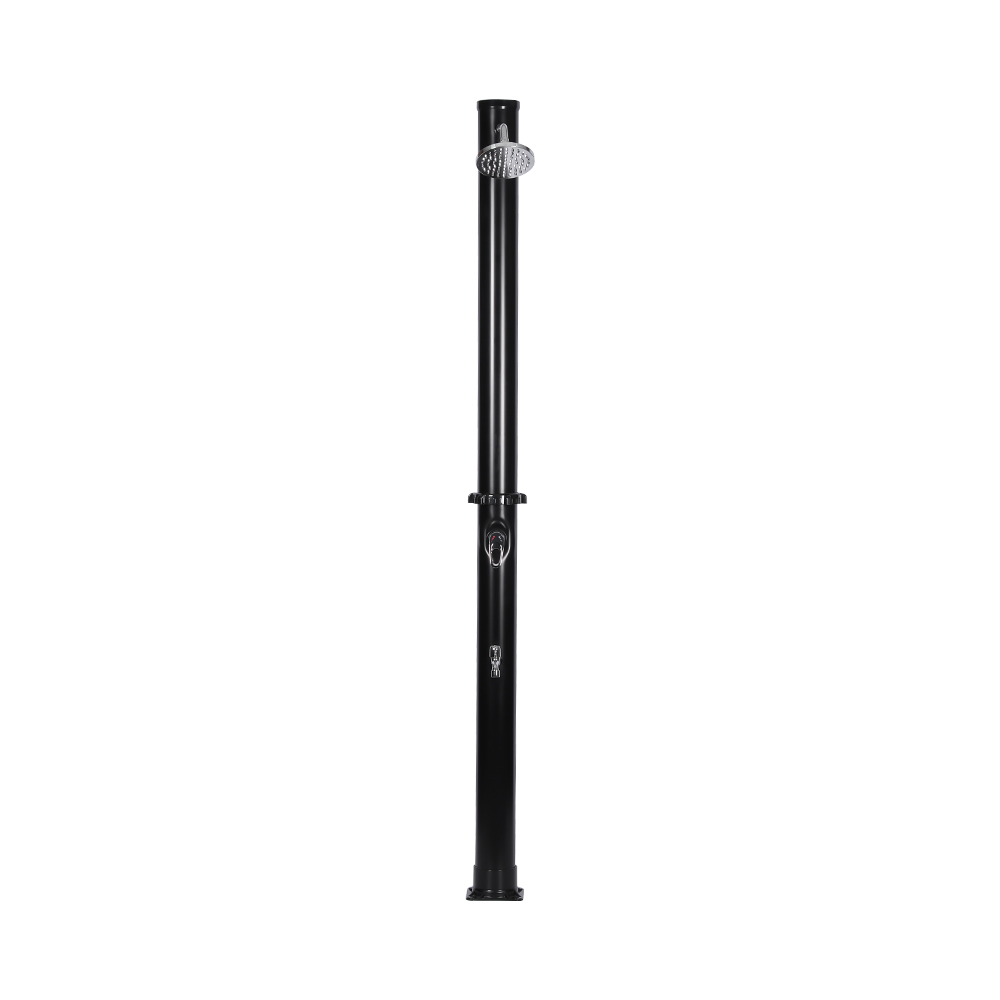 LY18L01 18L Solar Shower Column with Integrated BaseMatched column, tank, and base reduce separate-foot compatibility concerns; includes 18L PVC solar heating, single-lever mixer, and adjustable rain head.View Product →
A representative example is the LY18L01 18L outdoor garden PVC solar shower column with base. Its value is not simply that a base is included, but that the column, tank, and base are matched as one assembly. That reduces the risk of buying a separate foot that looks compatible but has a different bolt circle or a footprint that is too narrow for the tank height.
Where to find an outdoor solar shower with base
You can find these products through three main routes: a dedicated outdoor shower factory, a garden and pool equipment supplier, or a custom project supplier that develops a shower around a specific site or product line. The factory route is usually the strongest choice when you need a base that matches the column, because the base tooling, tank size, and packaging are controlled together. A garden retailer may stock a small number of models, but replacement bases and spare parts are often limited. A custom supplier can develop a base for a hotel, rental site, or garden project, but the specification must be written clearly so that the base is not treated as a cosmetic accessory.
Factory-direct product ranges
Look for a manufacturer that lists the base as part of the model name or specification. The product page should show the tank capacity, base material, fill method, and whether ground anchors are supplied.
Specialist garden and pool suppliers
These suppliers are useful for small quantities and local delivery, but check whether the base is sold as a spare. A shower without a replacement base can become difficult to maintain after a few seasons.
Custom project supply
For a rental property, pool club, or landscape project, specify the surface, wind exposure, and water supply. The base design should follow those conditions rather than being chosen after the column.
Replacement base sourcing
If you already own a solar shower column, measure the mounting hole spacing, tank diameter, and column bottom width before ordering a separate base. A base that is 10 mm out of alignment can be unusable.
When you compare suppliers, ask for the base drawing or a dimensioned photo, not only a lifestyle image. The drawing should show the footprint, the height of the mounting surface, the fill port, the drain plug, and the anchor holes. For a poolside unit, also ask whether the base has drainage slots or a raised foot to keep the column out of standing water. Standing water around the base accelerates dirt build-up and makes the footing slippery.
A mobile base is a different product choice. It is helpful where one shower serves several positions, such as a pool deck that is rearranged between seasons. The trade-off is that mobility and stability pull in opposite directions. A mobile base needs a locking system, a low center of gravity, and enough weight or ballast to stay put when the shower is in use. If the base is moved frequently, check the wheel material and the handle fixing points, because these are the first parts to loosen.
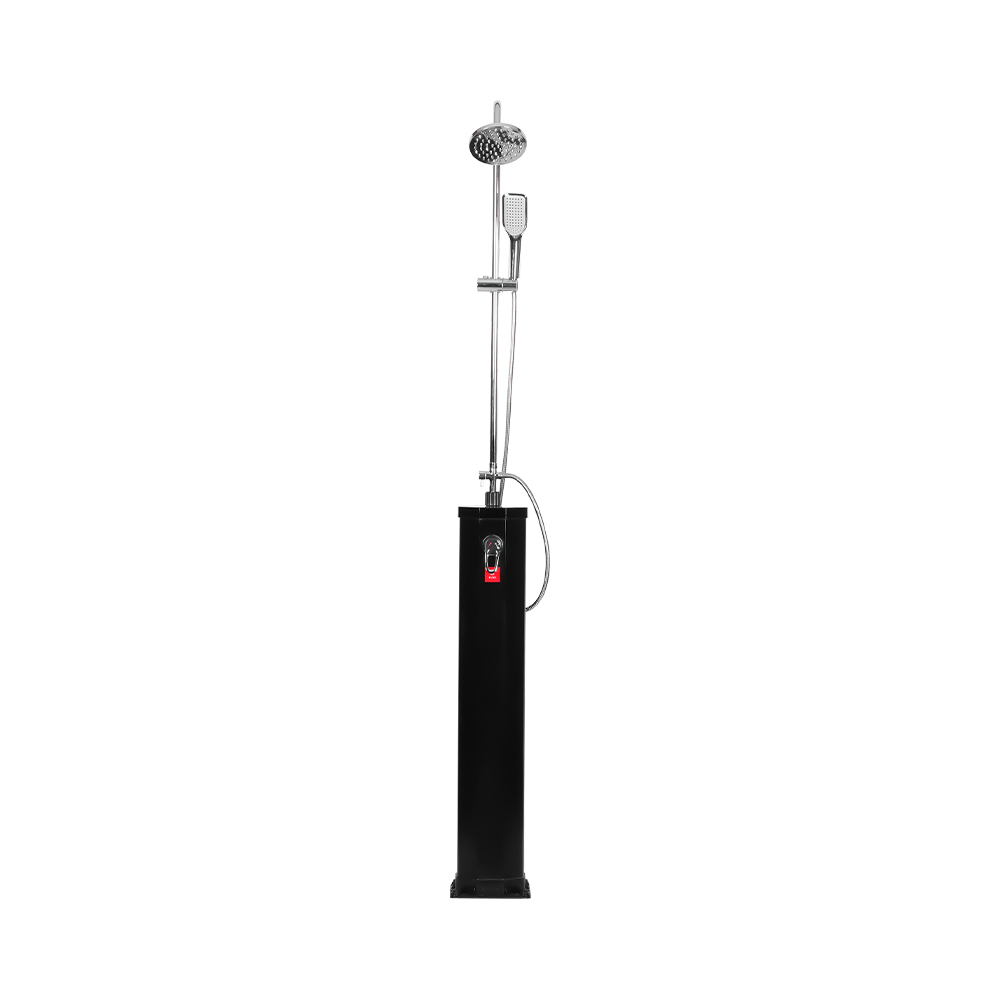 LY18L09B 18L Poolside Solar Shower with Mobile Stainless Steel BaseMobile stainless steel base aids repositioning for cleaning or seasonal changes; 18L PVC tank and adjustable rain head support poolside outdoor showering.View Product →
The LY18L09B 18L poolside PVC solar shower with mobile stainless steel base is an example of this category. It suits sites where the shower needs to be shifted for cleaning, storage, or seasonal layout changes, but the user should still plan a fixed parking position with a level surface and a way to lock the base.
Capacity, base footprint, and user expectations
Capacity affects both the usable shower time and the load that the base must carry. An 8L solar shower is light and quick to heat, but it is best for a quick rinse rather than a long family shower. An 18L unit is a practical middle size for a garden or small pool area. A 30L or 35L unit gives more use between refills and is common for family gardens, poolside showers, and beach houses. A 60L model can serve heavier use, but the base and ground conditions must be stronger because the filled weight is much higher.
| Capacity | Typical use | Base consideration | Practical note |
|---|---|---|---|
| 8L | Quick rinse, small garden, beach day use | Compact base; still needs a level surface | Fast heating but short shower time |
| 18L | Garden shower, small poolside unit, family backup | Integrated or separate base with clear ballast volume | A common balance between weight and usable water |
| 30L to 35L | Family garden, pool deck, holiday rental | Wider footprint or stronger anchoring recommended | Check ground firmness and wind exposure |
| 60L | Higher-use poolside or group settings | Heavy-duty base, hard surface, or designed footing | Do not rely on a small ballast base alone |
Base footprint should be checked against the full tank weight, not the dry product weight. A 35L tank holds about 35 kg of water, and the column and base add further weight. If the base is placed on soft lawn after rain, the load can sink on one side. A simple solution is to set the base on a compacted gravel pad, a concrete paver, or a pressure-treated board that spreads the load. The shower should not wobble when the tank is full; if it does, stop using it until the footing is corrected.
 Solar Shower Base Accessory Range for Column Stability and DrainageReplacement or project footing accessory with standard, reinforced, and WPC variants; pre-drilled holes and drainage support stable outdoor shower columns.View Product →
The solar shower base accessory range is useful when a base needs to be replaced or when a project uses several columns with a common footing design. Before ordering a separate base, compare the mounting pattern and the column bottom diameter. A base with a larger footprint can improve stability, but it must still fit the intended location and allow water to drain away.
Material and structural checks before you buy
Material choice affects appearance, weight, and service life, but the structural details matter just as much. A thick PVC base with poor UV stabilization can become brittle, while a thin metal base with exposed edges can corrode at the fixing points. The useful approach is to check the material, the wall thickness, the joint design, and the fastener protection as one system.
PVC columns and bases
PVC is light, resistant to many garden chemicals, and easy to mold into an integrated base. Check whether the PVC is UV-stabilized and whether the base has internal ribs rather than a flat hollow shell.
ABS shower heads and fittings
ABS is common for shower heads and small fittings because it is tough and dimensionally stable. A chrome finish should be checked for adhesion, especially around threaded joints and the shower head edge.
Aluminum columns
Aluminum reduces weight and resists rust, but it can flex if the base connection is weak. Look for a reinforced insert or a broad mounting collar where the column meets the base.
Stainless steel bases and fasteners
Stainless steel is useful near pools and coastal sites, but grade and finish still matter. Check for sharp edges, welded joints, and drainage holes that can trap water.
WPC boards and footings
Wood-plastic composite boards can spread load and improve appearance around the base. They should be installed with a slight fall so water does not sit under the shower.
Structural checks should include the following: the base should not rock when placed on a flat floor; the column should not lean when the tank is filled; the shower head should not pull the column forward; and the base should have a clear drain path. Also check the fasteners. Small screws that are not stainless steel can rust within a season, especially in coastal air or near chlorinated pool water. If the base uses a fillable cavity, confirm that the fill cap seals well and that the drain plug can be opened without tools.
Installation and site preparation
Installation should begin with the ground, not the shower. A solar shower with base needs a firm, level surface that can carry the filled weight and shed water. Grass is acceptable for a light seasonal unit if the ground is compacted and the base is set on a load-spreading pad. Concrete, pavers, and timber decks are better for larger tanks. If the site is exposed to wind, the base should be anchored or weighted according to the manufacturer’s instructions.
- Clear the position and check that the surface is level in both directions. A 5 mm slope under a narrow base can become a visible lean once the tank is full.
- Decide whether the base will be ballasted, anchored, or both. Follow the supplied step-by-step installation and removal guidance for an 18L model if you are working with a similar column design.
- Place the base on a load-spreading pad if the ground is soft. Do not bury the drain hole or block the base ventilation gaps.
- Connect the column to the base and tighten fasteners in a cross pattern. Do not overtighten plastic threads; use the sealing washer and check for movement.
- Fill the tank and observe the unit for stability before connecting the shower head or using the shower.
- Check the drain path and the surrounding surface for pooling. If water collects under the base, raise the footing or improve drainage.
A common installation error is to fill the tank before the base is secured. Fill the base ballast first where the design allows it, then connect the column, then fill the tank. This sequence keeps the center of gravity low during assembly and reduces the chance of tipping.
How fast does an outdoor solar shower heat?
Heating time depends on sunlight, air temperature, wind, water volume, and the absorber design. A small 8L unit can reach a usable temperature faster than a 60L unit because there is less water to heat, but it also delivers a shorter shower. A larger tank may need most of a sunny day to reach its best temperature. The chart below is a planning guide rather than a guarantee; it assumes full sun, a clear absorber surface, and moderate air temperature.
Use the chart to plan the filling time, not to promise a fixed water temperature. Morning fill and afternoon use is the most practical pattern for most gardens. If the shower is shaded for part of the day, expect a longer heating window. Wind also matters because it pulls heat from the column surface. A sheltered position with full sun from mid-morning to late afternoon usually performs better than an exposed position with the same tank size.
For poolside use, the shower can be filled after the morning swim and used in the late afternoon. For a rental property, a larger tank reduces the number of refills but may not fully heat if guests use it early. A simple sign that states the fill and use pattern prevents disappointment without overpromising performance.
Common buying risks and how to avoid them
The most common problems are not related to the solar principle itself. They come from mismatched parts, weak footings, and missing installation details. A shower can look correct in a photo and still be unsuitable if the base is too narrow for the tank, the fasteners are not corrosion-resistant, or the site drains poorly.
| Risk | What happens on site | Check before ordering |
|---|---|---|
| Base not matched to column | Bolt holes do not line up or the column sits off-center | Request the mounting pattern and column bottom dimensions |
| Too little ballast | The unit moves when the shower is used or in gusty weather | Confirm ballast volume and whether sand or water is recommended |
| Poor drainage | Water sits under the base and the footing becomes slippery | Check drain holes, base height, and the slope of the site |
| Corroding fasteners | Screws seize or stain the base after a few months | Ask for stainless steel or coated fasteners and check spare parts |
| No replacement base | A damaged foot makes the whole shower difficult to use | Confirm that the base is available as a separate accessory |
Another risk is packaging. A base with a wide footprint can be damaged in transit if it is not protected at the corners. Ask how the base is packed and whether the column is separated from the base inside the carton. For projects that involve several units, request a sample or a clear packing diagram before the main order so that the installation team knows what will arrive.
Maintenance, winter care, and long-term base stability
Maintenance is mostly about water, sunlight, and fasteners. Rinse the tank and shower head at the start of the season, check the base for standing water, and tighten any loose connections. If the water is hard, mineral scale can build up inside the tank and shower head. A mild descaling routine keeps the flow rate steady and reduces the chance of blocked nozzles.
- Empty the tank before a frost period if the shower will not be used. Trapped water can expand and crack fittings.
- Open the base drain plug and tilt the unit so that water does not remain in the ballast cavity.
- Clean the base surface with water and a soft brush. Avoid abrasive pads on colored PVC or coated metal.
- Check the mounting bolts and base feet at the start of each season. Replace rusted fasteners before they seize.
- Follow a regular maintenance and cleaning routine for long-term use to keep the absorber surface clear and the shower head flowing evenly.
- Inspect the ground under the base after heavy rain. Soft ground can cause the unit to settle on one side.
Winter care should include the base as well as the tank. If the base is fillable, drain it completely. If the unit stays outdoors, cover the shower head and check that water cannot collect in the base cavity. A base that freezes with water inside can crack even if the tank is empty. For coastal sites, rinse the base and fasteners with fresh water after periods of salt spray.
Matching the shower to garden, poolside, beach, and rental use
The same base design does not suit every location. A garden installation usually values appearance and a stable lawn footing. A poolside installation needs drainage, corrosion resistance, and a position that does not block walkways. A beach or coastal site needs stronger attention to salt and wind. A rental property needs a clear fill-and-use routine so that guests do not overfill or move the shower carelessly.
Family garden
Choose an 18L to 35L unit with an integrated or ballast base. Set it on a level lawn pad or paver and keep the fill port accessible. A wider base is useful where children may pull on the shower head.
Poolside
Prioritize drainage and corrosion resistance. A base that keeps the column above standing water is easier to maintain. Check that the footing does not create a trip hazard near the pool edge.
Beach or coastal
Use stainless fasteners and rinse the base regularly. Wind exposure is usually higher, so ballast or anchoring should be planned before the first use rather than added later.
Rental and holiday property
Select a model with a simple fill cap, a visible drain, and a base that is difficult to move accidentally. A short instruction card can reduce misuse and service calls.
For a garden, the base can be partly hidden with pavers or a low planting edge, but do not bury the drain holes. For a poolside site, keep the base out of the main splash zone if possible. For a beach house, a mobile base may be useful for storage, but it should be parked on a firm surface during use. For rental properties, a fixed or weighted base is usually safer than a lightweight movable one.
FAQ: outdoor solar showers with base
Where can I find an outdoor solar shower with base?
The best place to start is a manufacturer that produces both the shower column and the base, because the mounting pattern and tank size are matched. Specialist garden and pool suppliers can also stock complete units, but confirm that the base is included and that a replacement base is available.
Can I buy the base separately?
Yes, if the supplier lists the base as an accessory. Measure the column bottom diameter, the mounting hole spacing, and the height of the connection point before ordering. A base from a different model may fit the footprint but still sit too high or too low.
Do I need to fill the base with water or sand?
Only if the base is designed for ballast. A fillable base adds stability, especially in wind or on soft ground. Follow the supplier’s instruction on the fill material and do not overfill beyond the marked level.
How do I stop the shower from tipping in wind?
Use a level, firm surface, fill the ballast cavity if available, and anchor the base where the site is exposed. Keep the shower head turned inward during strong wind and store the unit if a severe storm is expected.
What size solar shower is best for a family garden?
An 18L unit is a practical starting size for quick family use. A 30L or 35L unit gives more water between refills, but the base and ground must carry more weight. A 60L unit is better suited to heavier use and a stronger footing.
Can an outdoor solar shower with base sit on grass?
Yes, if the ground is level and firm. Use a load-spreading pad under the base and check the unit after rain. Soft ground can allow one side of the base to sink, which puts stress on the column connection.
How much water does the base add to the total weight?
A base that holds 10L of water adds about 10 kg when filled. That is separate from the tank weight. Check both figures together, because a small tank with a large ballast base can still be heavy to move.
How long does the water stay warm?
It depends on air temperature, wind, and tank insulation. A larger tank usually holds heat longer than a small one, but it also takes longer to heat. Plan to use the shower in the afternoon after a full sunny period.
What maintenance does the base need?
Rinse it, check the drain holes, and inspect the fasteners at the start of each season. Drain the ballast cavity before frost. Replace rusted screws and clean any grit from under the base so that it sits flat.
Can I use a solar shower with base by a swimming pool?
Yes, but choose a position with drainage and keep the base out of standing water. Rinse the base and fasteners regularly, especially where pool water or salt spray can collect. A mobile base can help with cleaning and seasonal storage.
-
How Do You Maintain and Clean Your Solar Shower for Long-Term Use
Empty the Tank After Each Use Maintaining the cleanliness and functionality of your solar shower is ...
-
Comprehensive Guide to Solar Showers: From Portable Bags to Luxury Poolside Units
Introduction to Solar Showers What is a Solar Shower? A solar shower is an innovative and environmen...
-
How to Choose the Perfect 8L Solar Shower for Beach, Pool & Garden Use
Benefits of Using an 8L Solar Shower at the Beach 1. Convenience and Portability for Beachgoers An 8...
-
The Ultimate Guide to 18L Solar Showers: Reviews, Tips, and How-To
Introduction to 18L Solar Showers In recent years, 18L solar showers have become a must-have item fo...
No.27, Fengshan Road, Hangfu Town, Kecheng District, Quzhou City, Zhejiang Province, China
(+86)-17888203192
 Wholesale Outdoor Solar Shower Factory