
 English
 Deutsch
 Español
 Français

Here You Can Get Our Latest Information
Industry News
Best Solar Shower for Camping: Capacity, Heating and Off-Grid Buying Guide
The Best Camping Solar Shower Is a Capacity Match, Not a Brand List
For most campers, the best solar shower for camping is an 18L to 35L freestanding unit with a UV-stable body, a stable base, a controllable shower head, and a fill port that is easy to use without spilling. An 8L model is the smarter answer for solo overnight hikes and quick beach rinses, while a 60L unit makes sense only when several people share one shower station or when the shower stays at a base camp for a full season.
The practical short answer
Choose capacity by the number of showers between refills, not by the biggest number on the box. Then check heat-up time, standing stability, and whether the shower head can be adjusted from a gentle rinse to a stronger wash. Those three points decide whether a solar shower feels convenient on day two or becomes a chore.
A solar shower is not a pressure shower. It uses gravity, sun exposure and a dark or UV-stabilized body to warm water. That simple design is exactly why it works well at camp: no mains power, no plumbing, and no complex setup. But it also means the best model is the one that fits your water budget and your campsite surface. A tall column with a narrow base can be perfect beside a pool and awkward on loose sand. A soft bag packs small but may need a branch or a vehicle rack to hang safely.
When campers ask what is the best solar shower for camping, the honest answer depends on how many people will use it, how far it must be carried, and whether the campsite has sun from mid-morning to late afternoon. The rest of this guide turns those variables into a clear buying decision.
Camping Solar Shower Capacity Comparison
Capacity is the first filter because it controls refill frequency and weight. The table below uses planning ranges for typical summer camping, not laboratory guarantees. Actual performance changes with starting water temperature, air temperature, cloud cover, wind and the angle of the sun.
| Capacity | Typical camping use | Water window | What to check before buying |
|---|---|---|---|
| 8L | Solo overnight trips, day hikes, beach rinses, small pack space | One short rinse or two very quick washes | Hanging loop strength, fill opening, leak-free cap, compact empty weight |
| 18L | Couples, small campervans, weekend camps, poolside and garden use | Two to three careful showers | Base stability, hose length, shower head height, UV-treated body |
| 30L | Families with children, longer camps, shared shower stations | Three to four short showers | Footprint, wind resistance, drain or empty method, lifting point |
| 35L | Group camping, overlanding, base camps, extended outdoor stays | Four to five short showers | Reinforced base, larger absorber surface, transport method, spare parts |
| 60L | Fixed seasonal camps, rental cabins, pool and beach facilities | Multiple showers with disciplined flow control | Installation surface, full weight, wind anchoring, seasonal storage |
A common mistake is buying a large capacity for a small campsite. Water is heavy, and a full 35L or 60L unit can be difficult to move once filled. On a vehicle-based trip, that weight is less of an issue because you can fill near the shower point. On a walk-in campsite, an 8L or 18L bag is often the more comfortable choice even if it means refilling once.
- Count showers, not litres: one generous rinse may use more water than two careful rinses.
- Check the empty weight as well as the full weight; the difference matters when carrying water from a tap.
- Match the base to the ground: sand, gravel, grass and packed earth behave differently under a tall column.
- Plan for shade and wind: a shower that heats well in an open field may cool quickly in a windy gap.
How Much Heat a Camping Solar Shower Really Delivers
Solar heating is simple but not instant. The body absorbs sunlight, the dark surface transfers heat to the water, and the hottest water rises toward the top. A shower filled with cold morning water needs several hours of direct sun before it feels comfortable. A shower refilled with already warm water from a jerrycan can feel ready much sooner. The chart below shows a realistic planning window for strong summer sun, not a promise for every location.
Typical heat-up window in strong summer sun
Planning ranges only. Starting water temperature, wind, shade and sun angle can shift results by more than an hour.
For a more detailed look at how sun angle and fill level affect comfort, these field notes on solar shower heat-up time are useful before choosing a capacity for a fixed camp.
Why the first litre feels hotter than the last
Hot water rises. In a tall column, the top section may feel pleasantly warm while the lower section is still cool. A quick shake or a gentle tilt can mix the layers, but it also releases some heat to the air. For camping, the practical approach is to fill the shower, let it heat undisturbed, and use a moderate flow rather than a wide-open stream. A shower head with simple on-off control saves more heat than most campers expect.
Cloud, wind and altitude
Thin cloud can still allow useful heating, but heavy overcast may only take the chill off the water. Wind removes heat from the body surface, so a sheltered spot against a vehicle or a windbreak can improve performance. At altitude, stronger sun may help during the day, yet cooler air and cooler water supply can offset that gain. In all three cases, a larger absorber surface helps, but it cannot replace direct sun.
The best solar shower for camping is therefore not automatically the one with the largest tank. It is the one that reaches a usable temperature within the time you actually have at camp. A 35L unit that needs most of the afternoon may be less useful than an 18L unit that heats by early afternoon and can be refilled for an evening rinse.
Buying Criteria That Change Camping Comfort
Once capacity is clear, the details decide whether the shower feels sturdy or frustrating. These are the points worth checking before purchase, especially when the shower will be used on uneven ground or packed away after every trip.
Body material and UV stability
PVC, ABS, aluminum and stainless steel each have a place. PVC is familiar in flexible bags and columns, and it can be tough when formulated for outdoor use. ABS offers molded shapes and a clean finish. Aluminum keeps weight down, while stainless steel adds a premium feel and corrosion resistance when properly finished. The real question is not which material sounds best; it is whether the material is stabilized for sun exposure and whether the joints, caps and threads are designed to survive repeated heating and cooling.
A dark body absorbs more solar energy, but dark color alone is not enough. Look for UV-resistant wording, a secure fill cap, and a body that does not become brittle at the folds. On a column shower, check the connection between the body and the base. That joint takes the most stress when the unit is moved while full.
Shower head and flow control
A fixed shower head with a wide spray can empty a small tank faster than the camper expects. A two-section head, a single-lever stand, or a simple twist control gives better control over the rinse. The best camping shower head is not the one with the most settings; it is the one that can deliver a gentle face rinse, a full body rinse, and a short pause without dripping away the warm water.
Check the hose length and the height of the head. A tall column is comfortable for standing adults, but it may be too tall for a small tent or a low vehicle awning. A compact unit with an adjustable head can be more versatile than a fixed luxury-style column.
Base, footing and wind
A stable base is essential. A round base with a wide footprint works well on firm ground, while a movable stainless base can help position the shower near a vehicle or pool. On sand, a narrow base may sink or lean. On gravel, a hard base may slide. The best setup uses a base that matches the surface and a windbreak that does not block the sun from the body.
Wind is the quiet enemy of solar shower comfort. It cools the water and makes the spray drift. A sheltered corner, a vehicle windbreak, or a simple screen can make a modest 18L shower feel much better than a larger unit standing in an exposed field.
Portability without fragility
Portable does not mean flimsy. A camping shower may be packed against cooking gear, strapped to a roof rack, or carried from a tap to a pitch. Look for protected threads, a cap that stays attached, and a hose that can be drained without kinking. If the unit is too heavy when empty, it will be left at home. If it is too fragile, it will not survive the season.
Parts and serviceability
Shower heads, hoses, caps and bases are the parts most likely to need attention. A replaceable head and a standard hose connection extend the useful life of the product. For campsite and rental use, the ability to replace one part instead of the whole shower matters more than a long feature list.
To compare shapes and capacities in one place, browse the full solar shower range and note which models use the same base or head design. Shared parts simplify storage and maintenance across a fleet of showers.
Match the Shower to the Camping Style
The same capacity can feel ideal in one campsite and awkward in another. The camping style, not the product photo, should decide the final choice.
Vehicle-based weekend camping
A 18L or 30L freestanding column is the easiest all-round choice. It can be filled near the vehicle, set up beside a tent or awning, and left in the sun while the group hikes. A stable base and a head height that clears the tallest user matter more than a large tank.
Tent camping without a vehicle
An 8L bag or a compact 18L unit is easier to carry and empty. Plan one short rinse per person and refill from a larger water container. A hanging loop or a small folding stand is useful when trees are sparse.
Beach and coastal camping
Sand and salt demand attention. A movable base helps position the shower away from loose sand, and a corrosion-resistant finish is useful near the coast. Rinse the unit with fresh water after the trip to protect the fittings.
Family base camp
A 30L or 35L model gives more water for children and dishes, but flow control is essential. Set a short rinse routine so the last person still has warm water. A wide base and a sheltered position reduce the risk of tipping.
Overlanding and long stays
A 35L column with a reinforced base and a practical shower head balances capacity and transport. Check how the unit drains and whether the hose can be stored without trapping water. A larger tank is only useful if it can be refilled and heated within the daily routine.
Seasonal garden and pool use
A 35L or 60L unit can serve a poolside rinse station, but it should be placed on a firm surface and anchored against wind. Seasonal use also makes winter draining and storage part of the buying decision.
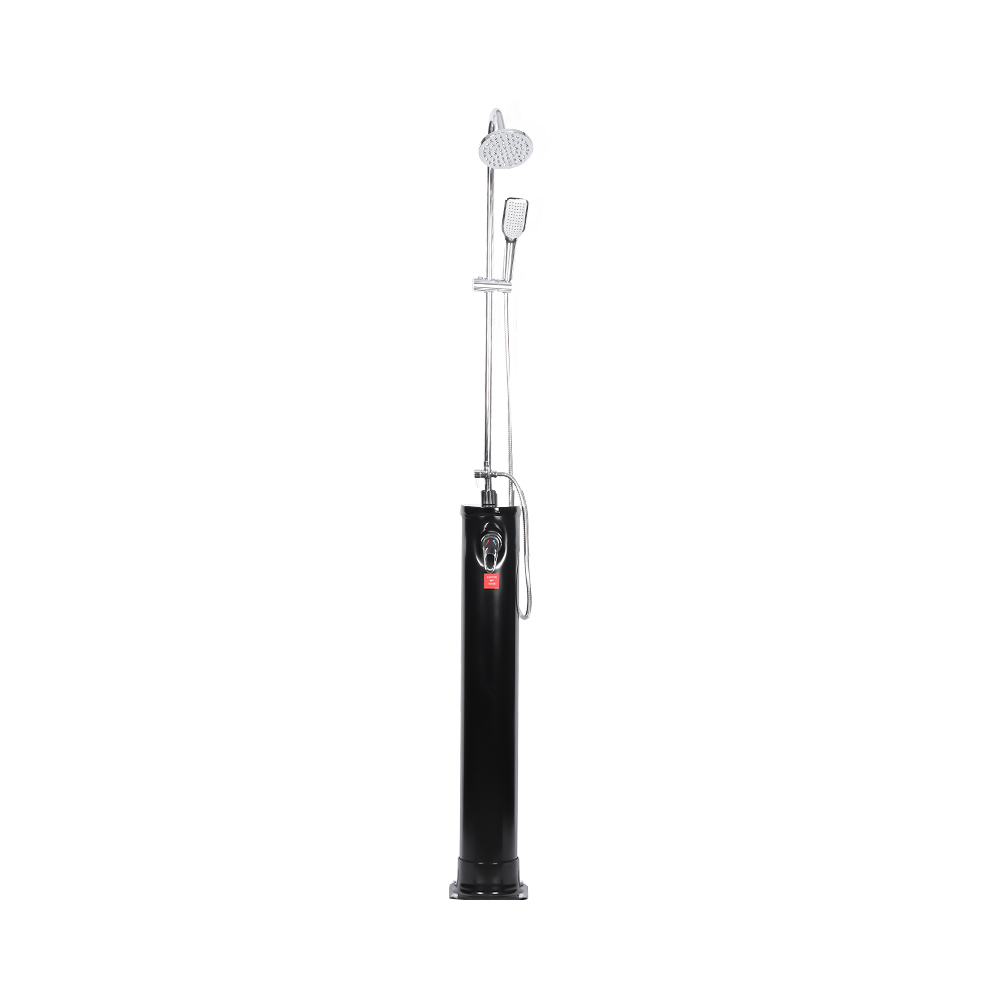
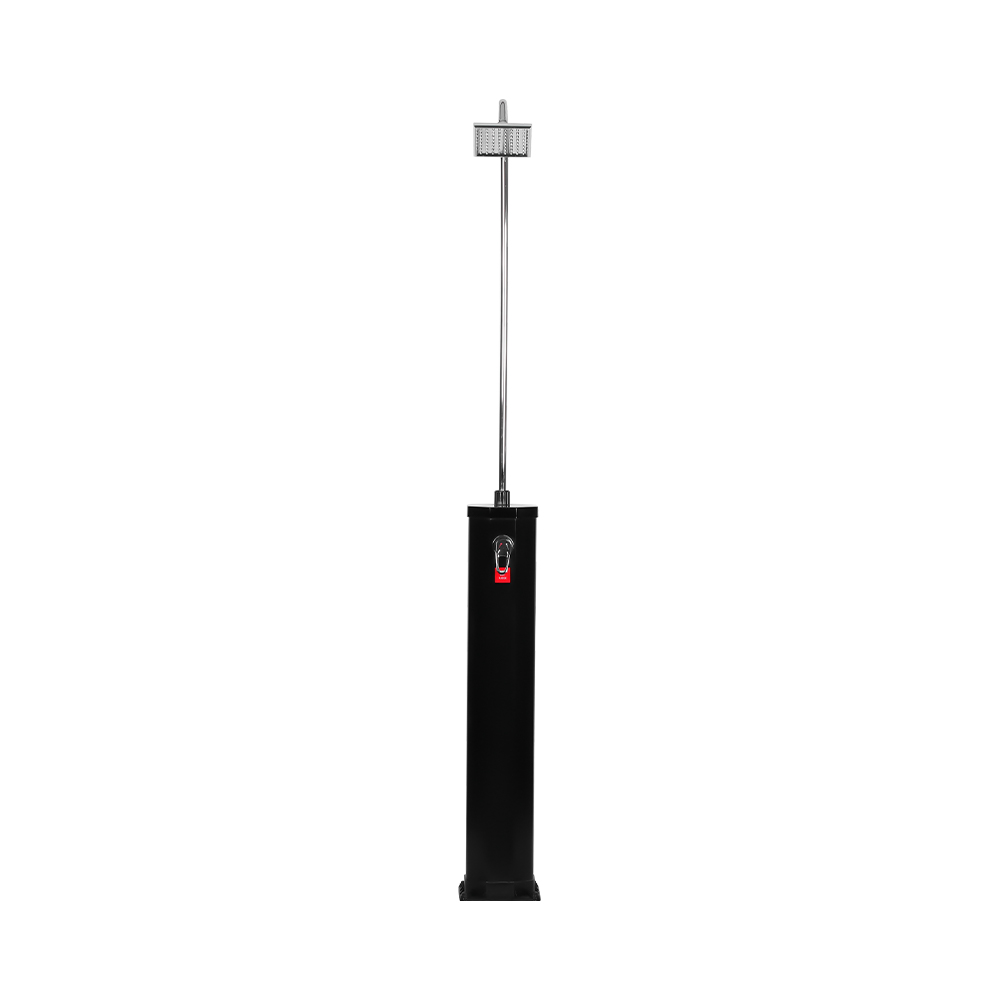
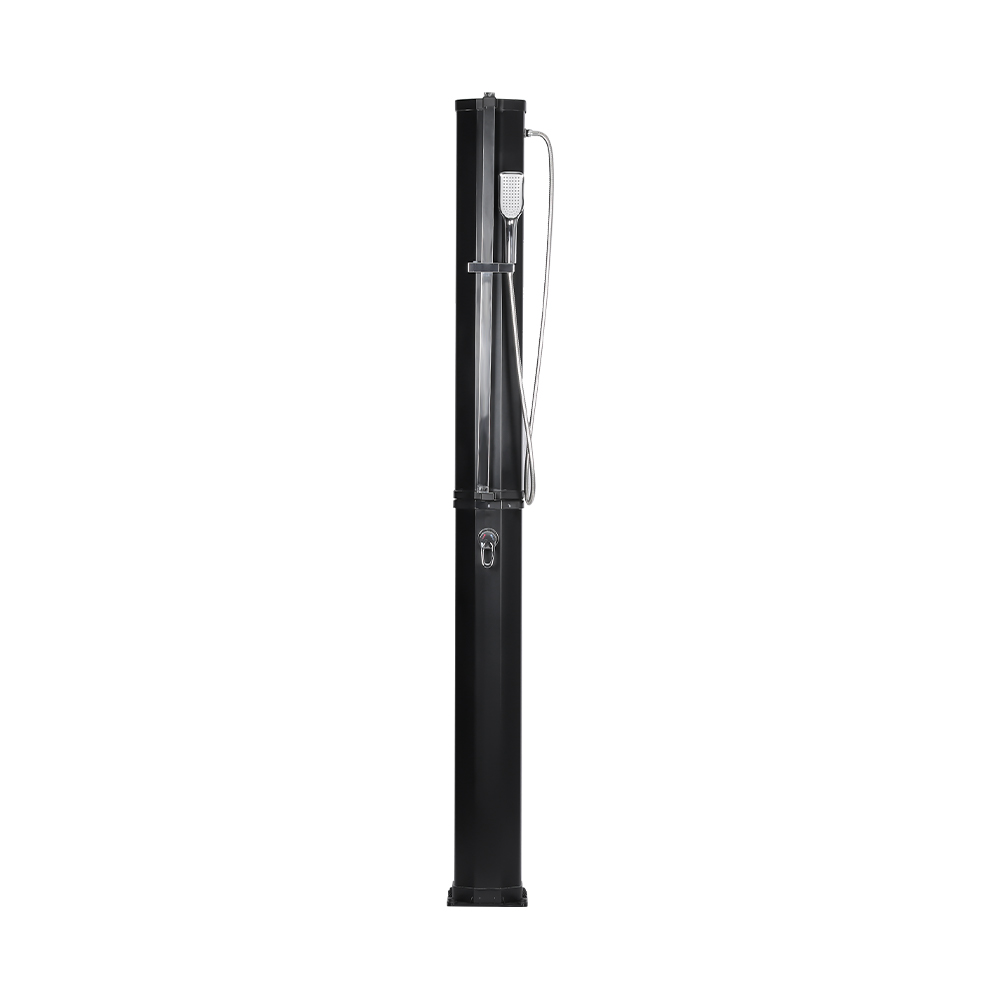
For a beach trip with a vehicle nearby, a compact 18L body with a stable base can be more practical than a tall column. The camping shower below is shaped for pool, garden and beach use, where the unit must be easy to move and simple to rinse after salt water exposure.
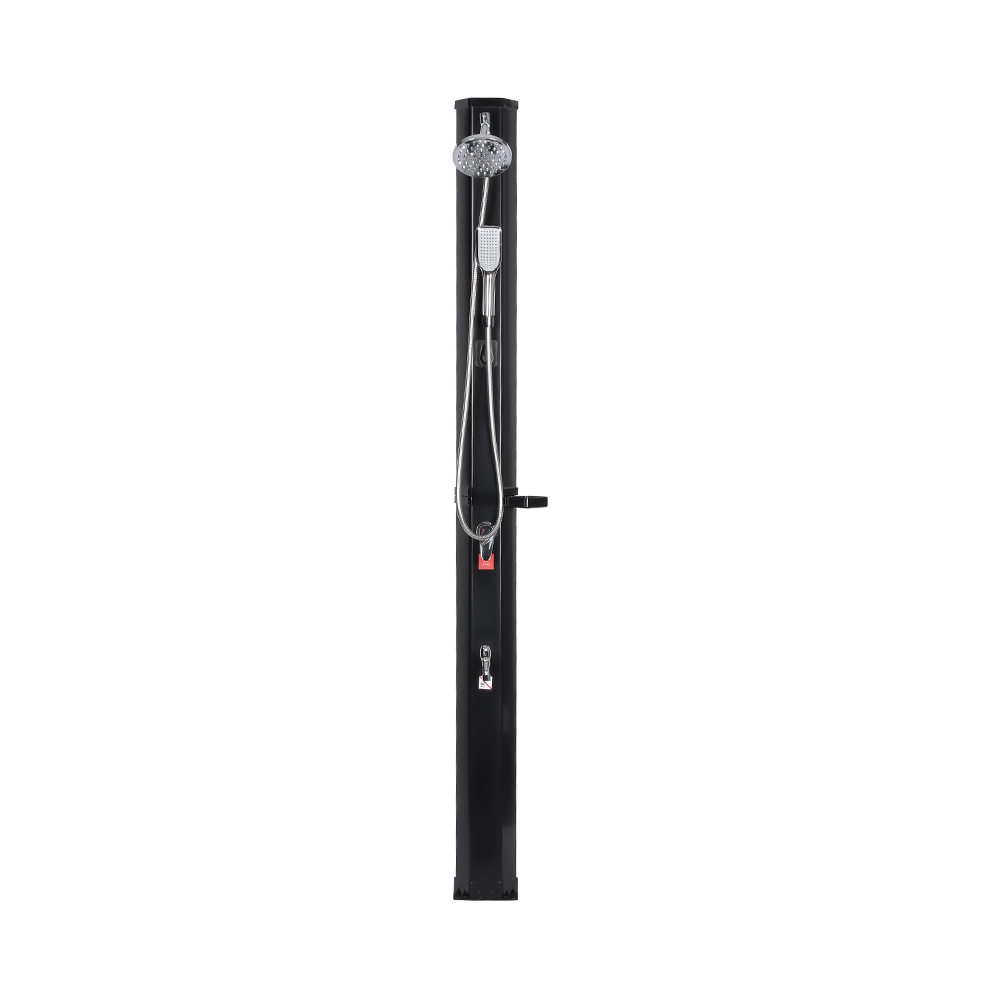 35L Portable Solar Shower for Camping and Outdoor UseThe 35L solar shower offers detachable storage, easy carrying, and hose filling for longer outdoor trips when refills are less convenient.View Product →
For longer trips, a 35L model with an easy-to-carry layout reduces the number of refills. The best choice is the one that fits the transport method: roof rack, van aisle, tent porch or hand carry from a tap.
What Each Capacity Does Well
8L: fast, light and best for solo use
An 8L solar shower is a rinse tool, not a family shower. It heats relatively quickly because there is less water to warm, and it is easy to carry when empty. Use it for a quick wash after a hike, a beach rinse, or a solo overnight camp. The limitation is obvious: one generous shower can empty it. If two people share it, plan a wet-down, shut-off, soap, and quick rinse routine. A hanging loop, a leak-free cap and a shower head that can be paused are more valuable than extra features.
18L: the flexible middle
An 18L column is the most versatile camping capacity for couples and small campervans. It offers enough water for two to three careful showers without becoming difficult to move. The best versions use a stable base, a hose that reaches comfortably, and a shower head that can be adjusted without tools. For weekend camping, 18L is often the point where capacity, heat-up time and portability balance best.
30L: family comfort with a weight penalty
A 30L shower gives families more breathing room, especially when children need help rinsing. It also works well at a shared camp shower station. The trade-off is weight and heat-up time. Fill it near the final position, keep it out of wind, and use a controlled spray. A 30L unit with a narrow base can feel less stable than a smaller shower, so check the footprint before buying.
35L: the long-stay and group option
A 35L solar shower suits overlanding, group camps and base camps where the unit stays in one place for several days. The larger body offers more absorber surface and more water, but it needs a firm, level position and a sensible refill plan. Look for reinforced bases, practical hose storage and a head that delivers a comfortable rinse without dumping the tank. For many outdoor programs, 35L is the upper limit that still feels portable.
60L: fixed-site capacity
A 60L unit is best treated as a fixed or semi-fixed shower for a seasonal camp, pool area or rental property. It is not the easiest choice for a weekend tent trip. The full weight is significant, and the heat-up window is longer. It makes sense when several people use the same shower over a day and when the unit can stay in direct sun without being moved.
Setup and Heating Routine That Gets Better Results
A solar shower rewards a simple routine. The goal is to give the body maximum sun exposure while keeping the base stable and the hose clear. This sequence works for most column showers and hanging bags.
- Choose a sunny, level spot from mid-morning to late afternoon. Avoid shade from tents, vehicles and trees during the main heating window.
- Fill with the coolest water you have, then cap tightly. If the water source is very cold, allow extra time or pre-warm a portion in a dark container.
- Purge air from the hose before the main heating period. Trapped air can make the flow uneven and reduce the usable water.
- Angle the body toward the sun if the design allows it. A slight tilt can improve exposure, but do not compromise base stability.
- Let the shower heat undisturbed for the planned window. Shaking or tilting too early releases heat and mixes the cooler lower layers.
- Test the temperature with a short spray before undressing. If the water is cooler than expected, use a lower flow and finish with a quick rinse rather than a long shower.
- After use, drain the hose and leave the cap loose if the unit will be stored. This reduces trapped moisture and odor.
A practical camp day
Fill an 18L or 30L shower at 9 a.m., place it in full sun with the base on firm ground, and plan the first shower for early afternoon. Keep one litre in reserve for a face and hand rinse after cooking. If the afternoon turns windy, move the shower behind a vehicle windbreak but keep the body exposed to the sun. This routine uses the same water twice in effect: once for the main wash and once for a small clean-up.
Campers who expect a hot shower at sunrise are usually disappointed because the unit has had no sun. A solar shower is a daytime system. For early-morning use, fill the night before only if the evening is warm, or use a small amount of pre-heated water to take the chill off. The best results come from working with the sun rather than against it.
Common Buying Risks and Field Problems
Most solar shower complaints come from a mismatch between the product and the campsite, not from the basic idea of solar heating. The table below links common symptoms to practical prevention.
| Symptom | Likely cause | Prevention |
|---|---|---|
| Water stays only lukewarm | Short sun window, heavy cloud, wind, or a partially shaded body | Fill earlier, move to full sun, add a windbreak, and choose a capacity that heats within your schedule |
| Shower tips or leans | Narrow base on soft ground or an uneven pitch | Use a wider base, level the ground, or anchor the unit before filling |
| Flow stops before the tank is empty | Trapped air, kinked hose, or a low outlet position | Purge air after filling, keep the hose straight, and check the outlet height |
| Plastic smell or cloudy water | Water left in the body between trips or poor drying | Drain and dry after every trip; use clean water and avoid long storage in heat |
| Cap leaks in transit | Worn thread, missing washer, or overfilling | Check the seal, do not fill above the marked level, and carry the unit upright |
| Hose or head cracks | UV aging or repeated bending at the same point | Choose UV-stabilized parts, store the hose loosely, and replace worn components early |
One more risk is buying for the photograph rather than the campsite. A tall column with a large head looks impressive, but it may be too tall for a low awning or too heavy for a walk-in pitch. A smaller unit with a better base and a controllable head often delivers a better camping experience. Check the full height, the empty weight, the filled weight and the base diameter before deciding.
Maintenance and Seasonal Storage
A solar shower is exposed to sun, water and outdoor grit, so a little care at the end of each trip protects the next one. Empty the body, drain the hose, and leave the cap open to dry in a shaded, ventilated place. Do not store the unit sealed with water inside; warmth and darkness encourage odor and surface film.
- Rinse the inside with clean water after beach or lake use, especially if the water contains salt or fine sediment.
- Clean the shower head holes with a soft brush or a pin if the spray becomes uneven.
- Inspect the base, threads and hose connection for cracks before packing.
- Store the body out of direct sun for long periods to slow UV aging.
- Keep spare washers and a spare cap with the camping kit; these small parts cause most leaks.
Cold-season storage
Water expands when it freezes. If the shower will be stored where temperatures drop below freezing, drain every part completely and leave the cap loose. A small amount of water trapped in a hose or head can split the material. For seasonal garden or pool showers, disconnect the hose and store the body indoors or under cover.
When to replace rather than repair
Replace the unit when the body becomes brittle, the base joint cracks, or the inner surface cannot be cleaned properly. A worn shower head or hose can usually be replaced on its own. If the body has changed shape or the cap thread no longer seals, repair is rarely reliable under solar heating and movement.
Custom Solar Shower Options for Outdoor Programs
Outdoor retailers, rental operators and camps often need a shower that fits an existing program rather than a single retail model. Capacity, body color, base type, shower head style, packaging and instruction language can all be adapted when the order is planned around a clear use case. A family camp may prefer a 30L or 35L unit with a simple head and a wide base. A beach rental may prioritize a compact 18L body, a movable base and corrosion-resistant fittings. A seasonal pool operator may need a taller column with a larger rain-style head and a stable footing.
For custom projects, start with the campsite conditions: ground surface, sun window, number of users, transport method and storage space. Those details determine the body shape and base more reliably than a color sample. A factory with in-house design and molding can adjust the fill port, hose length and head position without losing the simple gravity-fed function that makes a solar shower useful at camp.
Packaging and instructions also matter for outdoor programs. Clear filling guidance, a heat-up window chart and a winter storage note reduce returns and improve the user experience. The most successful custom shower is not the one with the longest feature list; it is the one that matches the way people actually wash at camp.
Frequently Asked Questions
What is the best solar shower for camping overall?
For most couples and small families, an 18L to 35L freestanding column is the best overall choice. It balances capacity, heat-up time and stability. Solo campers who carry their gear should look at an 8L bag or a compact 18L unit instead.
How long does a camping solar shower take to heat?
In strong summer sun, many 18L to 35L showers need roughly three to five hours to reach a comfortable temperature. An 8L bag may heat faster, while a 60L unit may need most of the day. Starting water temperature and wind can shift the result significantly.
Can I use a solar shower on a cloudy day?
Yes, but expect warm water rather than hot water. Thin cloud still allows some solar gain, while heavy overcast may only take the chill off. A larger absorber surface helps, but it cannot replace direct sun. On cool cloudy days, use a lower flow and keep the rinse short.
Is a larger solar shower always better?
No. Larger capacity means more water, more weight and a longer heat-up window. A 35L or 60L unit is useful at a fixed camp with several users. For a walk-in campsite or a quick weekend trip, an 18L model is often more practical.
How many showers can an 18L solar shower provide?
An 18L shower can provide about two to three careful showers when the flow is controlled. A long shower with a wide spray can empty it in one go. Wet down, shut off, soap, then rinse is the most reliable routine.
Do I need a stand for a camping solar shower?
A freestanding column has its own base and does not need a separate stand. A hanging bag needs a secure branch, vehicle rack or portable frame. Always check that the support can handle the full weight of the water.
How do I keep the water hotter for longer?
Keep the body in direct sun until the moment of use, shelter it from wind, and avoid shaking it before showering. Use a moderate flow and pause the head between rinses. A dark, UV-stable body and a full fill help, but do not overfill beyond the marked level.
Can a solar shower be used for dishes or pets?
Yes, with a separate outlet or a careful low flow. Use a dedicated shower head or a short hose for dishes and pet rinses, and keep the water below a temperature that could scald. Clean the head and hose after use.
What is the best capacity for a family of four?
A 30L or 35L unit is usually the practical range for a family of four at a base camp. Plan short showers and keep a small reserve for hand washing. If the campsite is walk-in only, two 18L units may be easier to carry and manage than one large unit.
How should I store a solar shower after the camping season?
Drain all water, leave the cap open, and dry the body and hose in a shaded, ventilated place. Store away from direct sun and freezing temperatures. Check the base, cap and hose before the next trip, and replace worn washers early.
-
How Do You Maintain and Clean Your Solar Shower for Long-Term Use
Empty the Tank After Each Use Maintaining the cleanliness and functionality of your solar shower is ...
-
Comprehensive Guide to Solar Showers: From Portable Bags to Luxury Poolside Units
Introduction to Solar Showers What is a Solar Shower? A solar shower is an innovative and environmen...
-
How to Choose the Perfect 8L Solar Shower for Beach, Pool & Garden Use
Benefits of Using an 8L Solar Shower at the Beach 1. Convenience and Portability for Beachgoers An 8...
-
The Ultimate Guide to 18L Solar Showers: Reviews, Tips, and How-To
Introduction to 18L Solar Showers In recent years, 18L solar showers have become a must-have item fo...
No.27, Fengshan Road, Hangfu Town, Kecheng District, Quzhou City, Zhejiang Province, China
(+86)-17888203192
 Wholesale Outdoor Solar Shower Factory