
 English
 Deutsch
 Español
 Français

Here You Can Get Our Latest Information
Industry News
How Warm Do Solar Showers Get? Real Temperatures, Timelines, and Buying Data
What Temperature Can a Solar Shower Actually Reach?
A solar shower usually settles between 95°F and 115°F when it has enough direct sun, enough volume, and enough time. In an 80°F afternoon with three hours of full sun, most well-designed units reach 100°F to 105°F. A 30L or 35L column shower with a dark absorber surface can push toward 110°F to 113°F. In hotter desert conditions, a large metal or dark PVC unit may briefly reach 118°F to 120°F, but that is not the everyday result for most gardens, pools, beaches, or campsites.
The practical rule is simple: expect roughly 20°F to 30°F above ambient air temperature after three hours of good sun. If the air is 80°F, plan for 100°F to 110°F. If the air is 65°F, plan for 85°F to 95°F. If the air is 95°F and the unit sits in full sun with no wind, 115°F to 120°F is possible. That difference matters because a 95°F shower feels warm but not hot, while a 110°F shower feels properly hot and needs careful mixing or shorter exposure.
- 8L solar shower bag: often 95°F to 105°F after two to three hours of strong sun.
- 18L solar shower column: commonly 100°F to 108°F after about three hours.
- 30L to 35L solar shower: typically 102°F to 112°F after three to four hours.
- 60L solar shower: often 95°F to 105°F after four to five hours because the larger water volume takes longer to heat evenly.
The key point is that “how warm” is not one number. It is a range shaped by sun angle, air temperature, wind, water volume, material, color, insulation, and how much water you draw during the shower. A unit that feels hot at 2 p.m. can feel merely lukewarm at 5 p.m. if clouds arrive or the wind picks up.
The Three-Hour Rule: Why 100°F to 110°F Is the Normal Target
Most passive solar showers need three to four hours of direct sunlight to reach a comfortable temperature. Passive means the unit relies on the sun to warm the water inside a tank, tube, or bag. There is no electric heating element, no heat pump, and no gas burner. The sun hits the absorber surface, the surface warms, and that heat moves into the water. At the same time, the unit loses heat to the air, the ground, and the wind.
The first hour is mostly a warm-up phase. The water may rise only 5°F to 15°F because the tank, hose, and outer shell must warm up first. The second hour is usually the strongest gain, often 15°F to 25°F. The third hour adds another 10°F to 20°F, but the rate begins to slow as the water gets closer to the unit’s practical maximum. After four or five hours, the temperature may plateau or even drop slightly if the afternoon breeze increases.
Active solar showers, which use a small pump to circulate water through a solar collector, can heat faster. In good sun, an active system may reach 100°F to 110°F in two to three hours. Passive bag showers and gravity columns are simpler, cheaper, and more common for gardens, poolsides, beaches, and camping, but they generally need more time.
If you test a solar shower after only 60 to 90 minutes and find it lukewarm, that is normal. It does not mean the product is faulty. It means the heat balance has not yet shifted in your favor. Give it another hour in full sun, move it away from shade, and check again.
Capacity Changes the Warm-Up More Than Most Buyers Expect
Capacity is not just about shower duration. It also changes how fast the water heats and how stable the temperature feels. A small 8L unit has less water to warm, so it can reach a usable temperature quickly. A 60L unit has much more thermal mass, so it takes longer to heat and longer to cool. The trade-off is simple: small units heat fast but empty fast; large units heat slowly but give a longer, more relaxed shower.
| Capacity | Typical water temperature | Approximate shower time | Best-fit use |
|---|---|---|---|
| 8L | 95°F to 105°F | 2 to 4 minutes | Beach rinse, quick camp cleanup, single user |
| 18L | 100°F to 108°F | 5 to 8 minutes | Garden, small pool, couple or child use |
| 30L | 100°F to 110°F | 8 to 12 minutes | Family poolside, weekend cottage, rental property |
| 35L | 102°F to 112°F | 10 to 15 minutes | Full outdoor shower, larger garden, repeated use |
| 60L | 95°F to 105°F | 18 to 25 minutes | Group use, large rain shower head, long rinse |
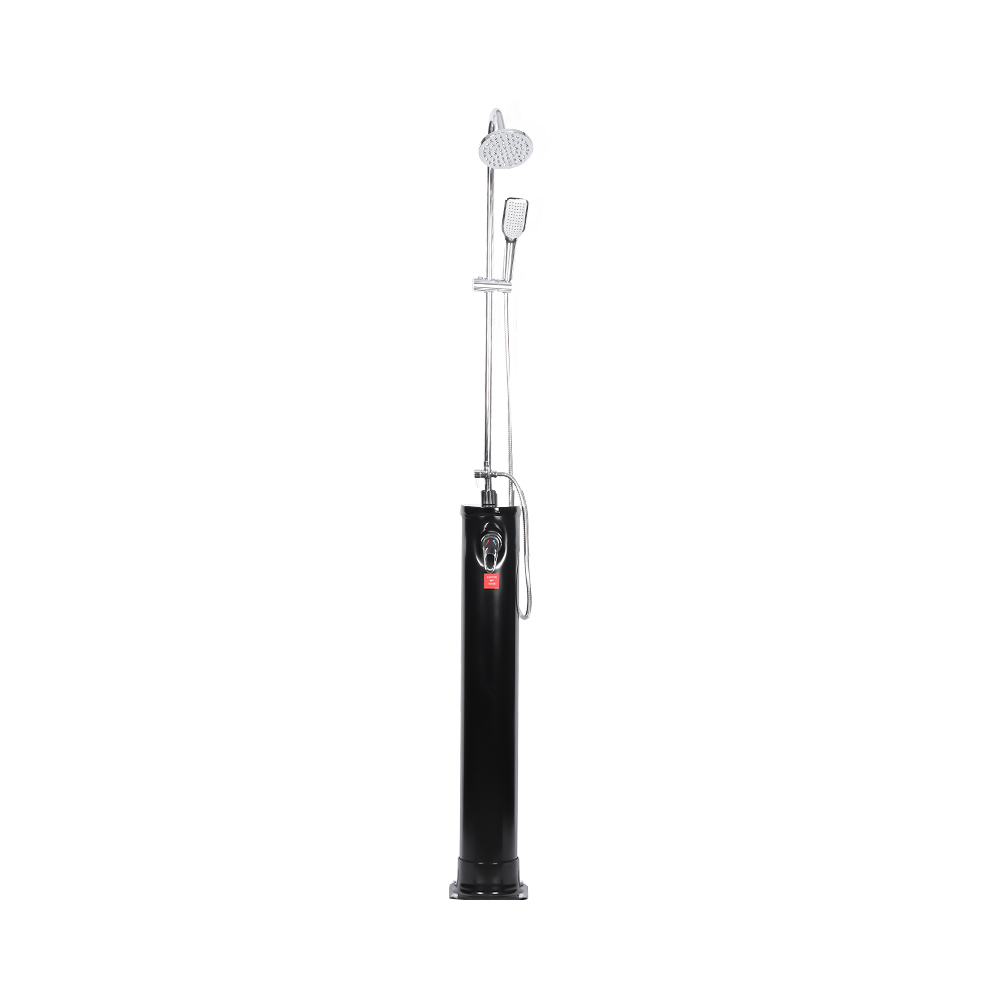
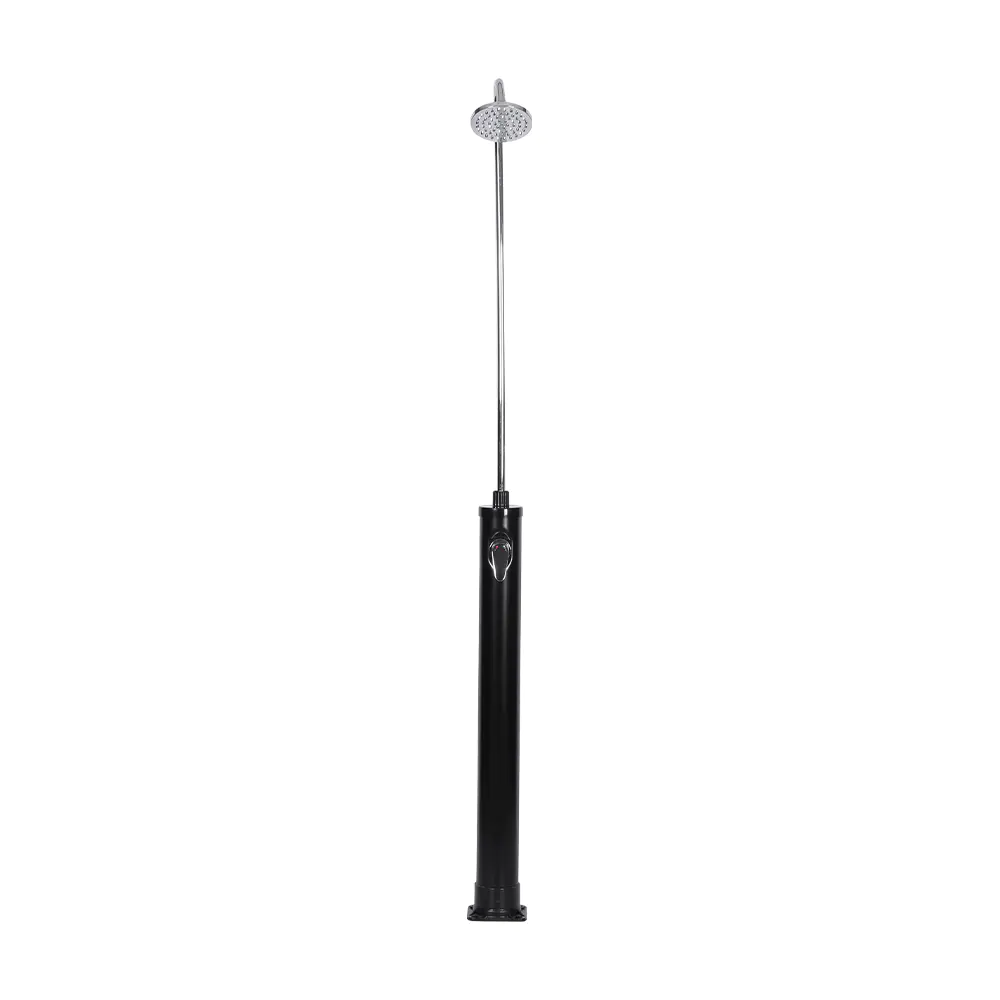
The 18L class is often the sweet spot for residential outdoor showers. It is large enough to feel like a real shower, but small enough to heat within an afternoon. A model such as the LY18L01 uses a PVC column body, a base for stable placement, and a simple gravity-fed layout that works well beside a pool, garden wall, or beach house. It does not need wiring, and it can be moved when the seasons change.
18L Garden and Poolside Unit: LY18L01
This 18L outdoor garden PVC solar shower column with base is designed for buyers who want a practical, low-maintenance outdoor rinse station. The column format gives the unit a smaller footprint than a large 35L model, while the base improves stability on patios, decks, and pool surrounds. The dark body helps absorb solar radiation, and the gravity-fed design keeps installation simple.
- Useful for poolside rinsing, garden bathing, and holiday rental outdoor showers.
- Works best with three to four hours of unobstructed sun.
- Typical water temperature: 100°F to 108°F in 80°F air.
- Simple maintenance: rinse the tank, check the shower head, and store indoors in freezing weather.
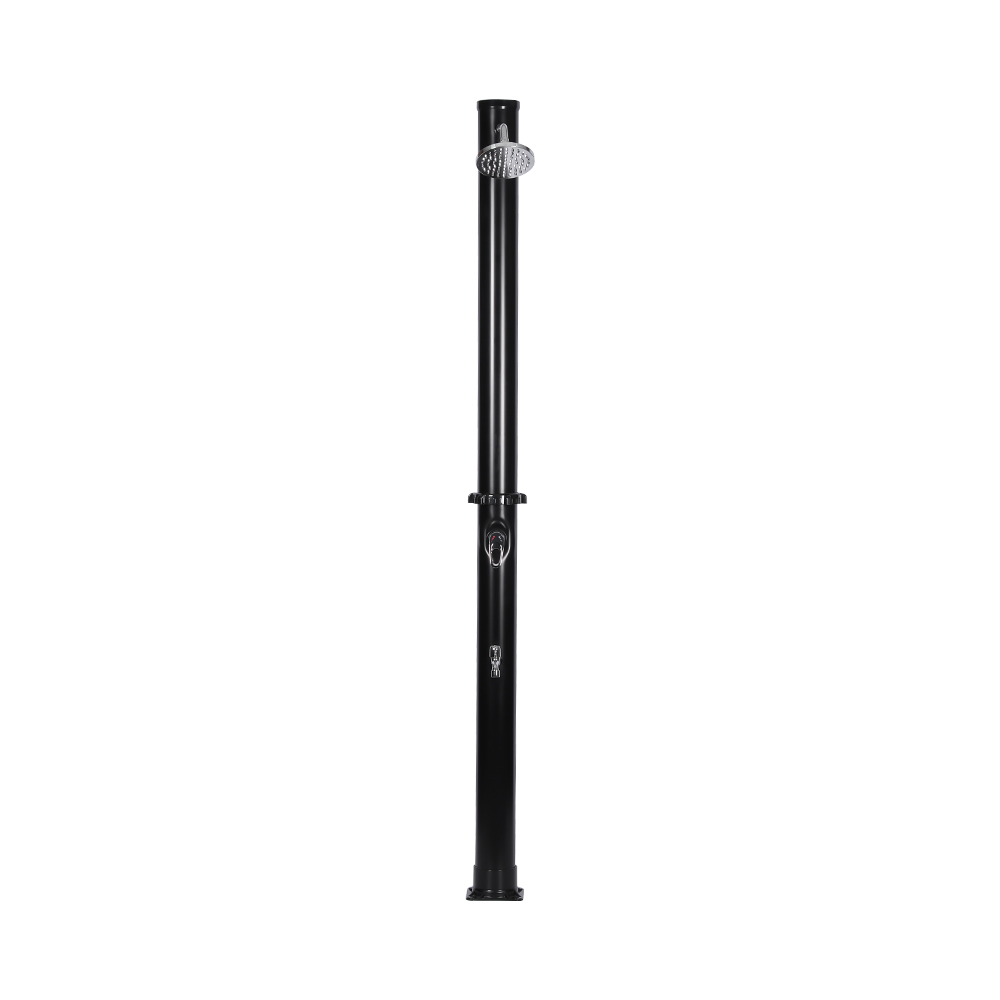 18L Outdoor PVC Solar Shower Column with BaseCompact 18L gravity-fed solar shower with stable base and adjustable rain head, offering a practical patio or poolside rinse station.View Product →
Larger 30L and 35L units give more shower minutes, but they also demand more patience. A 35L column may take three to four hours to reach 105°F, yet it can stay warm for another one to two hours after the sun drops. A 60L unit may need four to five hours, but it can serve several people or support a wide rain shower head without running dry in two minutes.
Material, Color, and Insulation: PVC vs ABS vs Aluminum vs Stainless Steel
The material of the tank, tube, and outer shell affects both heat gain and heat loss. Dark materials absorb more solar radiation. Thick walls hold heat longer but slow the initial warm-up. Metal conducts heat quickly, which can help during the day but also means faster cooling when the sun disappears. Plastic and composite materials often provide a better balance for passive solar showers because they reduce conductive heat loss.
| Material | Heat behavior | Durability notes | Best use |
|---|---|---|---|
| PVC | Moderate heat gain, good retention when dark-colored | Good UV resistance when properly formulated; lightweight | Garden, poolside, beach, budget-friendly outdoor showers |
| ABS | Good heat retention, less conductive loss than metal | Impact-resistant, holds shape well, often used for shower heads and bodies | Premium outdoor columns, two-section shower heads |
| Aluminum | Fast heat gain, fast heat loss, can become hot to touch | Light, strong, corrosion-resistant when coated | Modern poolside showers, warm climates, quick afternoon use |
| Stainless steel | Strong and stable, but can lose heat quickly without insulation | Excellent corrosion resistance, premium appearance | High-end gardens, coastal projects, long-life installations |
| WPC board or base accessories | Not a heating material; improves mounting and drainage | Weather-resistant, stable underfoot | Shower bases, decks, pool surrounds |
Color is not a minor detail. A black or dark gray absorber can raise the peak temperature by 5°F to 10°F compared with a light-colored surface in the same sun. That is why many outdoor solar showers use black PVC, dark ABS, or coated aluminum. If the unit is white or silver, it may still work, but it often needs stronger sun or a longer heating window.
Insulation matters more in the evening. A unit with a foam-insulated tank or a double-wall body will hold heat longer than a thin single-wall tank. If you plan to shower after sunset, choose a larger dark tank, place it on an insulated base, and protect it from wind. The difference between a 35L insulated unit and a thin 18L bag can be 10°F to 15°F by 8 p.m.
Hour-by-Hour Warm-Up Curve for a 35L Solar Shower
The chart below shows a realistic warm-up curve for a 35L dark PVC solar shower in 80°F air with full sun from 10 a.m. to 5 p.m. and light wind. It is not a laboratory guarantee, but it reflects the pattern most outdoor shower users see: slow start, strong middle, gradual plateau, then slow cooling after peak sun.
Typical warm-up curve: 35L solar shower at 80°F air temperature
The first hour is often disappointing if you expect instant hot water. The water may only rise from 70°F to 82°F. The second hour is where the unit begins to feel useful, moving into the mid-90s. By three hours, the shower is usually comfortable at 107°F. The fourth and fifth hours add only a few degrees because heat loss starts to match heat gain. This is why placing the shower in full sun at mid-morning is better than filling it at noon and expecting hot water by 1 p.m.
If the same 35L unit sits in wind, the curve flattens. At 15 mph wind, the three-hour temperature may be only 95°F to 100°F. If the unit is in partial shade, the curve may shift two hours later. If the air temperature is 90°F instead of 80°F, add 8°F to 12°F to each point.
Ambient Air Temperature and Sun Intensity: The 30°F Rule in Practice
The 30°F rule is a useful planning tool: after a few hours of good sun, water temperature often lands about 20°F to 30°F above the surrounding air. It is not exact, but it prevents unrealistic expectations. A solar shower is not a small electric heater. It cannot create heat from nothing. It captures solar energy, and the warmer the air, the less heat it loses while capturing that energy.
- 60°F air: expect 80°F to 90°F water after three hours. This is a cool rinse, not a hot shower.
- 70°F air: expect 90°F to 100°F water. Comfortable for warm days, but not deeply hot.
- 80°F air: expect 100°F to 110°F water. This is the classic comfortable outdoor shower range.
- 90°F air: expect 110°F to 120°F water in a dark, large, well-placed unit. Use caution.
- 100°F air: surface temperatures can push water above 120°F, especially in metal or dark PVC units with low water flow.
Sun intensity is just as important as air temperature. A clear summer day at noon delivers far more energy than a hazy morning or a partly cloudy afternoon. Even thin clouds can cut solar gain by 20% to 40%. Thick clouds can reduce it by 70% or more. If the forecast is mixed, fill the shower early and place it in the sunniest spot available. Do not wait until the sky looks clear at 3 p.m.; by then, the strongest heating window may already be passing.
Latitude and season also matter. In summer, the sun is high and direct. In spring and autumn, the sun is lower and weaker. A unit that reaches 110°F in July may only reach 90°F in October. That does not mean the product is worse; it means the solar input is lower.
How Long Does a Solar Shower Stay Warm After Sunset?
Heat retention depends on volume, insulation, wind, and starting temperature. A large 35L or 60L tank will cool more slowly than an 8L bag because it stores more thermal energy. A dark PVC column with a thick wall may stay above 95°F for two to three hours after sunset in mild weather. A thin bag exposed to wind may drop below 90°F within an hour.
For evening use, start with the highest practical daytime temperature. If the water reaches 112°F at 4 p.m., it may still be 100°F at 7 p.m. and 92°F at 9 p.m. in a sheltered garden. If the same unit is in open wind, it may be 88°F at 7 p.m. and 80°F at 9 p.m. The difference is not small when you are standing outside with wet skin.
Simple retention tactics work well. Place the shower against a south-facing wall that holds heat. Use a base or WPC board to separate the tank from cold ground. Add a windbreak with plants, a fence, or a temporary screen. If the unit has a removable shower head, keep the hose out of the wind. Do not drain the tank immediately after use if you plan another shower later; the stored warm water is valuable.
Flow Rate, Shower Duration, and the Real Feel of Warmth
A solar shower can be 108°F and still feel disappointing if the flow is too weak or too strong. Very low flow makes rinsing slow and can make the water feel cooler on skin because it trickles. Very high flow drains the tank quickly and may feel cooler because the water spends less time in the warm tank. Gravity showers typically deliver 0.8 to 1.5 gallons per minute depending on head height, hose length, and shower head design.
Use this rough guide to match capacity with shower minutes:
- 8L: about 2 to 4 minutes at a moderate rinse flow.
- 18L: about 5 to 8 minutes.
- 30L: about 8 to 12 minutes.
- 35L: about 10 to 15 minutes.
- 60L: about 18 to 25 minutes.
If you want a longer shower, do not simply choose a larger tank and hope for the best. Match the shower head to the job. A wide rain shower head feels luxurious but can use water faster. A focused spray head uses less water and keeps pressure higher. A two-section ABS chrome head, for example, can provide a wider spray for rinsing and a more concentrated stream for washing hair. That flexibility matters when the tank is only 18L or 30L.
Water temperature also drops as the tank empties. The warmest water is often near the top or in the sun-facing section. As you draw water, cooler water may mix in. This is one reason a 35L tank can feel hot for the first five minutes and merely warm after ten minutes. If your shower routine includes hair washing, do that early while the water is at its peak.
Cold Weather, Cloudy Days, and Shoulder-Season Performance
Solar showers are seasonal products in most markets. They can work in cool weather, but the results are modest. At 50°F air temperature, a passive unit may only reach 70°F to 80°F after several hours. That is enough for a quick rinse after swimming in a heated pool, but it is not a comfortable hot shower for most people. At 40°F, the water may struggle to reach 65°F to 75°F, and wind will make it feel colder.
Cloudy days are not automatically useless. Bright overcast conditions still transmit some solar energy. A dark 35L unit may reach 85°F to 95°F if the clouds are thin and the air is warm. Heavy rain clouds, however, can cut performance to little more than ambient temperature. If you need guaranteed hot water in cold or cloudy conditions, a solar shower should be treated as a pre-heat or rinse system, not the only source of hot water.
Useful shoulder-season tactics include:
- Fill the tank with water that is already slightly warm, if a safe source is available.
- Place the unit against a dark wall or reflective surface to capture more heat.
- Use a windbreak and keep the hose off cold ground.
- Start heating earlier in the day, around 9 a.m. or 10 a.m.
- Choose a larger dark tank instead of a small bag, because it holds heat longer.
- Take a shorter shower and use the warmest water first.
Do not add boiling water directly into a plastic solar shower unless the manufacturer clearly allows it. High-temperature water can deform tanks, weaken seams, and create a scalding risk. If you need to boost temperature, use a separate mixing container and test the water before it enters the shower.
Best Placement and Installation for Maximum Water Temperature
Placement can add or subtract 10°F to 20°F from the final water temperature. The best position is one that receives direct sun from mid-morning to late afternoon. In the northern hemisphere, a south-facing spot is usually ideal. In the southern hemisphere, a north-facing spot performs better. Avoid positions where a wall, tree, fence, or building casts a shadow during the main heating hours.
Wind is the hidden enemy. A warm tank in a breezy open lawn may lose heat as fast as it gains it. A sheltered corner, a courtyard, or a spot behind a low wall can improve performance noticeably. If the unit is portable, move it during the day to follow the sun. Many 8L and 18L models are light enough for one person to reposition, while 35L and 60L units are better placed once and left in position.
Ground surface also matters. Dark stone, concrete, or decking can radiate heat upward. Cold grass or wet soil pulls heat away. A solar shower base or WPC board lifts the tank off the ground, improves drainage, and reduces conductive heat loss. For poolside installations, keep the unit away from constant splashing, which can cool the outer surface and increase slipping risks.
If the shower has a black hose, coil it in the sun rather than hiding it under the tank. The hose itself can act as a small collector. Make sure the hose is not kinked, because restricted flow increases pressure and can cause leaks at joints. Check all connections before the first use and after moving the unit.
Product Selection by Outdoor Scenario
Different outdoor scenarios need different capacities and formats. A beach rinse station needs portability and quick heating. A garden shower needs stability and enough water for one or two people. A poolside shower needs a durable base, easy drainage, and a design that looks appropriate beside water. A rental property or holiday cottage may need a larger tank that can serve several guests without constant refilling.
For a compact garden or small pool, an 18L column is often enough. It heats in about three hours, takes up little space, and can be moved into storage during winter. For a family pool or a busy outdoor area, a 30L or 35L unit gives more shower minutes and better heat retention. For group use, a 60L model with a large rain shower head can deliver a longer, more relaxed experience, but it needs a longer heating window and a sunny, open position.
If you are comparing the full range, start with the full solar shower range and match capacity to your typical number of users. A single user who takes short rinses may be happier with an 18L unit than a 60L tank that never fully heats. A family that showers after swimming will usually prefer 30L or 35L. A rental property with repeated guest use may need a 60L tank or multiple smaller units.
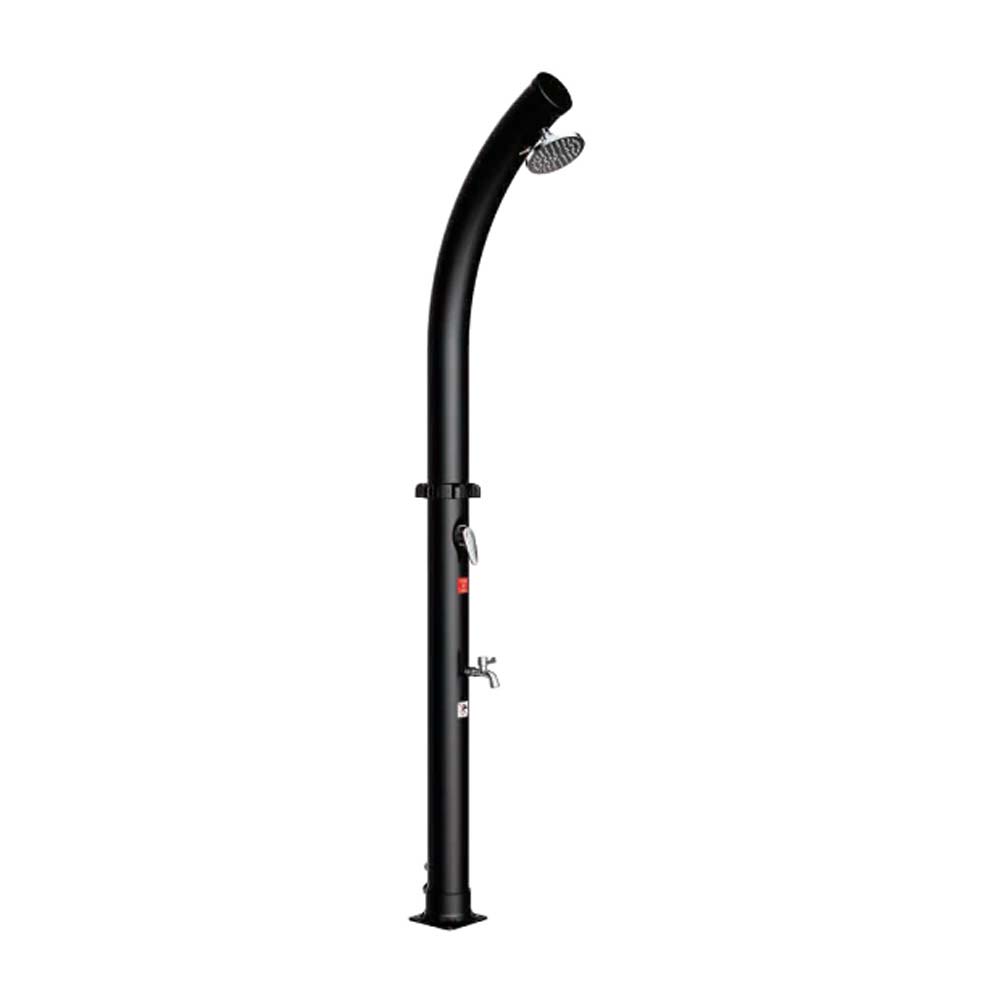
30L Aluminum Poolside Unit: LY30L01
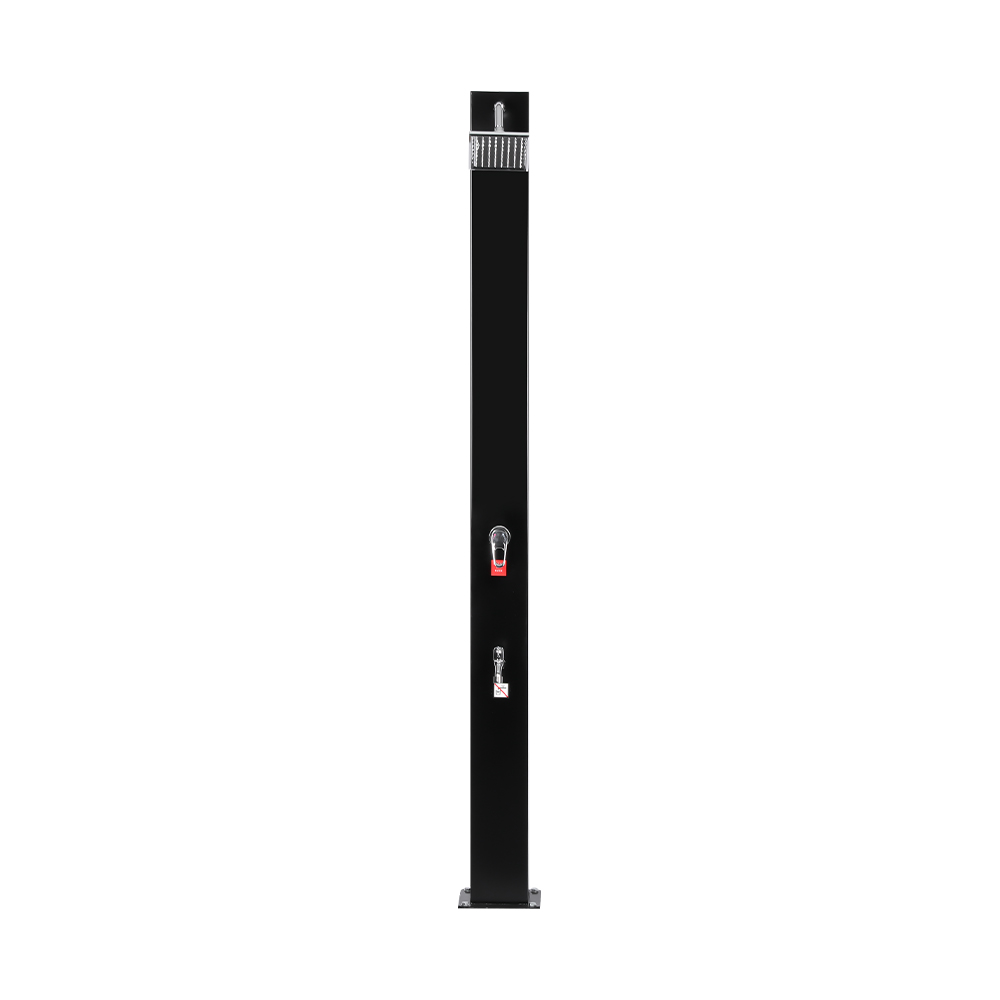
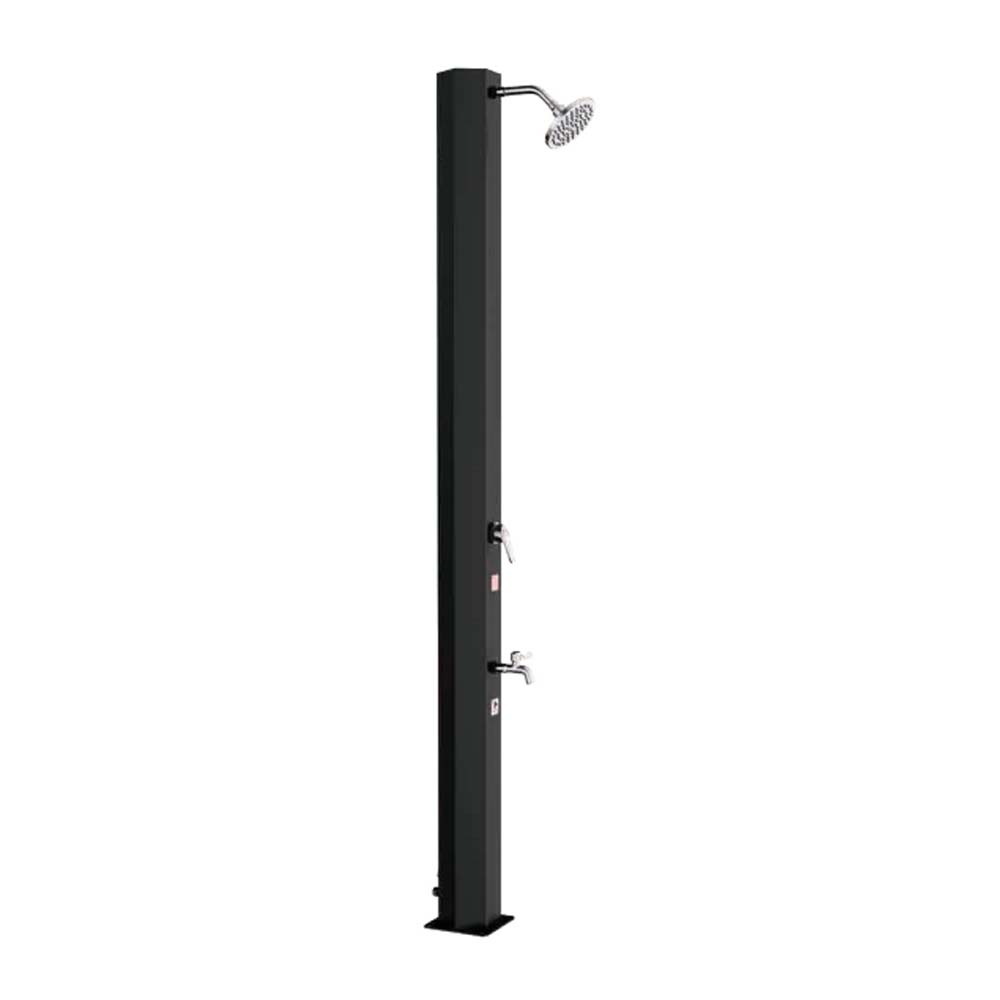
The LY30L01 aluminum bent outdoor swimming pool solar shower is built for modern pool areas where appearance and heat gain both matter. Aluminum warms quickly in direct sun, and the bent body gives a clean, contemporary profile. It is a strong fit for warm-climate gardens, hotel pool surrounds, and residential outdoor shower zones that need a larger water volume than an 18L column.
- Approximate capacity: 30L, suitable for 8 to 12 minutes of shower time.
- Best performance in full sun with air temperatures above 75°F.
- Aluminum body benefits from a sheltered position to reduce evening heat loss.
- Pairs well with poolside drainage, decking, or a WPC shower base.
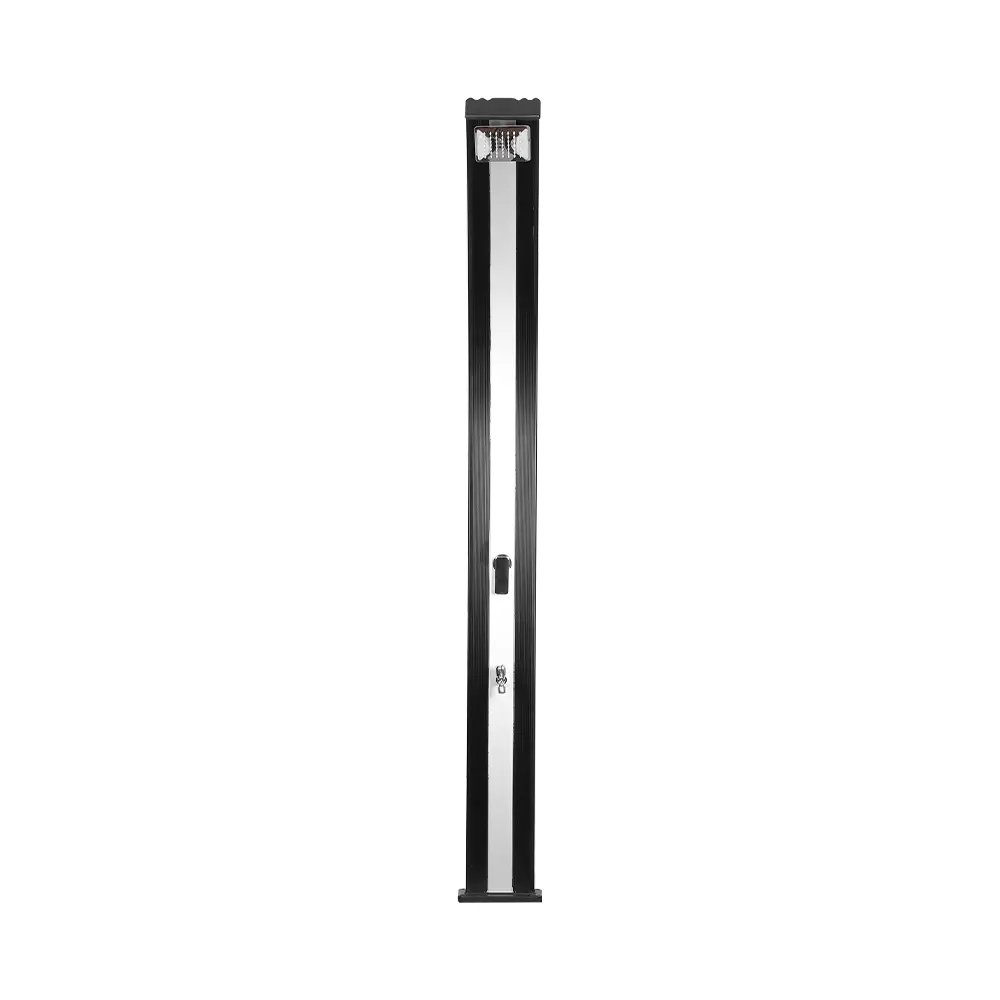 LY30L01 Aluminum Bent Outdoor Pool Solar ShowerA 30L aluminum solar shower with bent profile and single-lever mixer, suited to modern pool areas seeking larger volume than an 18L column.View Product →
For larger projects, the 60L class is the most generous option. It can support a wide rain shower head and longer rinse times, but it should not be expected to heat as quickly as an 18L unit. Placement, patience, and a sunny day matter more with large tanks.
60L Large Rain Shower Unit: LY60L01
The LY60L01 extra-large rain shower head garden solar shower is designed for users who want a fuller shower experience without an electric connection. The larger tank stores more warm water, and the rain shower head creates a softer spray. It is best suited to open gardens, large pool decks, and warm climates where the unit can sit in direct sun for four to five hours.
- Approximate capacity: 60L, often enough for 18 to 25 minutes of controlled flow.
- Needs a longer heating window than 18L or 30L models.
- Works best with a dark base, wind protection, and full-day sun exposure.
- Ideal for group use, large outdoor bathrooms, and premium garden setups.
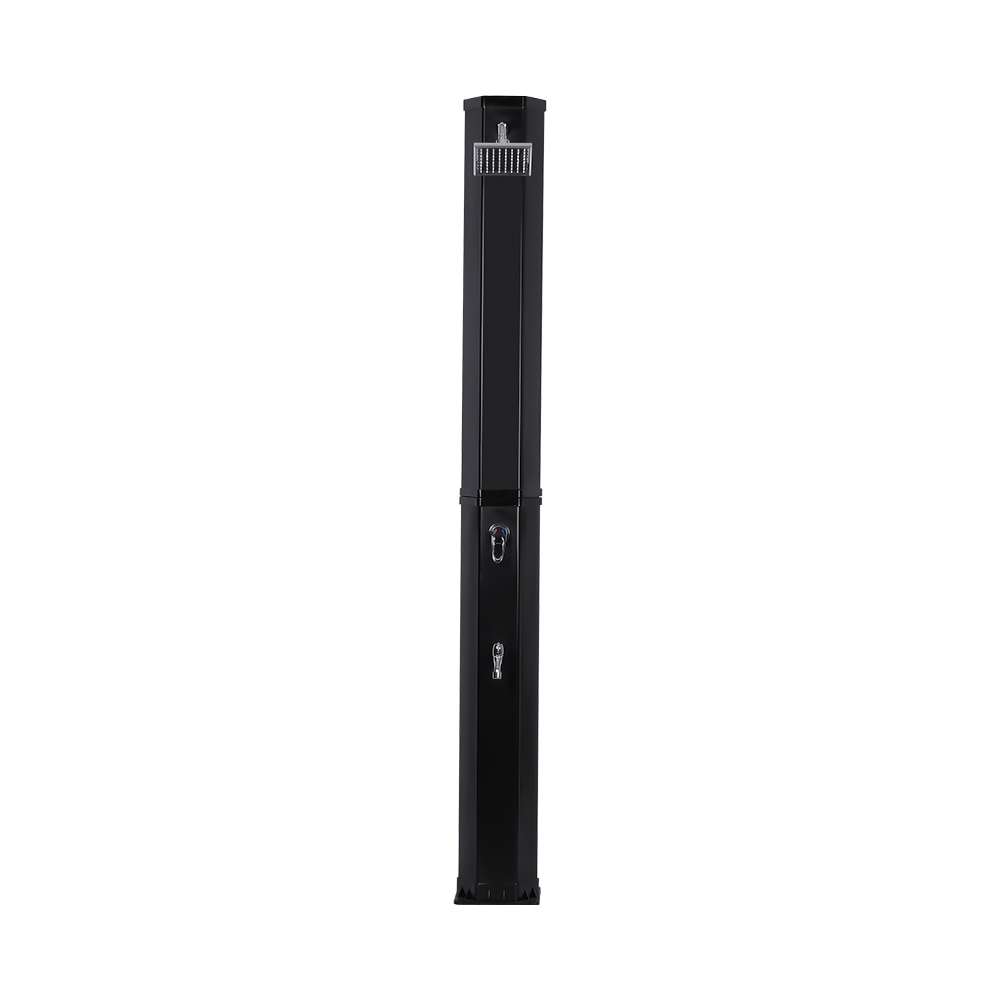 LY60L01 Extra-Large Rain Shower Head Garden Solar ShowerA 60L outdoor solar shower with oversized rain showerhead and modular storage, suited to open gardens or large pool decks needing fuller spray.View Product →
Retail and Custom Program Considerations for Solar Shower Buyers
For brand owners, retail program managers, and importers, temperature performance is only one part of the product decision. Packaging, manual clarity, spare parts, carton strength, and seasonal demand all affect sell-through. A solar shower that reaches 108°F in testing but arrives with a cracked base or missing hose washer will generate returns and negative reviews. That is why production control and component consistency matter as much as peak temperature.
When evaluating a custom solar shower program, ask for these details:
- Actual tank capacity versus nominal capacity, because some products list volume including fittings.
- Material grade for PVC, ABS, aluminum, or stainless steel, including UV stabilization.
- Shower head flow rate and spray pattern, tested at typical gravity pressure.
- Carton drop-test results and container loading plan to reduce freight damage.
- Spare parts availability, including washers, hoses, shower heads, and bases.
- Multilingual manuals that explain heating time, placement, winter storage, and safety limits.
- Color consistency and surface finish, because outdoor products are often displayed in retail aisles and online listings.
A manufacturer with in-house production can usually control these details more consistently than a trading operation. In-house design, mold control, and assembly also make it easier to adjust capacity, base shape, shower head style, and packaging for different markets. For seasonal programs, lead times should account for peak spring and summer demand, when solar shower orders often cluster.
Common Mistakes That Make a Solar Shower Feel Cold
Most complaints about solar shower temperature come from predictable setup errors rather than product defects. If the water is only 80°F after four hours, one of these issues is usually present:
- Filling the tank too late in the day. A 2 p.m. fill may not have enough strong sun left.
- Placing the unit in partial shade. Even a small shadow across the tank can cut heat gain.
- Leaving the unit in strong wind. Wind carries heat away from the outer surface.
- Using a small 8L bag but expecting a 15-minute shower. The water runs out before it can feel hot.
- Choosing a light-colored tank in a mild climate. Dark surfaces absorb more solar energy.
- Not accounting for cold ground. A tank sitting on wet grass loses heat downward.
- Using a high-flow shower head on a gravity system. The tank empties quickly and pressure drops.
- Testing temperature at the top of the tank but showering from the bottom. Water layers can differ.
The fix is often simple: fill earlier, move the unit into full sun, reduce wind exposure, and match the shower head to the tank size. If the unit still underperforms on a clear 85°F day, check for air locks, kinked hoses, or a blocked shower head. A small amount of trapped air can reduce flow and make the water feel cooler than it is.
Maintenance That Protects Temperature Performance
Solar showers have no electric parts, but they still need basic care. A dirty outer surface absorbs less solar energy. A clogged shower head reduces flow and can make the water feel uneven. A cracked seal leaks warm water and lowers pressure. A tank left full through freezing weather can split. These issues are easy to prevent with a simple seasonal routine.
- Rinse the tank and hose after each use, especially after beach or pool water exposure.
- Clean the shower head with a soft brush and mild vinegar solution if mineral deposits appear.
- Check washers, O-rings, and hose connections for leaks before each season.
- Store the unit dry and indoors during freezing months, or drain it completely if it must stay outside.
- Avoid abrasive cleaners that can scratch dark absorber surfaces or remove UV coatings.
- Inspect the base and mounting points for cracks, rust, or loose hardware.
- Do not leave standing water in the tank for weeks, because biofilm and odor can develop.
For a longer technical explanation of heat behavior and lifespan, see this article on how hot a solar shower really gets and how long it lasts. It complements the practical temperature ranges covered here with more detail on testing and long-term use.
Safety: Scalding, Pressure, and Water Quality
Water above 110°F can scald sensitive skin, especially for children and older users. A solar shower can reach 120°F in hot conditions, so always test the water with your hand or elbow before stepping under the spray. If the water is too hot, add cold water or let the unit cool for a few minutes. Never assume that because the shower is “solar” it cannot get dangerously hot.
Pressure safety also matters. A gravity solar shower is low-pressure by design, but a kinked hose or blocked nozzle can build pressure inside the tank. Check that the vent or fill cap is not sealed too tightly if the design requires airflow. Use only the hose and shower head supplied or approved for the unit. Replacing a low-flow head with a high-pressure head can strain seals and cause leaks.
Water quality should be considered for repeated use. Do not leave untreated water in the tank for long periods, especially in warm weather. If the unit is used for camping or beach rinsing, empty and dry it after the trip. If you use the shower for garden bathing, keep soap and shampoo runoff away from sensitive plants and waterways. Even a simple outdoor shower should respect local drainage and environmental rules.
FAQ: How Warm Do Solar Showers Get in Real Use?
How warm do solar showers get in 70°F weather?
In 70°F air with full sun, a dark 18L or 35L unit often reaches 90°F to 100°F after three to four hours. It feels warm, but not hot. For a more comfortable shower, use a larger tank, start heating in the morning, and shelter the unit from wind.
Can a solar shower reach 120°F?
Yes, but only in strong conditions. A 35L or 60L dark tank in 90°F to 100°F air with full sun and low wind may reach 115°F to 120°F. Metal units can heat faster. At that temperature, test carefully and mix with cooler water if needed.
Why is my solar shower only 80°F after four hours?
Common causes include partial shade, strong wind, a light-colored tank, cold ground, a small water volume, or a late start. Check placement first. Move the unit into full sun, reduce wind exposure, and ensure water can circulate or heat evenly around the tank.
How long does an 18L solar shower take to heat?
In 80°F air with full sun, an 18L unit typically needs about two and a half to three and a half hours to reach 100°F to 108°F. In cooler air, allow four hours or more.
Does a black solar shower get hotter than a white one?
Usually, yes. A black or dark absorber surface can gain 5°F to 10°F more than a light surface under the same sun. The difference is most noticeable in mild weather and late-afternoon use.
How long does a 35L solar shower stay warm?
A 35L unit at 110°F may stay above 95°F for two to three hours after sunset in mild, sheltered conditions. Wind and cold ground will shorten that window. An insulated base and a windbreak help extend it.
Can I use a solar shower in winter?
It can work as a cold rinse or pre-heat source in mild winter sun, but it will not deliver a hot shower in freezing conditions. At 40°F air, the water may only reach 65°F to 75°F. Drain and store the unit before hard freezes to prevent cracking.
How many minutes of shower time does a 60L solar shower give?
At a controlled gravity flow, a 60L tank may provide 18 to 25 minutes. With a wide rain shower head, expect the lower end. With a focused spray head, expect the higher end.
Do solar showers work on cloudy days?
They can still warm water in bright overcast conditions, but performance drops sharply. Thin clouds may allow 85°F to 95°F in a good unit. Heavy clouds may keep water close to ambient temperature.
What is the best capacity for poolside use?
For a residential pool, 18L to 35L is usually the practical range. An 18L unit is compact and quick to heat. A 30L or 35L unit gives longer showers and better heat retention. A 60L unit suits larger pools, group use, or premium outdoor showers.
-
How Do You Maintain and Clean Your Solar Shower for Long-Term Use
Empty the Tank After Each Use Maintaining the cleanliness and functionality of your solar shower is ...
-
Comprehensive Guide to Solar Showers: From Portable Bags to Luxury Poolside Units
Introduction to Solar Showers What is a Solar Shower? A solar shower is an innovative and environmen...
-
How to Choose the Perfect 8L Solar Shower for Beach, Pool & Garden Use
Benefits of Using an 8L Solar Shower at the Beach 1. Convenience and Portability for Beachgoers An 8...
-
The Ultimate Guide to 18L Solar Showers: Reviews, Tips, and How-To
Introduction to 18L Solar Showers In recent years, 18L solar showers have become a must-have item fo...
No.27, Fengshan Road, Hangfu Town, Kecheng District, Quzhou City, Zhejiang Province, China
(+86)-17888203192
 Wholesale Outdoor Solar Shower Factory