
 English
 Deutsch
 Español
 Français
Here You Can Get Our Latest Information
Industry News
How Long Do Solar Showers Last? Lifespan by Material, Climate and Care
A solar shower is one of the simplest pieces of outdoor equipment you can own. There is no pump, no wiring, no control board and no filter to clog. Water sits in a dark reservoir, the sun heats it, gravity delivers it. Because there is so little to break, owners often assume the unit will simply keep working forever. It does not. What actually happens is slower and more predictable: seals harden, a hose goes brittle in the sun, a chrome finish starts to flake, and one cold night in November splits a tank that was full of water.
We build these products, and we also handle the spare-part requests that come back years later. The pattern is consistent. A solar shower bought purely on price often fails in its second season. A well-built column with a UV-stabilised body, brass threaded inserts and a stainless or aluminium base is frequently still standing after a decade, sometimes with nothing more than a new hose and two O-rings.
So the honest answer to how long solar showers last is a range, not a number: roughly one to two seasons for a cheap 8L bag unit, four to eight years for a standard 18L PVC column in a temperate garden, and eight to twelve years for a 30L to 60L column with a UV-proof body and a metal base, provided it is drained before the first freeze. Everything below explains where those figures come from and how to move your own unit toward the top of its range.
How Long Do Solar Showers Last? The Direct Answer
Service life depends far more on the material of the tank and base than on the capacity printed on the box. The table below summarises what we see in real installations across Europe, North America and Australia, assuming the shower is used seasonally outdoors and stored or drained during the coldest months.
| Type of solar shower | Typical lifespan | Most common first failure | Realistic best case |
|---|---|---|---|
| 8L portable bag shower (PVC or TPU reservoir) | 1-2 seasons | Seam split or hanging strap tearing | 3 seasons with careful storage |
| 18L PVC column with ABS fittings | 4-8 years | Hose cracking, valve seals hardening | 10 years if drained each winter |
| 18L square or round body with chrome-plated ABS head | 5-8 years | Chrome flaking, head thread wear | 9 years with a spare head |
| 30L aluminium column | 6-10 years | Coating scratches in coastal air | 12 years with annual rinsing |
| 35L large-capacity column with stainless base | 8-12 years | O-ring compression, base fixings loosening | 14 years with a seal kit |
| 60L extra-large rain-head column | 8-12 years | Shower-head gasket, drain plug | 14 years |
Two things stand out in that table. First, the jump from a bag to a column is not incremental, it is a different product category with a different failure profile. Second, the "best case" column is almost never about luck. It is about drainage, water hardness and whether anyone ever looked at the seals.
What Actually Decides How Long a Solar Shower Lasts
Five forces do almost all of the damage. Understanding them lets you predict the life of a unit before you buy it, which matters whether you are fitting one beside a pool or planning a season of stock.
Ultraviolet radiation
UV is the single biggest factor for polymer bodies. Sunlight breaks the polymer chains in untreated PVC, which is why a cheap tank goes chalky, then stiff, then cracked. UV-stabilised compounds and dark masterbatch pigments slow that process dramatically. A body that still flexes slightly after six summers is a body that was properly compounded; one that snaps like a biscuit in year three was not. Metallic bodies such as aluminium shed UV without any change in chemistry, which is one reason aluminium and stainless-steel units sit at the top of the lifespan table.
Freezing and trapped water
Water expands roughly nine percent when it turns to ice, and a closed tank gives it nowhere to go. A full 35L column left outside through a hard frost can split along a seam in a single night. This is the most avoidable failure on the list and the one that turns a ten-year product into a one-year product. Drain the tank, remove the shower head and, where the design allows, store the column indoors or under cover.
Water hardness and limescale
Hard water leaves calcium carbonate behind. In a solar shower it gradually blocks the spray holes, stiffens the mixer valve and coats the inside of the tank. The unit still works, but pressure drops and the valve starts to feel gritty. In very hard water areas, a monthly flush with diluted white vinegar in the tank keeps the internal surfaces clean and extends valve life noticeably.
Water pressure
These are gravity-fed products designed for low pressure. Connecting a column to a mains hose or a booster pump puts stress on the seams and on the plastic threads that hold the head. A crack that appears near the base of a column is usually a pressure injury, not a material defect. If you need higher flow, choose a larger head or a longer drop hose rather than more incoming pressure.
Handling, transport and installation
Every drop during a house move, every time a unit is dragged across patio slabs, every over-tightened fitting leaves a mark that turns into a crack two summers later. Threads should be hand-tight plus a quarter turn, never forced. On the base, use the fixings provided and set the column on a level surface so wind load does not work the joints loose.
Material by Material: Which Body Lasts How Long
Material choice is the clearest predictor of lifespan, and it is also the easiest thing to check before buying. The table below compares the bodies and bases used in today's outdoor showers.
| Material | UV resistance | Corrosion risk | Expected life outdoors | Notes |
|---|---|---|---|---|
| Untreated PVC | Low | None | 2-4 years | Goes brittle and chalks; avoid in high-sun regions |
| UV-stabilised PVC | Good | None | 6-10 years | Best value for temperate gardens |
| ABS | Good | None | 6-10 years | Common for shower heads and valves |
| Aluminium | Excellent | Moderate in salt air | 8-12 years | Rinse quarterly near the coast |
| Stainless steel | Excellent | Low, surface staining possible | 10-15 years | Heavier; ideal for poolside and rental use |
| WPC board base | Excellent | None | 8-12 years | Stable footing, no rot, no splinters |
The practical takeaway is simple. If the shower will stand in full sun for six months a year, pay for UV stabilisation and a metal or composite base. If it will live on a shaded terrace and be packed away each September, a well-made PVC body is entirely reasonable.
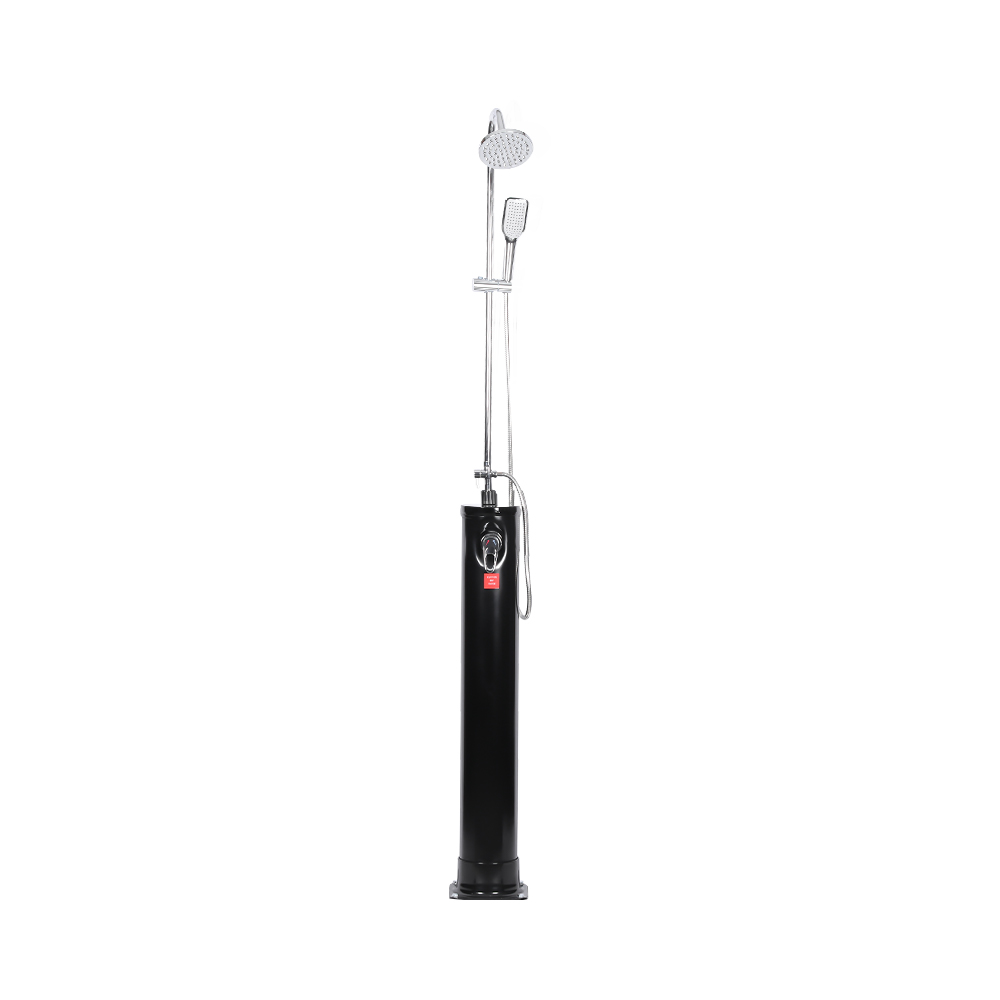
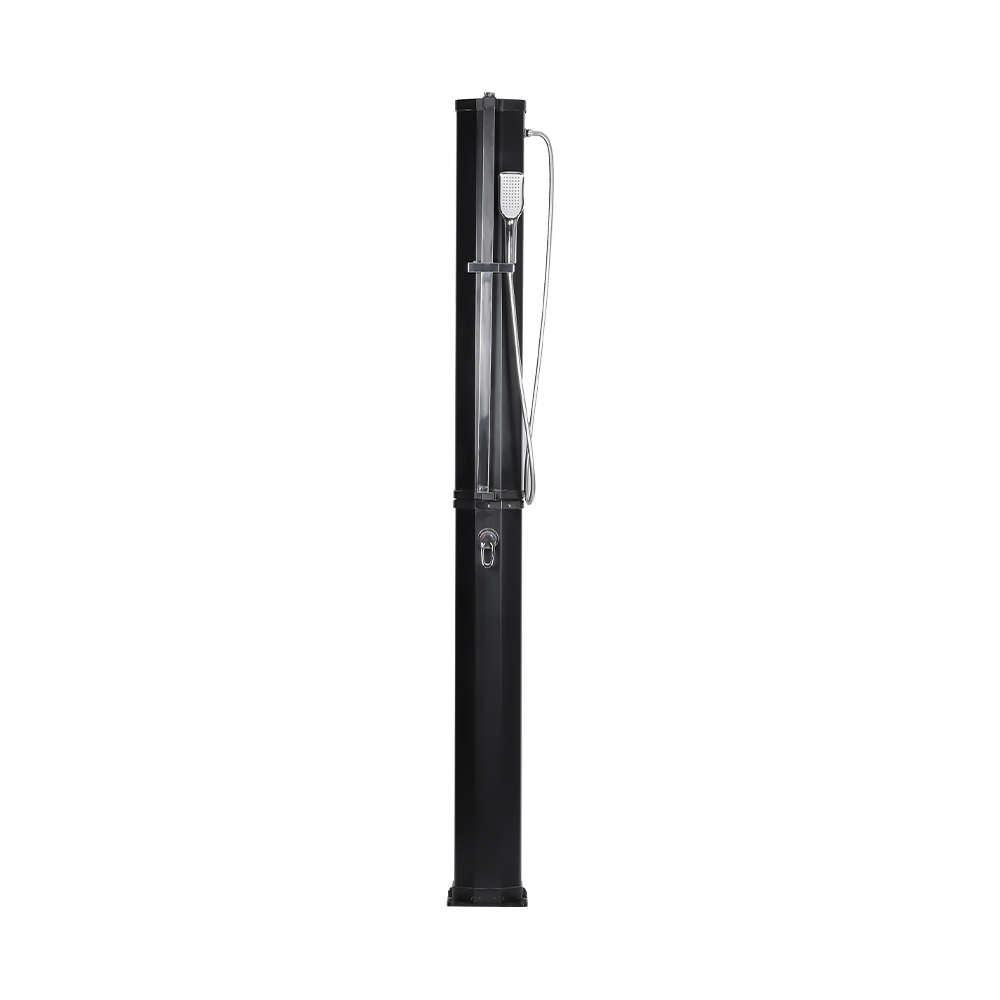
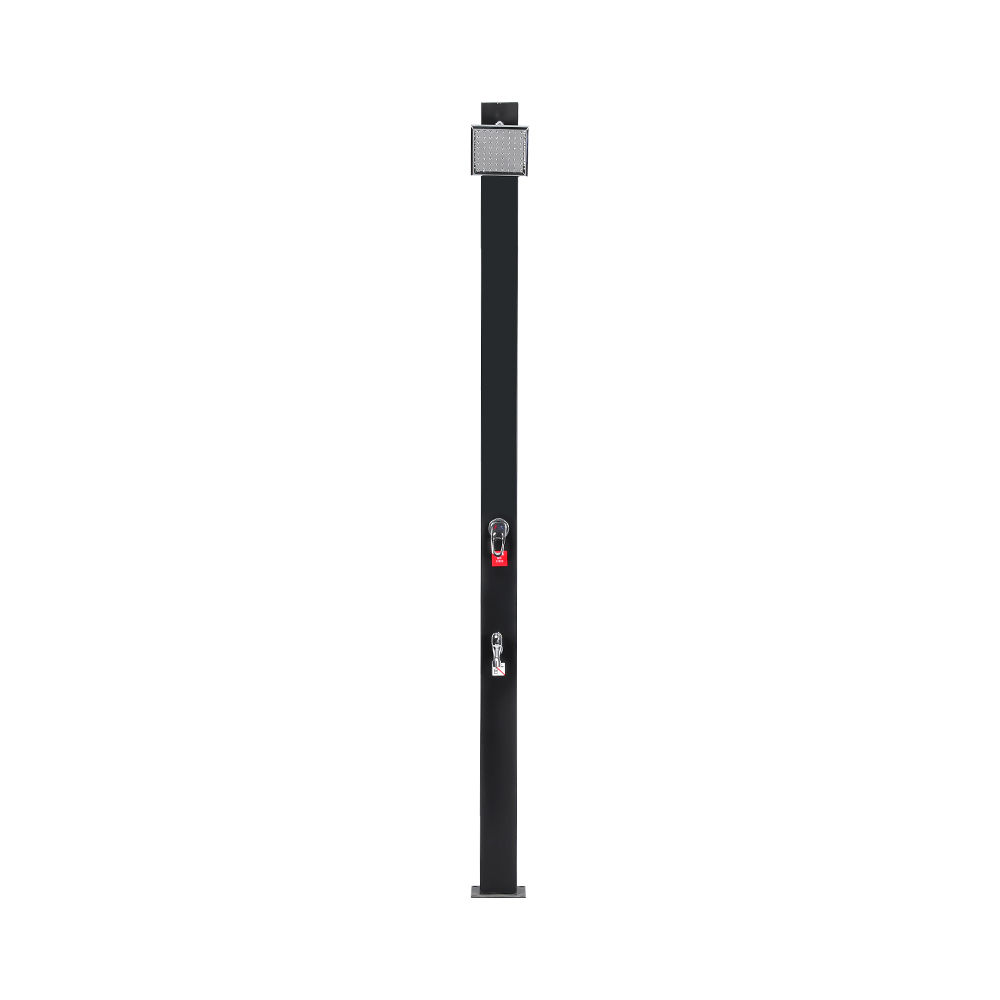 LY18L08-SS Adjustable Integrated UV-Proof Solar ShowerThis LY18L08-SS adjustable integrated UV-proof solar shower is thoughtfully designed for both comfort and practicality. Its generously sized rain shower head, equipped...View Product →
Units built around an integrated UV-proof body and an adjustable head target exactly this problem. The adjustability is not only for comfort, it also lets you angle the head away from the fixing point so water does not sit against a joint between uses.
Which Component Fails First?
In our own returns data, the failure profile of a solar shower looks nothing like the failure profile of the tank. Bodies rarely fail first. Small parts do.
That distribution is good news, because the three biggest categories are cheap and quick to replace. A hose and a set of O-rings cost very little and can add three to five years to a unit whose body is still sound.
- Shower head: chrome wear, blocked nozzles and thread damage are the classic complaints.
- Hose: constant UV exposure and bending at the same point cause surface cracking.
- Seals: rubber hardens with heat cycling and stops sealing long before anything else looks worn.
- Base: standing water and soil contact degrade fixings faster than the body itself.
Keep a spare hose and a small seal kit on site. That single habit is the difference between replacing a part on a Saturday morning and replacing the whole shower.
Does Tank Capacity Change the Lifespan?
Capacity influences lifespan in three indirect ways: wall stress, thermal cycling and how carefully people treat the unit.
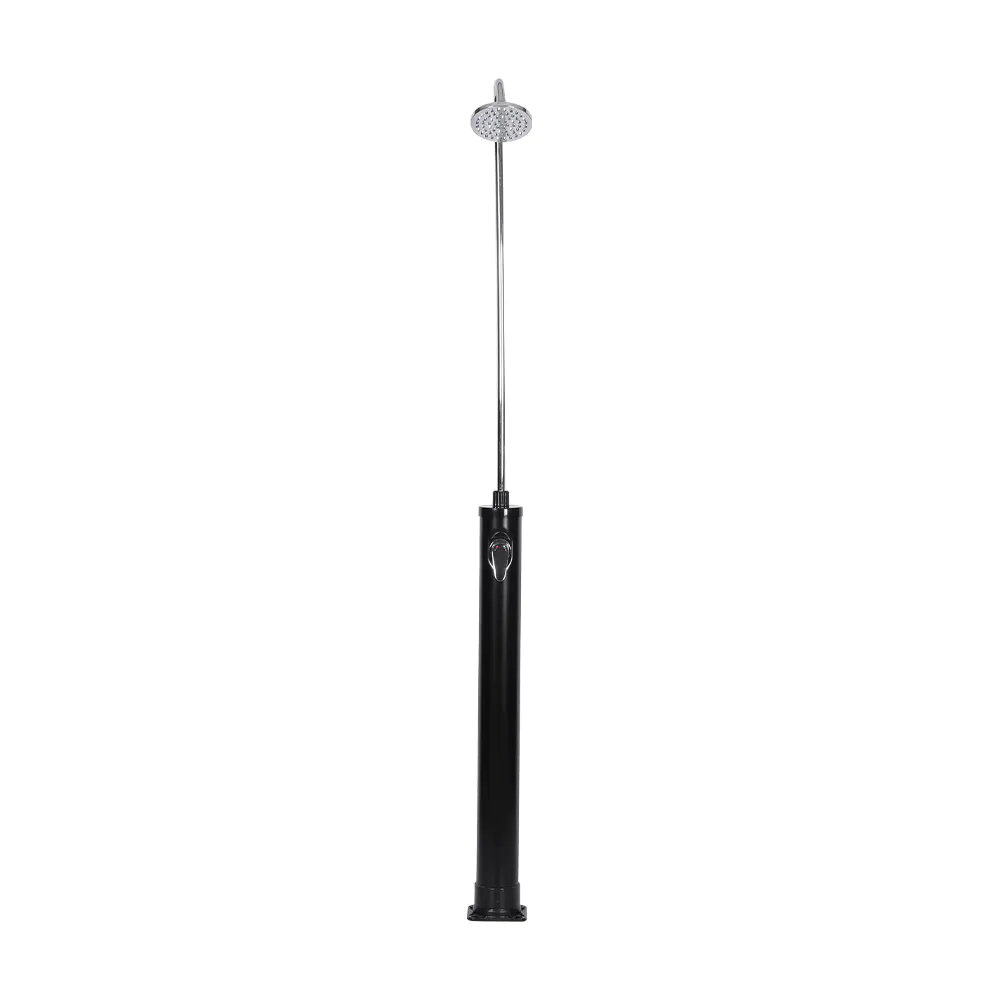
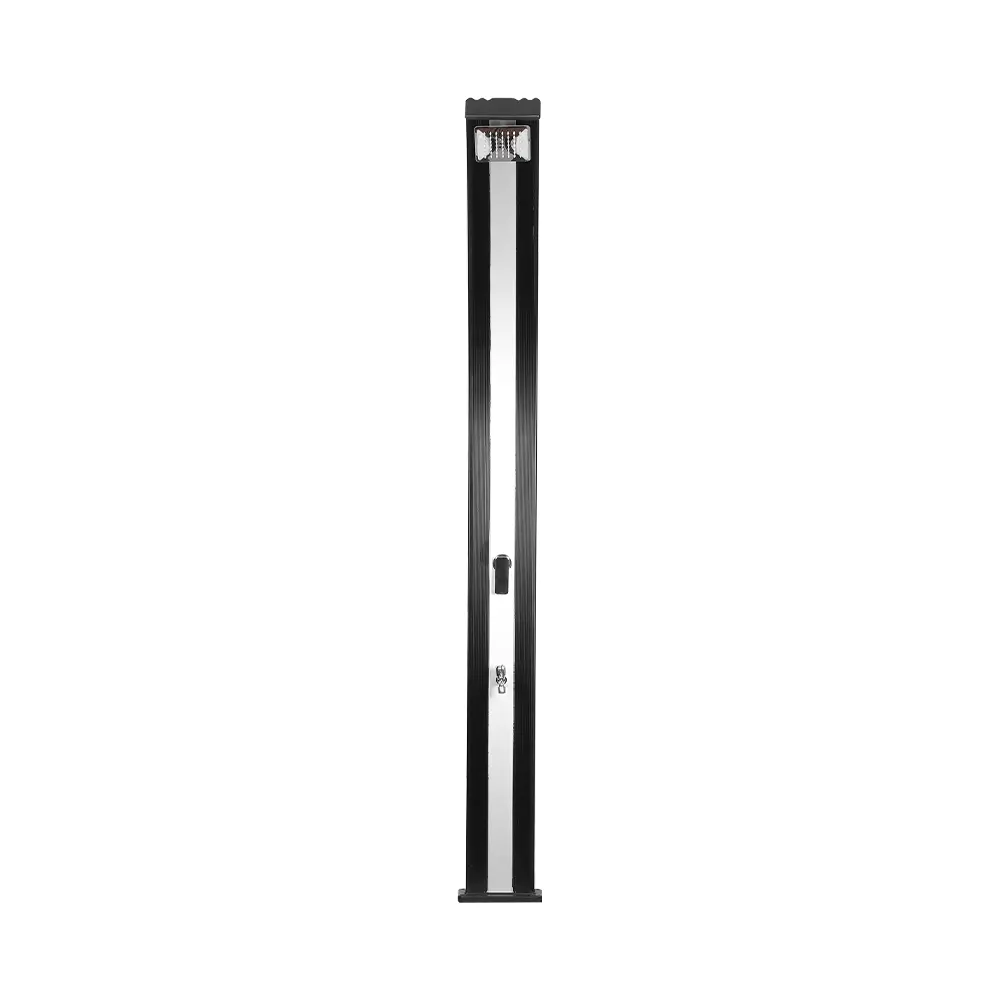 LY30L01 Aluminum Bent Outdoor Swimming Pool Solar ShowerThis LY30L01 aluminum bent outdoor swimming pool solar shower features a 30-liter aluminum shower pipe, providing ample water for a comfortable and enjoyable shower ex...View Product →
A 30L aluminium column is a useful illustration. The metal body is unaffected by UV, the larger volume means the water does not reach the same peak temperature as a small tank in weak sun, and the lower average temperature puts less stress on the seals. Larger units also tend to be permanent installations rather than items that get carried to the beach and dropped, and permanent installations get maintained.
- 8L: highest temperature per litre, thinnest walls, most handling. Shortest life.
- 18L: the volume sweet spot for a single user or a couple; good balance of stress and portability.
- 30L and 35L: better thermal behaviour, more material, longer service life when properly drained.
- 60L: designed for family or poolside use; lifespan is driven almost entirely by winter preparation.
If you want one number to remember, it is this: a 35L column that is drained every autumn will usually outlive two 8L bag showers bought in the same period, even though it costs more at the start.
Climate, Location and Installation Effects
Two identical showers installed in two different climates will not age at the same rate. The table below shows how location shifts the expected lifespan.
| Environment | Main threat | Effect on lifespan | Practical countermeasure |
|---|---|---|---|
| Hot, high-UV desert or Mediterranean | Polymer embrittlement | Reduces PVC life by 2-3 years | Choose UV-stabilised body or aluminium |
| Coastal, salt-laden air | Corrosion of fittings and base | Reduces metal life by 2-4 years | Rinse quarterly, prefer stainless base |
| Northern continental with hard frosts | Ice expansion | Reduces life to 1-2 years if not drained | Full drainage and indoor storage |
| Tropical, humid | Mould, algae, seal degradation | Reduces life by 1-2 years | Monthly flush, keep tank covered |
| Temperate, four mild seasons | Slow seal ageing | Best case, no adjustment | Annual inspection |
Installation sits alongside climate. A column fixed to a south-facing wall in full sun heats faster but also ages faster on the sunward face. A column in partial shade runs cooler, lasts longer and still delivers perfectly acceptable water on a warm afternoon. If you have a choice, shade the body in the middle of the day and let the water heat in the morning and late afternoon.
A Year-by-Year Timeline of a Well-Maintained Shower
Most owners ask about lifespan only when something goes wrong. A timeline is more useful, because it tells you what to check and when.
Years 1-2: The quiet period
Nothing needs replacing. Check the base fixings after the first stormy season, confirm the drain plug seals, and note whether limescale is building up on the head. Any leak now is an installation issue, not a wear issue.
Years 3-4: Seals start to age
O-rings begin to harden and the valve may need slightly more force. Replace seals before they fail rather than after. The hose is still fine but should be inspected at the bends.
Years 5-6: Small parts wear
This is the typical hose and shower-head replacement window. Surface chalking on the body is normal and cosmetic. Tighten all threaded connections, which may have loosened through seasonal expansion.
Years 7-8: Cosmetic decline
Colour fades, chrome dulls, the base may show surface marks. Function is usually unaffected. A second seal kit plus a new hose keeps the unit comfortable for several more seasons.
Years 9-12: Replacement planning
Wall thickness, thread integrity and base stability should be checked each spring. Many units continue to work well past this point, but this is the sensible window to plan a replacement rather than be surprised by one.
The timeline assumes a UV-stabilised body and at least one full drainage each year. Remove the drainage step and the same shower can collapse the curve into two seasons.
How to Make a Solar Shower Last Longer
Maintenance for these products takes minutes, not hours, and it is overwhelmingly about water and temperature rather than scrubbing. A detailed routine is set out in our guide to maintaining and cleaning a solar shower for long-term use; the condensed version looks like this.
- Flush the tank monthly during the season with fresh water to stop sediment and biofilm building up.
- Wipe the body with fresh water every few weeks, especially near the coast where salt settles on surfaces.
- Remove and rinse the shower head each month if your water is hard; soak it in diluted vinegar when nozzles begin to block.
- Check every threaded joint at the start and end of the season; tighten by hand only.
- Drain completely before the first frost, then leave the drain plug open during storage.
- Store the head, hose and seals indoors in a dry box, away from direct sun.
- Inspect base fixings once a year and re-tighten or replace any that have rusted.
Two habits matter more than the rest. Never leave water sitting in the tank through winter, and never let the shower run dry in strong sun for long periods, because an empty tank heats far beyond normal operating temperature and stresses both the body and the seals.
Repair or Replace? A Decision Table
The economics are usually obvious once the failure is identified. Use the table below to decide quickly.
| Problem | Repairable? | Typical effort | Recommended action |
|---|---|---|---|
| Dripping valve or joint | Yes | 10 minutes | Replace O-ring or seal |
| Cracked or stiff hose | Yes | 5 minutes | Fit a new hose |
| Blocked spray nozzles | Yes | 20 minutes | Soak in diluted vinegar |
| Flaking chrome on head | Yes | 5 minutes | Replace head assembly |
| Loose or rusted base | Usually | 30 minutes | Replace base or fixings |
| Cracked tank body or split seam | No | Not viable | Replace the unit |
| Brittle, chalky body after 8+ years | No | Not viable | Replace and choose UV-stabilised material |
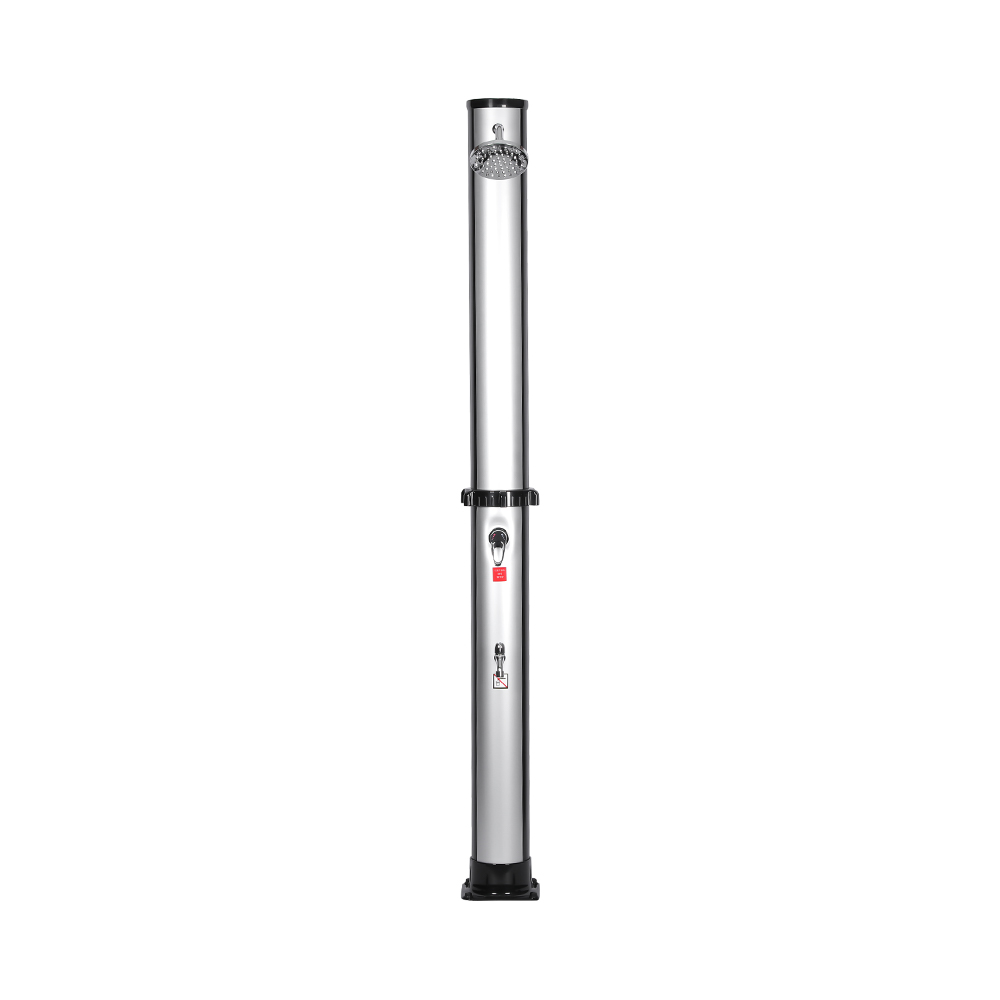
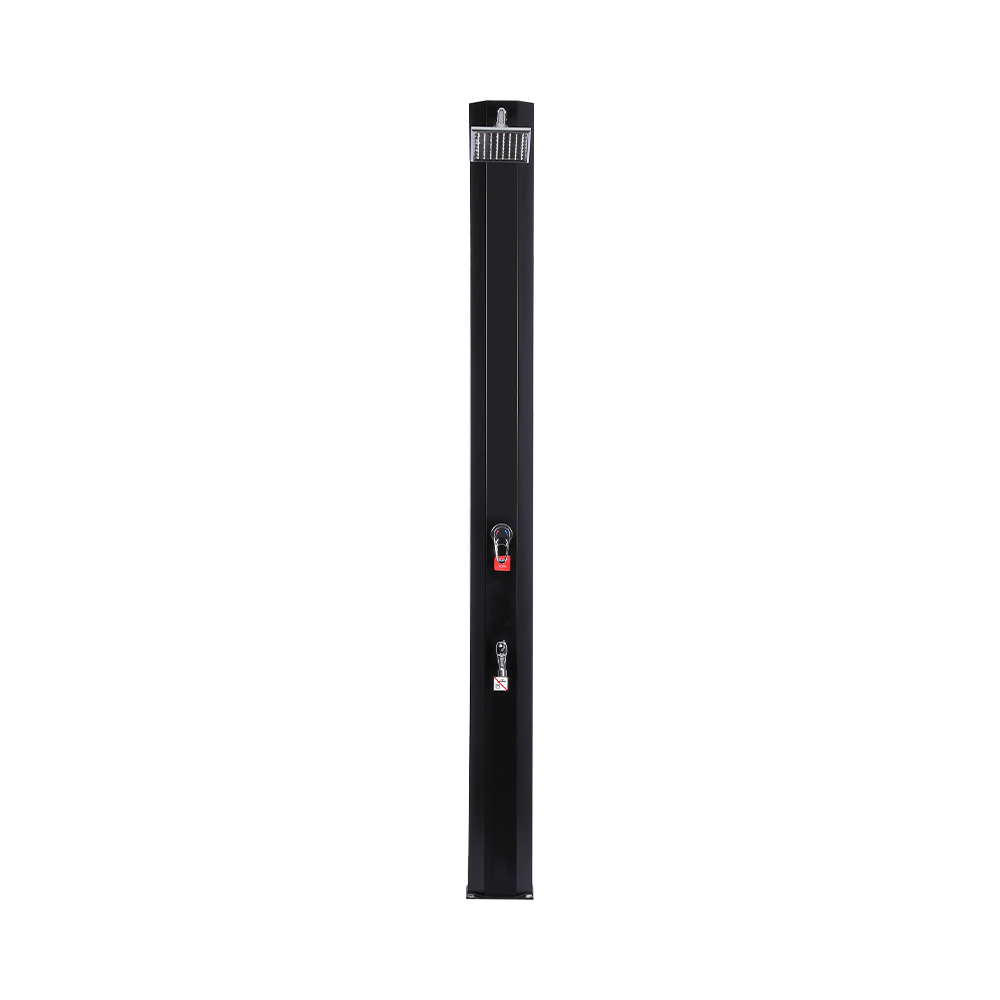 LY35L05-SS Convenient Anti-Water Accumulation Solar ShowerWith its generously sized shower pipe, this LY35L05-SS convenient anti-water accumulation solar shower efficiently heats water up to 60 °C under full sunlight, elimina...View Product →
Design details that limit standing water inside a column are worth paying attention to at the buying stage. A body that drains cleanly at the end of the season will almost always outlast one that traps a cupful of water in a low corner, because that cupful is what splits the seam in January.
What Buyers Should Check Before Ordering
Whether you are equipping a villa, a campsite or a retail programme, the questions that predict lifespan are the same, and they are answered by documents rather than by photographs.
- Polymer grade and UV stabiliser: ask whether the compound is UV-stabilised and whether masterbatch pigment is used throughout the wall or only on the surface.
- Wall thickness and weight: a heavier body at the same capacity usually means more material and slower ageing.
- Thread inserts: brass or metal inserts at high-stress joints survive far more tightening cycles than bare plastic threads.
- Seal specification: the grade of O-ring determines how many heat cycles it survives before hardening.
- Base construction: stainless steel, aluminium or WPC composite bases resist ground contact better than painted steel.
- Spare parts availability: a supplier who can ship hoses, heads and seal kits separately extends the life of everything already installed.
- Quality system and social audit documentation: ISO 9001 and BSCI certification give you a traceable process behind the claim.
- Test evidence: salt-spray hours, pressure testing and UV chamber results are the numbers that support a lifespan claim.
It also helps to understand how the category is organised before you shortlist, which is why a broader guide to solar shower types is useful reading alongside this page. A 17,000 square metre factory running its own moulding, assembly and testing lines can usually supply the full capacity range from 8L to 60L, plus bases and WPC accessories, from one source, which simplifies both spare-part planning and packaging.
Cost per Year: The Number That Actually Matters
Purchase price tells you very little on its own. Divide the price by the realistic service life and the picture changes completely.
| Unit | Indicative price | Realistic life | Cost per season |
|---|---|---|---|
| Budget 8L bag shower | Low | 1-2 seasons | Highest |
| Standard 18L PVC column | Moderate | 4-8 years | Low |
| 30L aluminium column | Moderate to high | 6-10 years | Low |
| 35L column with stainless base | High | 8-12 years | Lowest for heavy use |
| 60L rain-head column | High | 8-12 years | Lowest per user |
Add the cost of one hose and one seal kit across the life of a mid-range unit and you are still far below the cost of replacing a cheap bag shower every second summer. Durability is not a premium feature here; it is the cheaper option measured over any period longer than three years.
Frequently Asked Questions
How long does a solar shower bag last?
A portable 8L bag shower typically lasts one to two seasons with regular use. The limiting factor is almost always the seam or the hanging strap rather than the tank itself. Storing it dry, out of direct sunlight, and never filling it with hot water from a tap will push it toward three seasons.
Can a solar shower be left outside all winter?
It can be left outside, but it should never be left full. Ice expansion is the leading cause of split tanks, and a single hard frost can destroy a unit in one night. Drain the tank, open the drain plug, remove the shower head and hose, and store those parts indoors.
Do solar showers lose heating performance as they age?
They do, but slowly and usually for a fixable reason. Limescale on the internal surfaces reduces heat transfer, and a partially blocked head reduces flow and makes the shower feel weaker. Cleaning the tank and soaking the head restores most of the original performance.
How do I know when to replace rather than repair?
Repair while the body and seams are sound. Replace when the tank itself is cracked, when the body has become brittle and chalky, or when a seam has split. Parts such as hoses, heads, seals and bases are all replaceable and should never be the reason a whole unit is scrapped.
Does hard water shorten the life of a solar shower?
Yes, mainly by attacking the valve and the spray head rather than the tank. Scale builds up on moving parts, makes the valve stiff and eventually causes it to leak. A monthly flush and an occasional vinegar soak in hard water areas will add several years to the working life of the fittings.
Is an aluminium or stainless-steel shower worth the extra cost?
For a permanent poolside or garden installation, yes. Metal bodies are unaffected by UV, resist impact better than polymers, and typically add three to five years of service life. The main consideration is coastal air, where both metals benefit from a quarterly rinse.
Can water pressure damage a solar shower?
It can. These are gravity-fed products built for low pressure. Connecting one to mains pressure or a booster pump stresses seams and plastic threads, and cracks that appear near the base are usually pressure related rather than a material defect.
What is the most common cause of premature failure?
Trapped water in freezing weather. It accounts for the majority of early failures we see, and it is entirely preventable with five minutes of drainage at the end of the season. The second most common cause is untreated UV exposure on a body that was never compounded for outdoor use.
-
How Do You Maintain and Clean Your Solar Shower for Long-Term Use
Empty the Tank After Each Use Maintaining the cleanliness and functionality of your solar shower is ...
-
Comprehensive Guide to Solar Showers: From Portable Bags to Luxury Poolside Units
Introduction to Solar Showers What is a Solar Shower? A solar shower is an innovative and environmen...
-
How to Choose the Perfect 8L Solar Shower for Beach, Pool & Garden Use
Benefits of Using an 8L Solar Shower at the Beach 1. Convenience and Portability for Beachgoers An 8...
-
The Ultimate Guide to 18L Solar Showers: Reviews, Tips, and How-To
Introduction to 18L Solar Showers In recent years, 18L solar showers have become a must-have item fo...
No.27, Fengshan Road, Hangfu Town, Kecheng District, Quzhou City, Zhejiang Province, China
(+86)-17888203192
 Wholesale Outdoor Solar Shower Factory