
 English
 Deutsch
 Español
 Français
Here You Can Get Our Latest Information
Industry News
Are Outdoor Showers Worth It? Real Benefits, Hidden Costs, Smart Buying
Are outdoor showers worth it? Yes, for most property owners with a pool, a beach-minded household, or a functional garden — but only when the system is matched to the intended job. A plumbed outdoor shower can cost several thousand dollars to install. A self-contained solar outdoor shower costs a fraction of that amount, requires no plumbing, and pays for itself within the first season of regular use. The real question is not whether outdoor showers are worth it in general; it is which type, capacity, and material fit the way your household actually lives and spends time outdoors.
The Value of an Outdoor Shower Depends on the Setting
An outdoor shower is not a single product category. It is a fixture that either solves a recurring, specific problem for your property, or it does not. The households that get the most value tend to share one of the following situations:
Poolside homes
Children and adults leave the pool dripping chlorine, sunscreen, and leaf debris. An outdoor rinse point traps most of that before it reaches interior floors, bathroom drains, and clean towels.
Beach and coastal properties
Sand is abrasive to indoor plumbing and flooring. A 60-second outdoor rinse removes the bulk of it, protecting drains, washing machines, and vacuum cleaners from excessive wear.
Gardens and workshops
Gardeners clean muddy hands, tools, and pets outside. An outdoor shower keeps soil and chemical residue from being tracked through the home.
Hot tub and sauna owners
A pre-soak rinse removes body oils, lotions, and sunscreen before they contaminate hot tub water, which directly reduces chemical maintenance costs.
Active outdoor households
Post-workout rinses, post-cycle cool-downs, and muddy children after rain are handled outside, preserving the indoor bathroom for more comfortable use.
The Real Cost Difference: Solar vs Plumbed Outdoor Showers
Most buyer hesitation around outdoor showers comes from the assumption that installation requires digging trenches, running hot water lines, and hiring a licensed plumber. That assumption is true for a plumbed unit and completely false for a solar model. The cost gap is substantial at every stage.
| Cost item | Plumbed outdoor shower | Solar outdoor shower |
|---|---|---|
| Professional labor | $1,200 to $3,500 | Not required |
| Plumbing and electrical work | $500 to $2,000 | Not required |
| Shower unit itself | $300 to $1,500 | $50 to $400 |
| Monthly hot-water energy cost | $5 to $15 | $0 |
| Typical first-year total | $2,000 to $7,000 | $50 to $450 |
What the plumbed route buys you is consistency: hot water on demand regardless of weather. What the solar route buys you is independence: water heated entirely by the sun, no new utility connections, and the freedom to move or reposition the shower whenever the outdoor layout changes.
A solar shower also changes the water-use equation. A plumbed outdoor shower with a standard head flows at roughly 9 to 12 liters per minute, so a five-minute rinse consumes 45 to 60 liters of water. A solar model uses only the water you fill into the tank. That fixed-volume approach naturally limits waste and makes the water bill impact much more predictable.
Matching the Shower Size to the Task
Once you know which setting the shower serves, the next decision is tank capacity. Oversizing is the most common buying mistake. A larger tank is not automatically better, because a bigger water volume takes longer to heat and holds more stagnant water between uses.
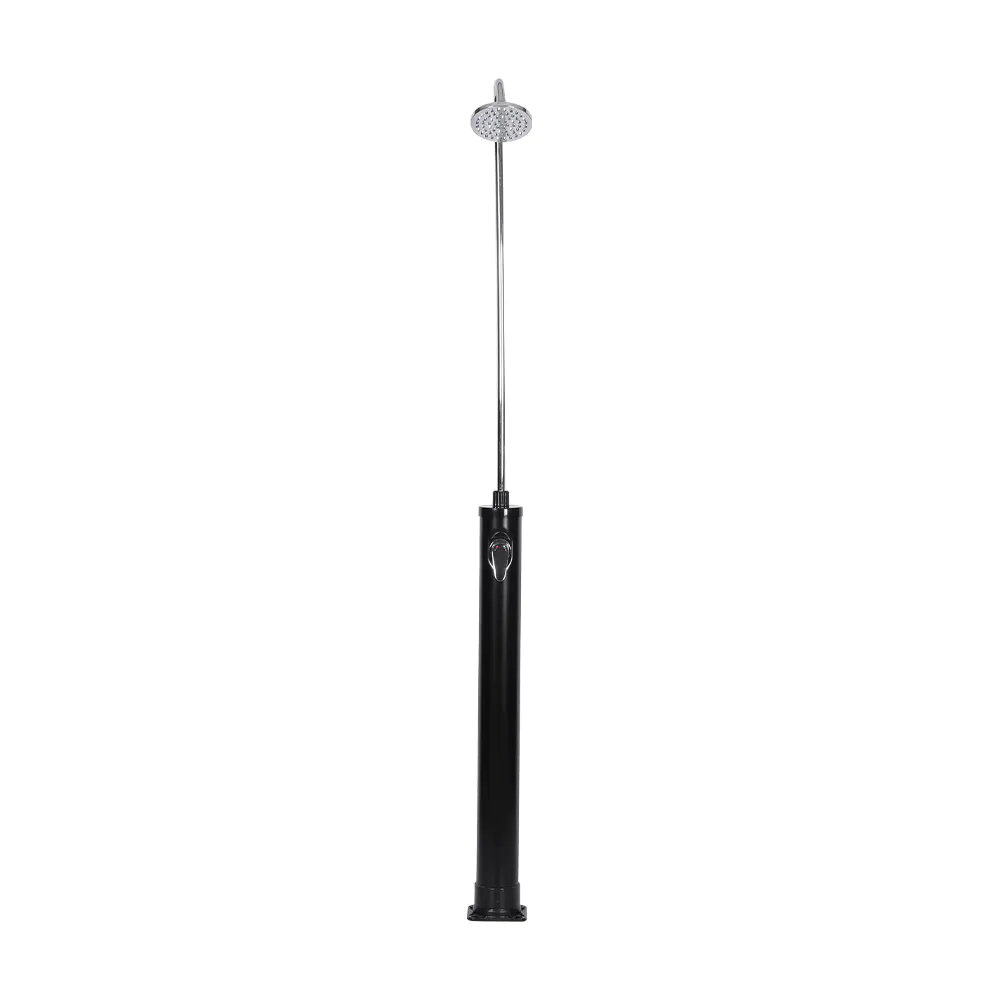 LY08L02 8L Solar Garden Shower for Pool and Outdoor UseThis compact 8-liter solar shower heats water up to 60°C using sunlight alone, making it a practical choice for rinsing off sand, chlorine, or sweat at the pool or beach without electricity.View Product →
For pure rinse duty — sand, chlorine, sweat — an 8-liter unit is often the sweet spot. It heats quickly in morning sun, reaches a usable temperature faster than any larger model, and can be carried to a beach or boat dock when needed. Gardening households also appreciate being able to move the shower to different working areas as the season changes.
Capacity and Heat: The Performance Trade-Off
The relationship between tank size and performance is easy to misunderstand. Larger tanks hold more water but also take longer to warm up and cool down more slowly in the evening. The chart below shows the realistic rinse capacity of each tank class on a full tank of sun-warmed water.
| Capacity | Best use case | Peak water temperature | Heat time to peak |
|---|---|---|---|
| 8L | Individual rinses, beach trips | 50–55°C | 2 to 3 hours |
| 18L | Small family pool, garden use | 48–52°C | 3 to 4 hours |
| 30L | Frequent visitors, shared patio | 45–50°C | 4 to 5 hours |
| 35L | Medium family, daily full-body wash | 44–48°C | 4 to 5 hours |
| 60L | High-use pool, rental property | 40–45°C | 5 to 6 hours |
Temperature expectations should be set realistically. The figures above assume a full tank of water that has been soaking up sunlight for most of the day. If you shower early in the morning or late at night, the water will be cooler regardless of tank size. Gravity-fed flow also feels different from pressurized indoor showerheads; the stream is softer and slower, which suits rinsing and warm-weather washing but should not be judged against the pressure of a home water system.
For a deeper look at how the 18L class performs in real households, including setup tips and common pitfalls, read our complete guide to 18L solar showers.
The 18L Middle Ground for Residential Pools
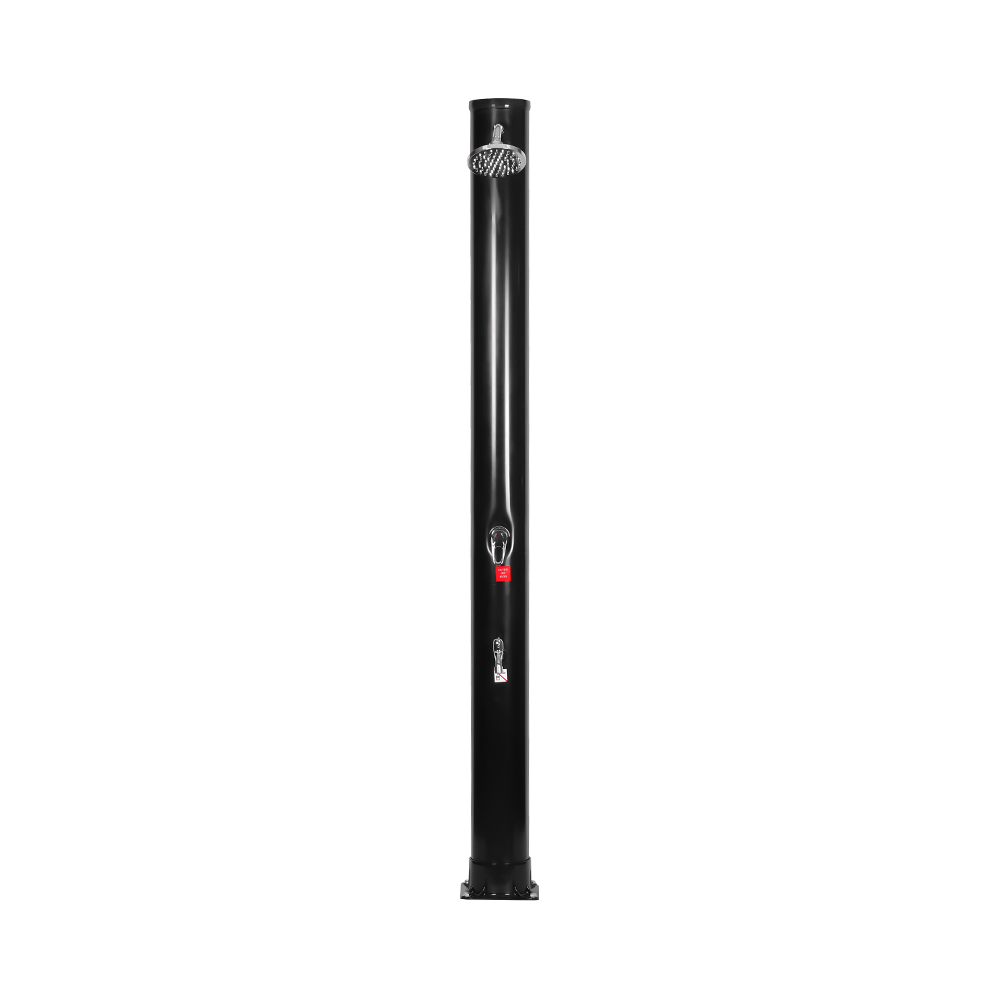
For a four-person household with a residential pool, the 18L class offers the most balanced performance. It produces enough water for two full showers or five to six quick rinses, and it stays light enough to store or relocate at the end of the season. Freestanding designs, such as the bend-body model, place the showerhead at a comfortable height without requiring a wall anchor or a permanent foundation.
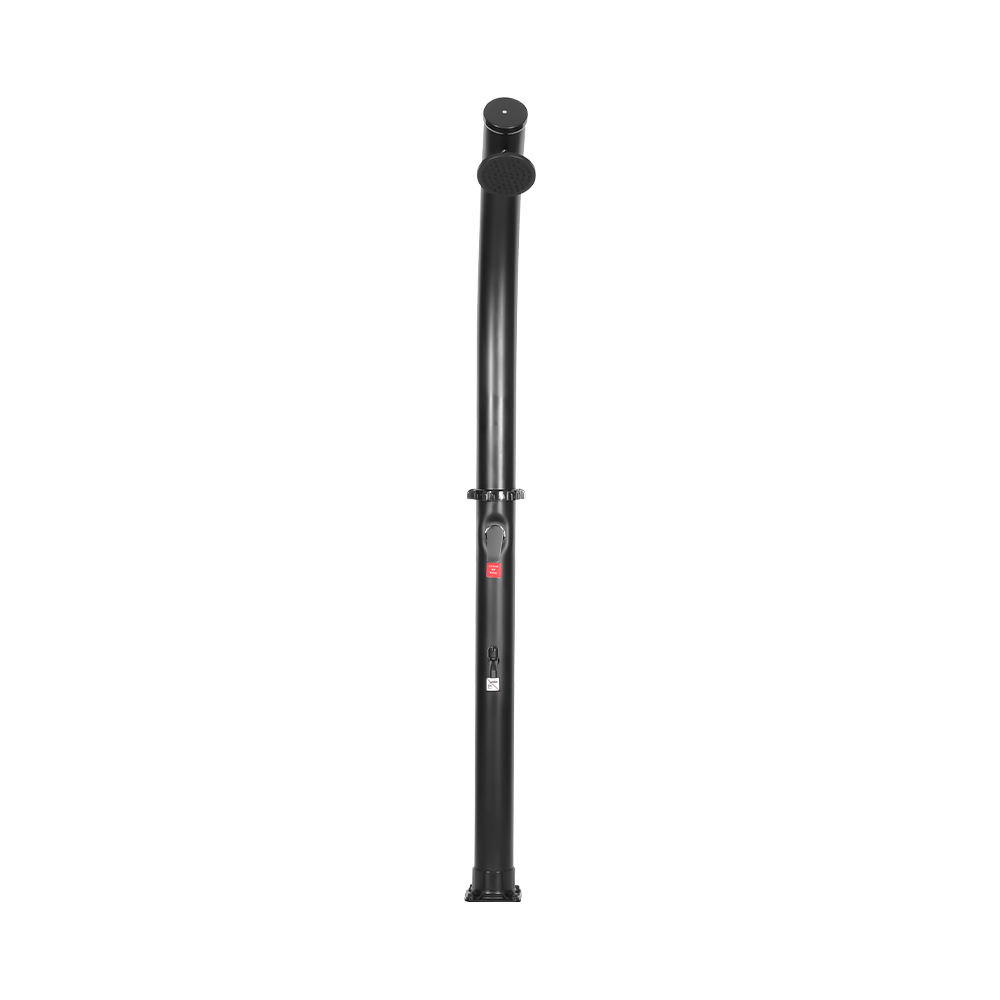 LY18L02 18L Freestanding Bend Body Solar Shower with Shower HeadThis 18-liter freestanding solar shower delivers enough warm water for multiple rinses and stands at a comfortable height without needing a wall anchor, ideal for households or seasonal setups.View Product →
One detail worth checking before purchase is the base. An 18L tank weighs more than 20 kilograms when full, so a wide foot or a stabilizing base prevents tipping on uneven patio stones or soft lawn edges.
Beyond the base, look at the showerhead and valve. A rain-style head distributes gravity flow over a wider surface, creating a softer and more even spray. A well-sealed control valve with metal internal parts lasts far longer than the small plastic knobs used on budget units.
Materials: What Separates a Long-Lasting Shower from a Disposable One
Outdoor showers sit in direct sunlight, rain, salt air, and seasonal temperature swings. The materials determine whether the unit still looks good and holds water in year three, or starts warping and leaking in year one.
- PVC bodies resist corrosion and keep costs low, but unpigmented PVC is vulnerable to UV degradation. Quality manufacturers add UV stabilizers to the polymer blend, so the grade of PVC matters more than the material name alone.
- ABS with a chrome or painted finish handles sun exposure better than basic PVC and gives the shower a more polished look for poolside settings.
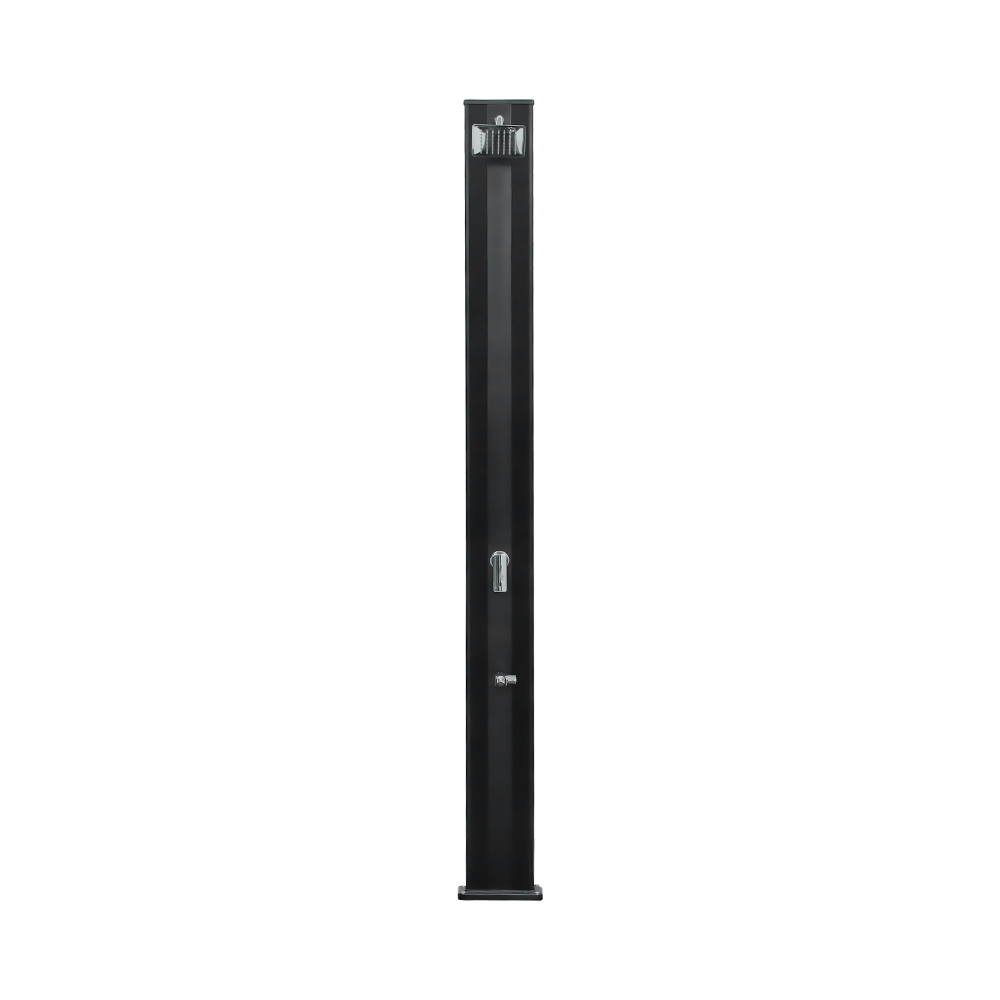
- Aluminum columns suit tall, fixed installations. Aluminum is light, strong, and naturally corrosion-resistant in most environments.
- Stainless steel fittings and bases are essential in coastal regions. Salt air attacks plain steel fasteners quickly; a stainless base protects every connection point.
Internal structure matters just as much as the exterior material. Water left sitting in a dark tank becomes stagnant and accelerates material fatigue. Features such as anti-accumulation drainage and removable hoses make seasonal cleaning considerably easier.
The small components are often the first to fail. Drain caps, hose connectors, and mounting brackets take constant handling and weather exposure. Choose a model with oversized, replaceable fittings and a documented spare-parts policy so a minor failure does not end the life of the whole shower.
Going Big: The 35L Class for Shared and Family Use
When an outdoor shower is used daily by several people, a small tank becomes a bottleneck. The 35L class is the first tier that genuinely supports full-body washing for a family, rather than rinse-off duty only.
A 35L tank in full sun reaches 44–48°C, which matches the comfortable range for a normal shower. The larger volume also means two or three people can shower in sequence without waiting hours for a full reheat between uses.
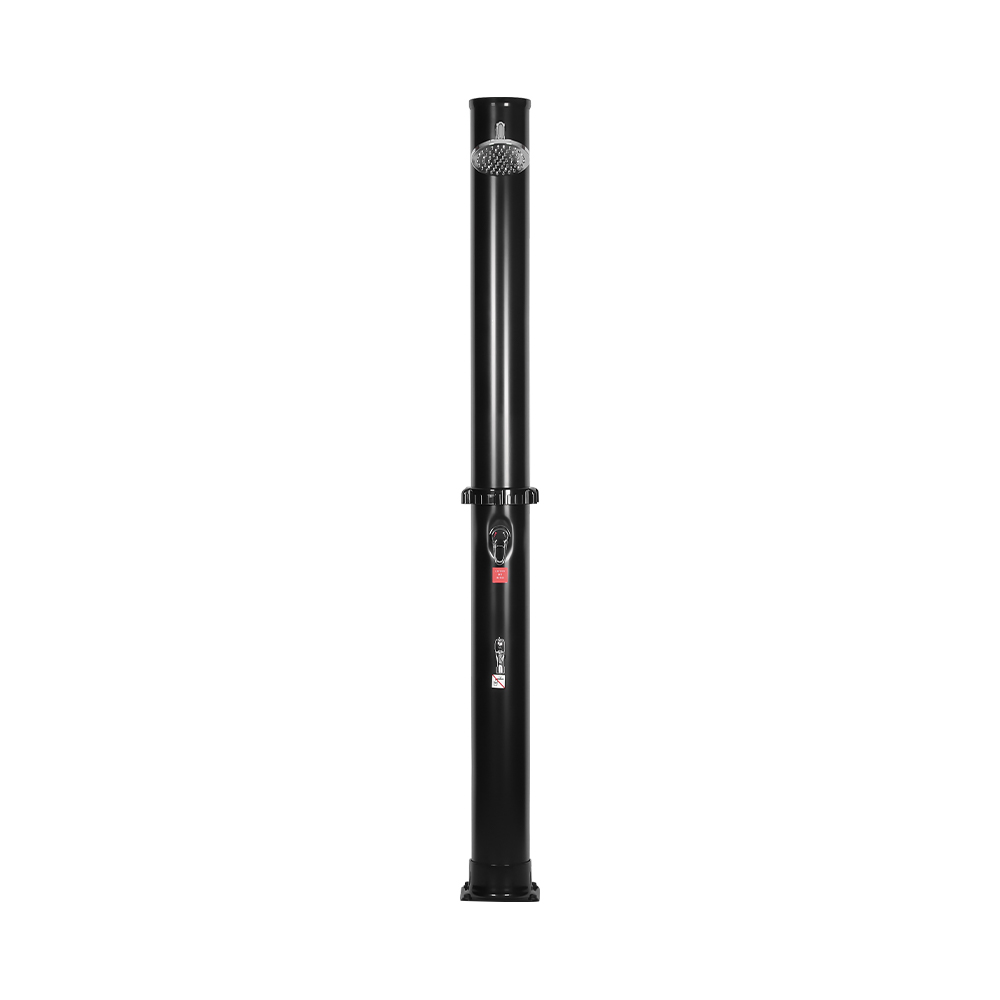
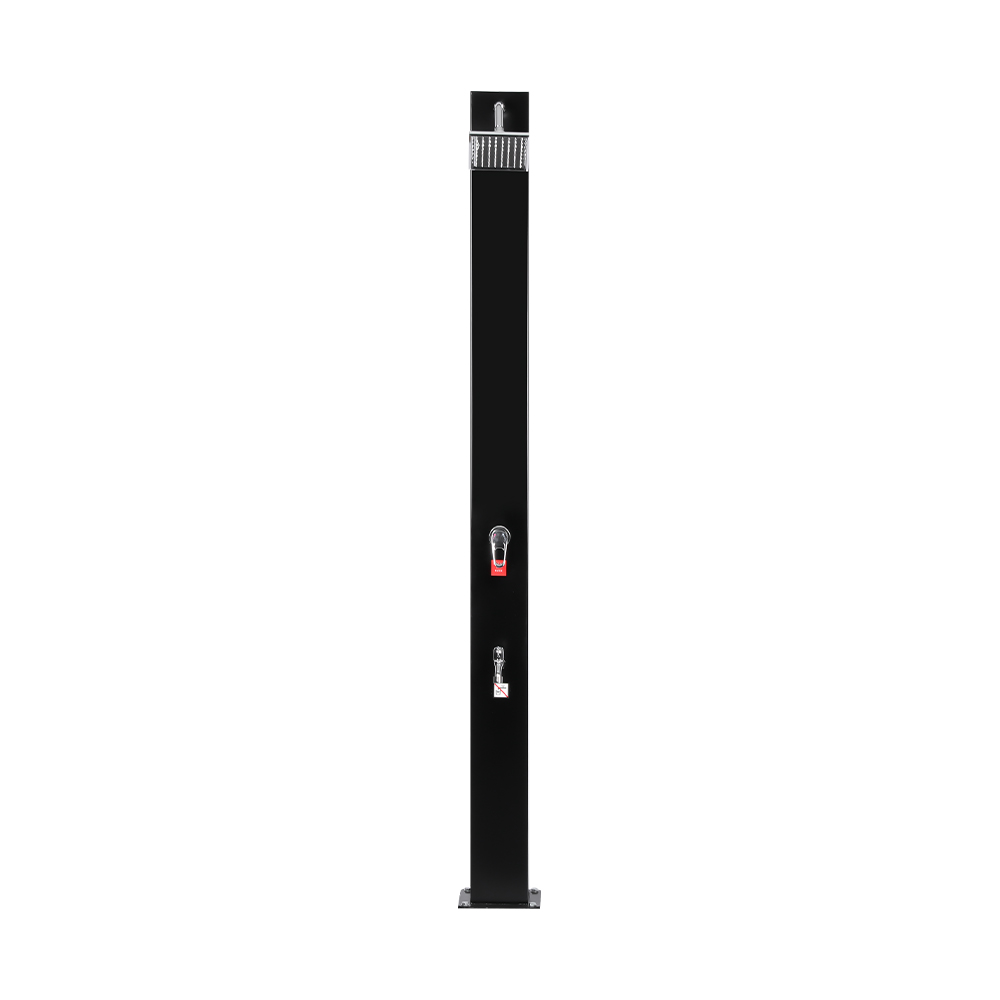 LY35L04-SS High-Capacity Outdoor Solar Shower with Metal RackWith a 35-liter tank heated by sunlight, this solar shower provides a comfortable water temperature for sequential showers and includes a built-in metal rack for toiletries, plus a drain for easy emptying.View Product →
Weight is the main trade-off. A filled 35L unit weighs roughly 45 kilograms, so it effectively becomes a permanent installation. Choose the location carefully, and use a base that keeps the column stable on soft or uneven ground.
Rain-style shower heads pair well with large tanks. The wide face distributes gravity flow over a larger area, creating a soft, even spray that feels closer to a modern indoor shower. This combination is why many 35L and 60L units are specified for shared pool areas and rental properties.
Maintenance Determines How Long the Value Lasts
An outdoor shower is a low-maintenance fixture, but not a zero-maintenance one. The routine tasks are simple: drain the tank before winter, wipe down the exterior, inspect the hose and connectors for cracks, and let the tank dry out between uses to prevent odor.
Seasonal care and winter preparation are where most owners extend — or shorten — the lifespan of their shower. Detailed instructions for winterizing, cleaning, and replacing worn components are available in our maintenance and cleaning guide for solar showers.
Frequently Asked Questions
Does an outdoor shower work on cloudy days?
A solar tank still absorbs diffuse sunlight on overcast days, but the water temperature will be noticeably lower and the reheat time longer. Warm cloudy days typically produce a lukewarm shower; cold overcast days may not reach a comfortable temperature without a backup heating source.
Can an outdoor shower be used in winter?
A plumbed unit with a proper cutoff valve and drain point can be winterized and used seasonally. A solar shower should be drained and stored, or at least fully emptied with the hose disconnected, before freezing temperatures arrive.
How long does a solar outdoor shower take to heat up?
In full summer sun, most tanks reach peak temperature within 3 to 5 hours depending on capacity. An 8L tank can be ready in about 2 to 3 hours, while a 60L tank may require 5 to 6 hours.
Is the water pressure from a solar shower enough?
Solar showers rely on gravity feed, so the flow is gentler than a plumbed showerhead. The pressure is normally sufficient for rinsing and washing, especially when the tank is positioned at or above head height. Showerhead design also affects the feel; wide rain-style heads deliver a softer spray that works well with gravity flow.
What is the typical lifespan of an outdoor solar shower?
With regular draining and cleaning, a well-built PVC-based unit lasts roughly 3 to 5 years. Models with aluminum or stainless steel frames and UV-resistant finishes typically last longer, especially in coastal climates.
Can I mix cold and hot water with a solar shower?
Some solar shower models accept a garden-hose cold-water line through a single-lever mixer. This allows you to adjust the temperature instead of waiting for the tank to cool down. It is a useful feature for households where children use the shower, because it prevents an overheated tank from being the only option.
Making the Decision: A Practical Checklist
Before you buy, run through these five checks to confirm that an outdoor shower is worth it for your specific property:
- Is there a recurring outdoor mess? Sand, chlorine, mud, or pool debris that regularly enters the house is the strongest signal that a rinse station adds real value.
- Does the location get direct sun for at least half the day? Solar heating depends on sunlight. Shaded areas under trees or north-facing sides of the house limit performance.
- Is there a flat, stable place to mount the shower? Gravity-fed tanks need height. Confirm that the shower can stand on level ground or on a suitable base.
- Can the unit be drained for winter? If the local climate includes freezing temperatures, the shower must be easy to drain and protect.
- Does the capacity match the number of users? Count the people who will use it on a busy summer day, then size the tank for that number rather than the size of the pool.
For most pool owners, coastal households, and active gardens, an outdoor shower is clearly worth the investment. It saves time, keeps the house cleaner, reduces water waste, and turns a basic rinse into an enjoyable part of the outdoor routine.


-
How Do You Maintain and Clean Your Solar Shower for Long-Term Use
Empty the Tank After Each Use Maintaining the cleanliness and functionality of your solar shower is ...
-
Comprehensive Guide to Solar Showers: From Portable Bags to Luxury Poolside Units
Introduction to Solar Showers What is a Solar Shower? A solar shower is an innovative and environmen...
-
How to Choose the Perfect 8L Solar Shower for Beach, Pool & Garden Use
Benefits of Using an 8L Solar Shower at the Beach 1. Convenience and Portability for Beachgoers An 8...
-
The Ultimate Guide to 18L Solar Showers: Reviews, Tips, and How-To
Introduction to 18L Solar Showers In recent years, 18L solar showers have become a must-have item fo...
No.27, Fengshan Road, Hangfu Town, Kecheng District, Quzhou City, Zhejiang Province, China
(+86)-17888203192
 Wholesale Outdoor Solar Shower Factory