
 English
 Deutsch
 Español
 Français
Here You Can Get Our Latest Information
Industry News
How Many Gallons Does a 20 Minute Shower Really Use? Exploring the 4 Minute Rule and Outdoor Shower Tech
What is the 4 minute shower rule?
The 4 minute shower rule is not a mandatory law but a global environmental initiative that originated in water-scarce regions. The most famous examples come from drought-stricken countries like Australia. During severe water shortages, authorities urge residents to limit their showers to under four minutes to ensure the sustainability of the city's basic water supply.
The core logic of this rule is "maximum efficiency." Psychological studies show that most people enter an "autopilot" meditative state while showering, leading to an unconscious loss of time. Four minutes is considered the "sweet spot": it is just enough time for a person to get wet, apply soap or shampoo, and rinse off completely, without allowing for any extra distractions.
Macro Significance of Resource Conservation
If an adult reduces their shower time from an average of 8 minutes to 4 minutes, they save approximately 10 gallons (38 liters) of fresh water per day. For a town of 100,000 people, the annual savings would be enough to fill dozens of Olympic-sized swimming pools. This not only reduces the pressure on water treatment plants but also significantly lowers the carbon emissions required to heat that water.
How many gallons does a 20 minute shower use?
Many people lack a tangible concept of water flow while enjoying a long 20-minute hot bath. To answer How many gallons does a 20 minute shower use?, we must introduce the key variable: Flow Rate.
Showerhead flow rates are typically measured in GPM (Gallons Per Minute). Below is a data comparison based on different equipment performances:
| Showerhead Type | Flow Rate (GPM) | Total Water Used in 20 Mins | Annual Consumption (Once Daily) |
| Old High-Pressure Head | 3.5 - 5.0 GPM | 70 - 100 Gallons | 25,550 - 36,500 Gallons |
| Standard Modern Head | 2.5 GPM | 50 Gallons | 18,250 Gallons |
| Federal Standard Eco-Head | 2.0 GPM | 40 Gallons | 14,600 Gallons |
| High-Efficiency Head | 1.5 - 1.8 GPM | 30 - 36 Gallons | 10,950 - 13,140 Gallons |
Hidden Costs of a 20-Minute Shower
Energy Consumption: Heating 50 gallons of water (from 15°C to 40°C) requires approximately 5-8 kWh of electricity.
Wastewater Treatment: Every gallon of clean water sent down the drain requires complex filtration and chemical treatment by municipal systems before it can be cycled back into the environment.
Beach Shower
For seaside enthusiasts, a Beach Shower serves as the bridge between the ocean and urban life. Its primary purpose is not a deep clean, but a preliminary "decontamination."
Why is a Beach Shower Essential?
Skin Protection: Salt from seawater absorbs moisture as it dries on the skin, leading to itching and dehydration.
Asset Maintenance: Sand is highly abrasive. If not rinsed off before entering vehicles or indoor spaces, it can damage carpets, precision electronics, and floor coatings.
Invasive Species Prevention: In certain ecological reserves, beach showers help prevent tourists from carrying microorganisms or tiny algae from specific zones into other water bodies.
A high-quality Beach Shower must have extreme weather resistance. Due to long-term exposure to salt spray, UV rays, and high humidity, the main body is typically constructed from Grade 316 Stainless Steel (Marine Grade). This material contains more molybdenum than standard 304 stainless steel, effectively resisting corrosion from chloride ions.
How do beach showers work?
The question How do beach showers work? involves the integration of urban infrastructure and fluid mechanics. Unlike home showers, beach showers face the challenges of high-frequency use and extreme environments.
Water Supply Mechanism
Most beach showers are connected to the city's municipal freshwater network. Since the pipelines are usually buried deep within the sand, engineers must address issues such as pipe freezing and joint damage caused by sand shifting.
Self-Closing Control Valves
To implement water conservation, these devices almost exclusively use "Timed Self-Closing Valves." Once the user presses a button or steps on a pedal, the water flows for 15-30 seconds before automatically shutting off.
Multi-Stage Filtration and Drainage
Gravity Sand Trap: The floor beneath the shower is usually designed with a grate. Water carries sand down into a U-shaped sediment trap. The sand settles at the bottom due to gravity, while the water flows out from the top into the drainage system, preventing clogs in the municipal pipes.
Pressure Balancing: To handle peak usage times when multiple people are showering, these systems are often equipped with pressure-stabilizing valves to ensure consistent water pressure at every nozzle.
Swimming Pool Solar Shower
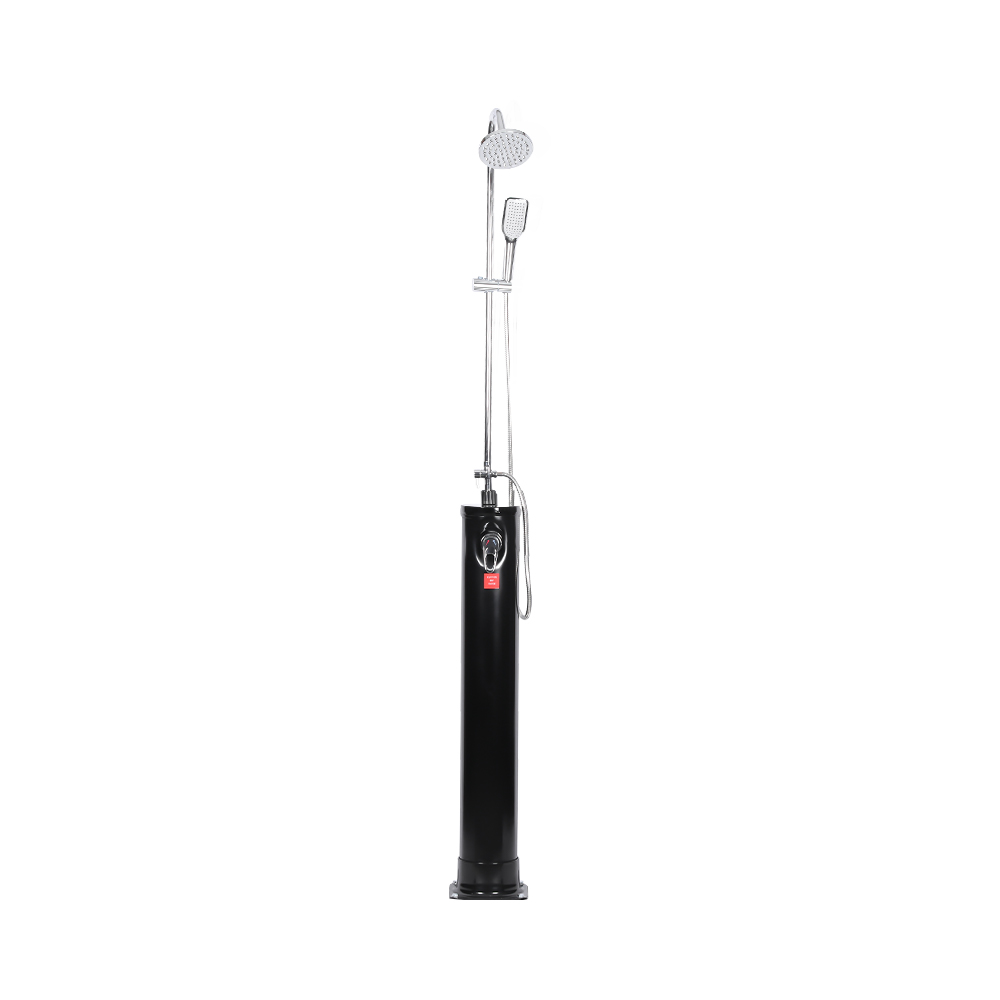
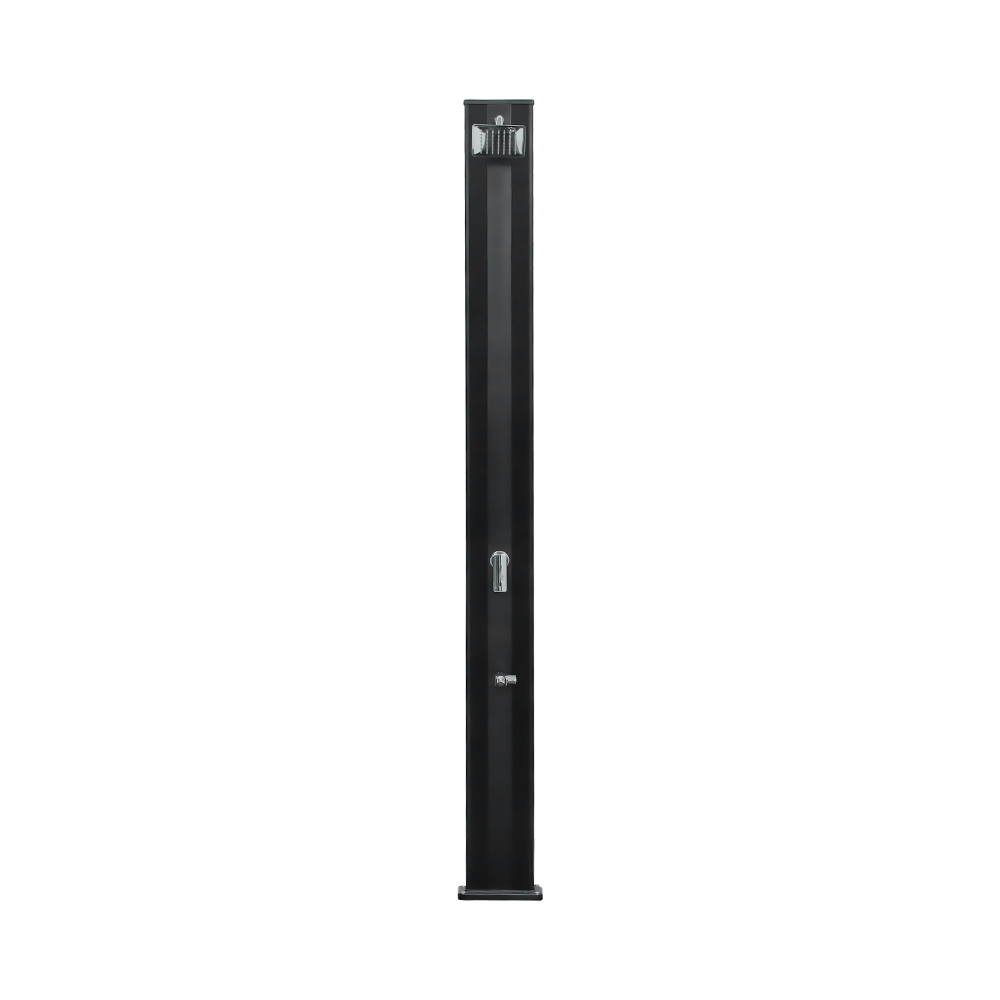
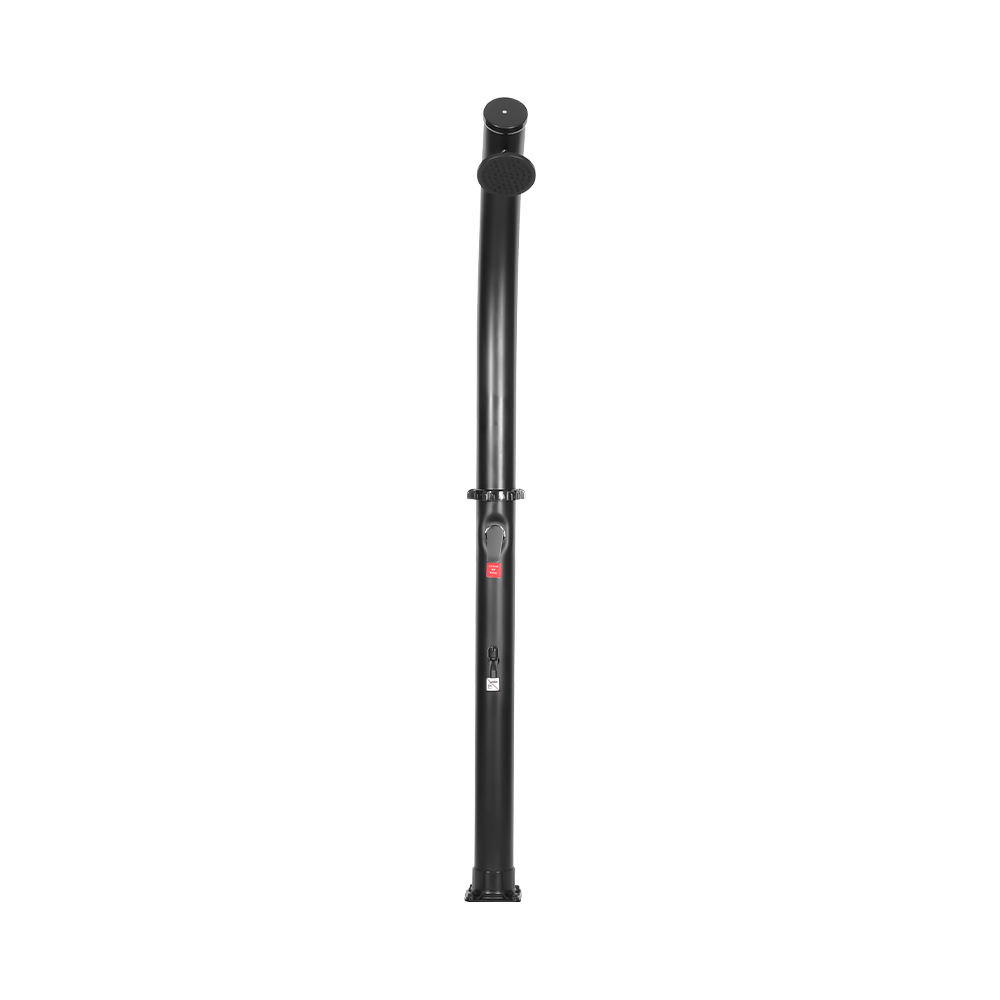
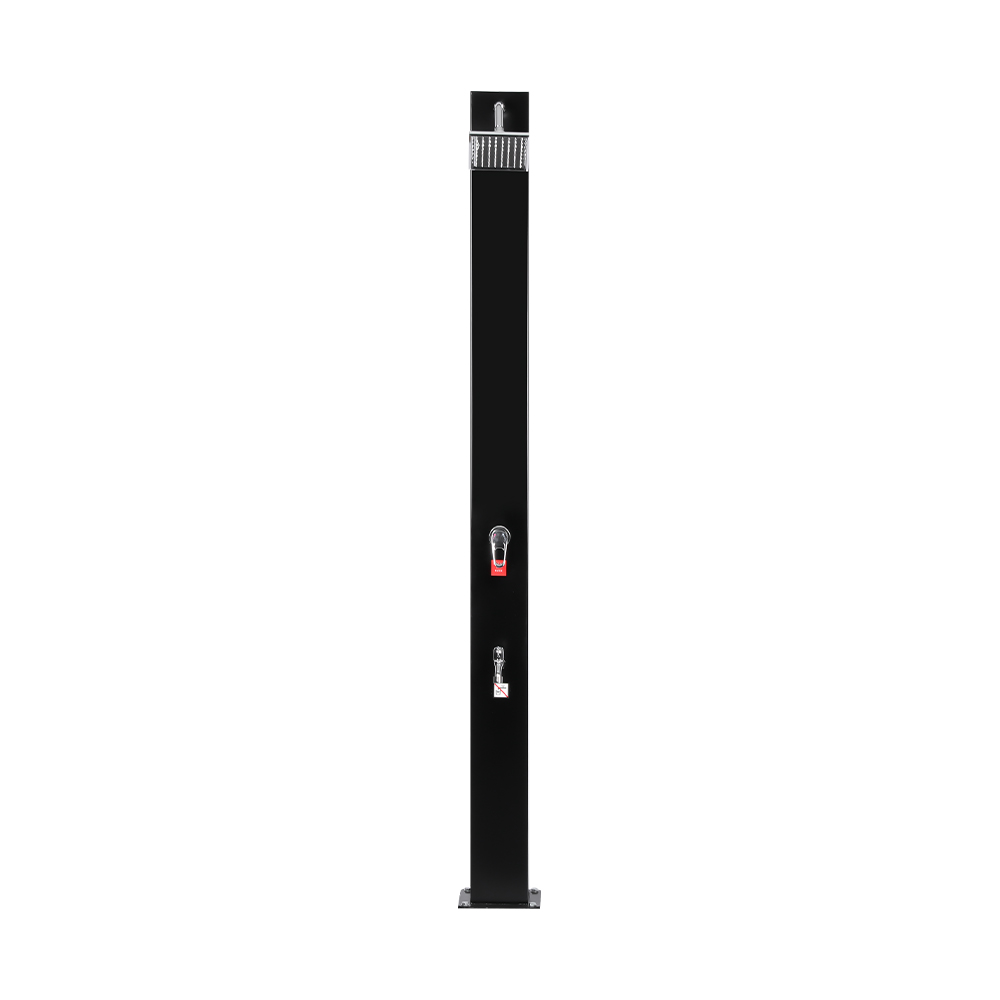
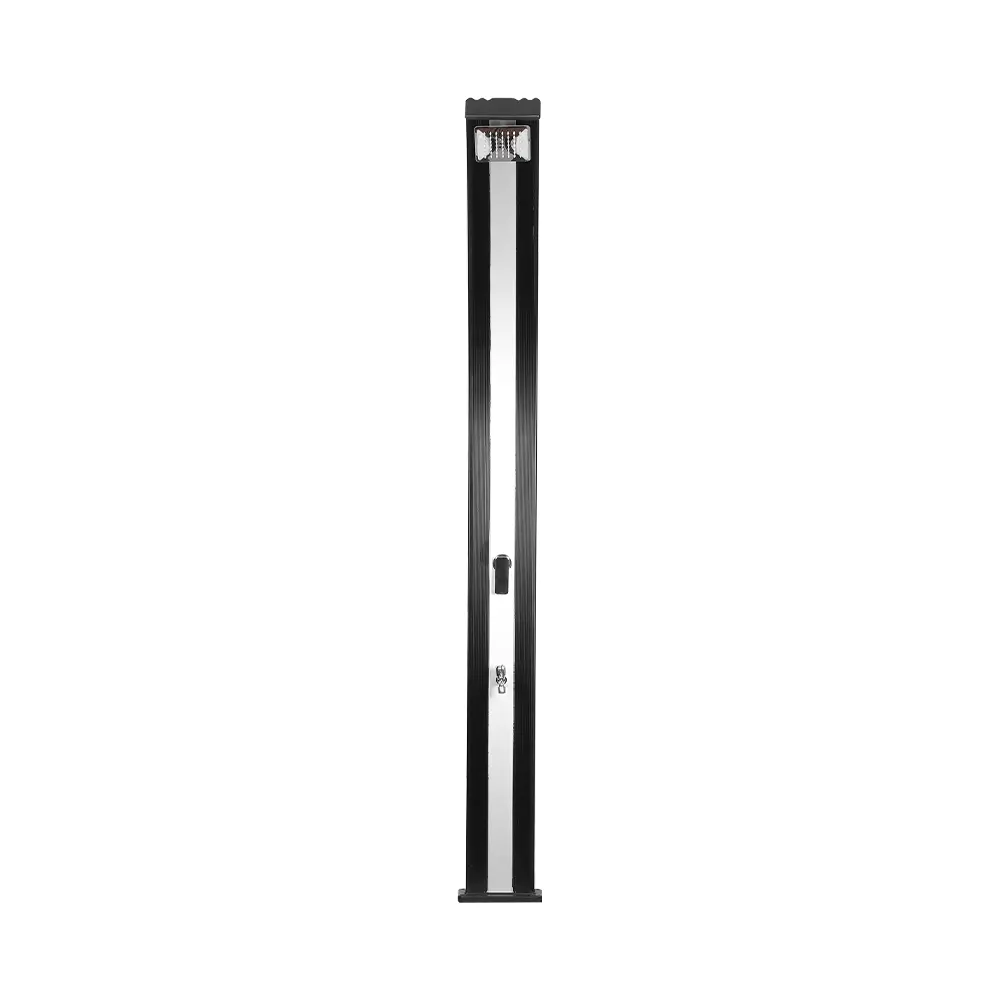
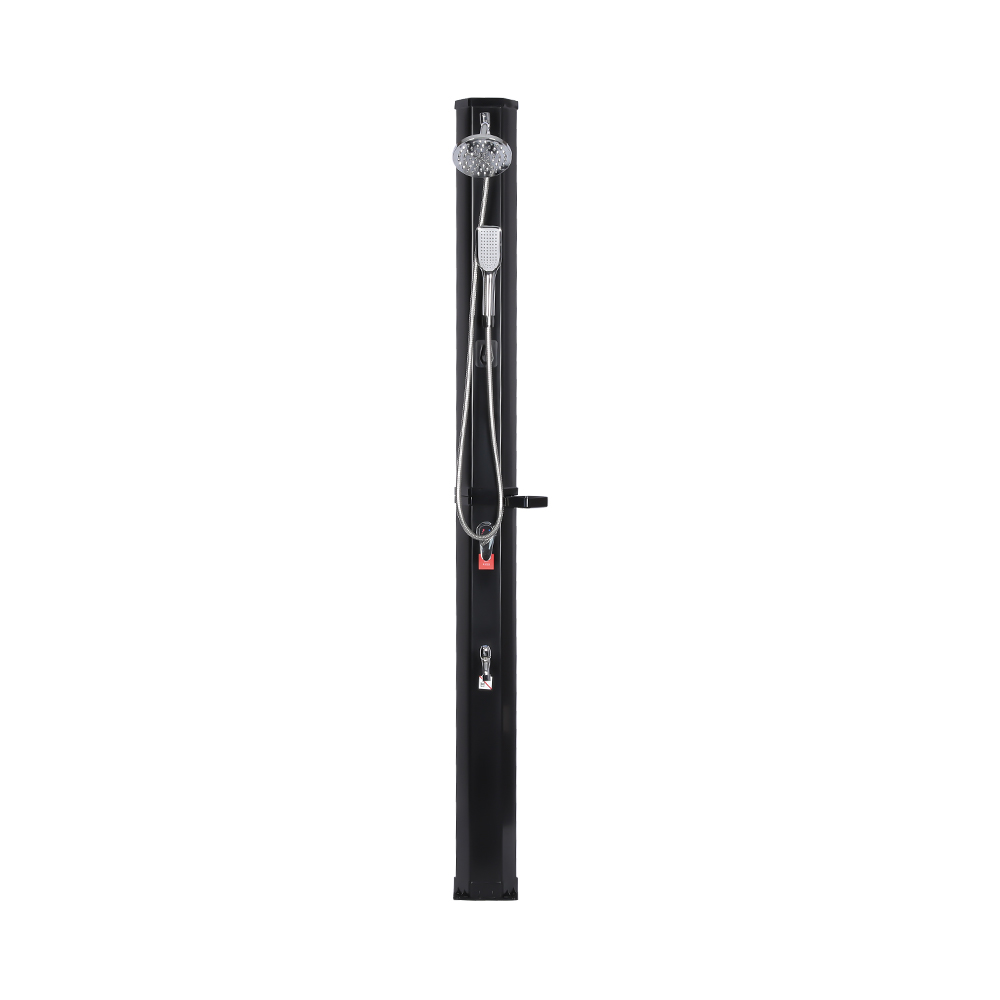
With the rise of carbon neutrality, the Swimming Pool Solar Shower has become a standard feature for private pools and high-end beach clubs. It is a closed-loop system that utilizes solar radiation to preheat cold water.
Core Structure and Parameters
Collector Column: Usually made of black-treated aluminum alloy or High-Density Polyethylene (HDPE). The black surface can absorb over 90% of solar energy.
Mixing Valve: This is a critical component. Because water temperatures under direct sunlight can exceed 60°C (140°F), the shower column features a mixing valve that allows users to adjust the ratio of cold water to prevent scalding.
Performance Advantages
Zero Operating Costs: As long as there is sunlight, hot water is produced.
Capacity Options: Common residential models range from 20 liters (5 gallons) to 40 liters (10 gallons).
Ease of Installation: No complex electrical wiring is required; it simply connects to a standard garden hose.
FAQ & User Insights
Since beach showers are important, can I use shampoo?
Answer: Using shampoo or body wash is not recommended. The drainage from most Beach Showers goes directly into the sand or storm drains rather than the sewage system. Chemical detergents can disrupt the pH balance of coastal ecosystems. It is advised to use only fresh water to rinse off salt and sand.
Is a 20-minute shower harmful to the skin?
Answer: Frequent long showers can be harmful. Prolonged exposure to hot water strips the skin of its natural lipid layer, leading to dryness or even triggering eczema. From a health perspective, a lukewarm shower lasting 5-10 minutes is ideal.
Does a solar shower work on cloudy days or in winter?
Answer: Its efficiency depends entirely on UV intensity. On cloudy days, the water temperature may only be slightly higher than the ambient temperature. In cold winters, if temperatures drop below freezing, the water inside the column must be drained to prevent expanding ice from bursting the collector tube.
How can I practice the 4 minute rule via a simple DIY method?
Answer: Many users find that playing a fast-paced song lasting about 4 minutes is the best way to keep time. When the music ends, you must turn off the tap. This is often more pleasant and effective than a loud alarm.
-
How Do You Maintain and Clean Your Solar Shower for Long-Term Use
Empty the Tank After Each Use Maintaining the cleanliness and functionality of your solar shower is ...
-
Comprehensive Guide to Solar Showers: From Portable Bags to Luxury Poolside Units
Introduction to Solar Showers What is a Solar Shower? A solar shower is an innovative and environmen...
-
How to Choose the Perfect 8L Solar Shower for Beach, Pool & Garden Use
Benefits of Using an 8L Solar Shower at the Beach 1. Convenience and Portability for Beachgoers An 8...
-
The Ultimate Guide to 18L Solar Showers: Reviews, Tips, and How-To
Introduction to 18L Solar Showers In recent years, 18L solar showers have become a must-have item fo...
No.27, Fengshan Road, Hangfu Town, Kecheng District, Quzhou City, Zhejiang Province, China
(+86)-17888203192
 Wholesale Outdoor Solar Shower Factory